Rio’s Buses Grind to a Halt, Exposing a Broken Funding Model
Brazil
Key Facts
The Rio bus strike looks like an ordinary pay dispute, but underneath it is a question that haunts cities everywhere: when fares no longer cover the cost of a bus ride, who makes up the difference?
At midnight on Monday, June 29, the drivers who keep Rio de Janeiro moving stopped driving. The walkout, called by their union after a weekend assembly, was open-ended, and by Tuesday the city was still short of buses.
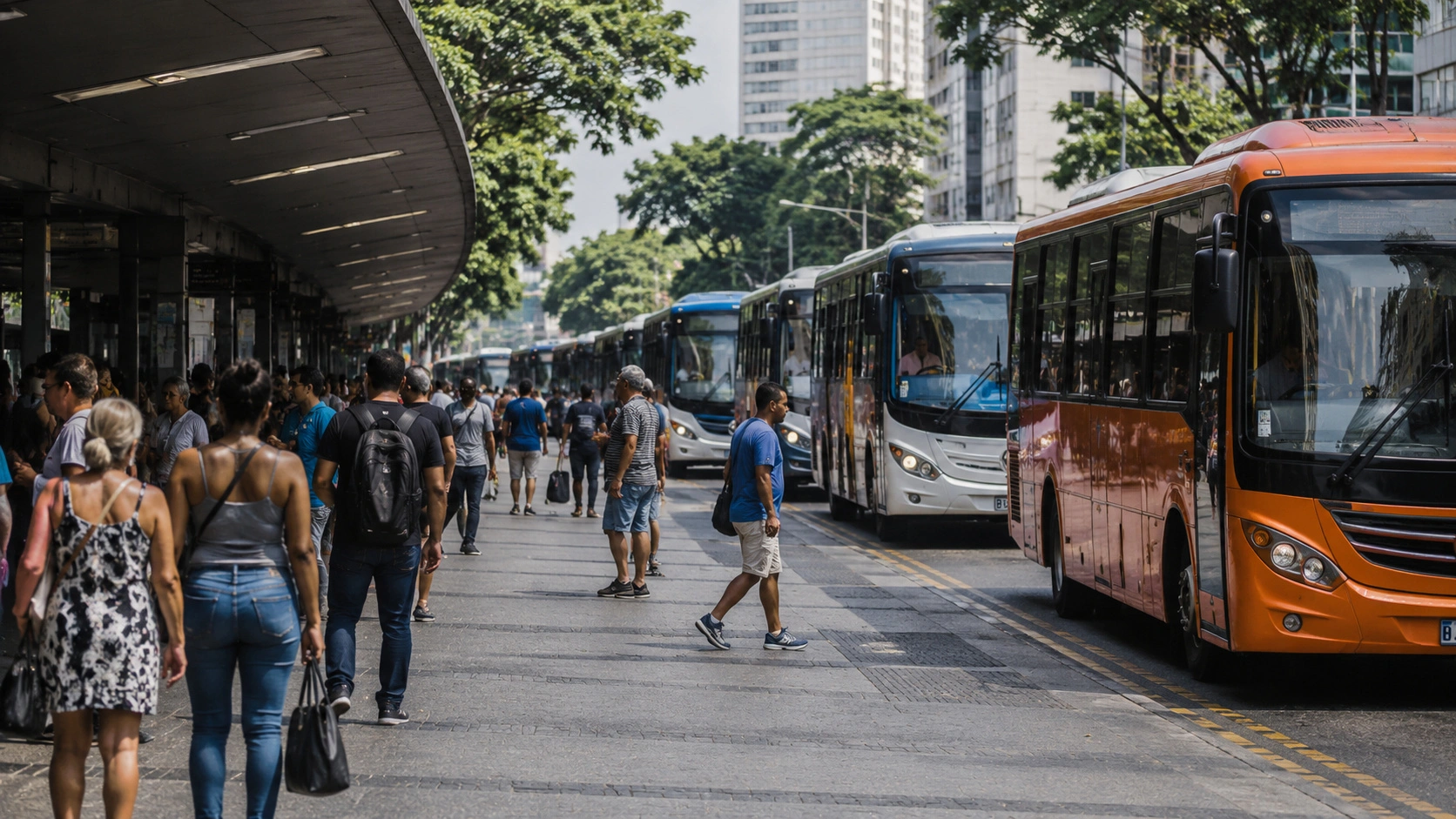
For anyone living in or visiting Rio, the effect was immediate. Only around eight hundred and seventy of the roughly eighteen hundred buses that normally run in the morning left their garages, leaving commuters waiting at stops across the city.
What the Rio bus strike means on the ground
A labor court tried to limit the damage. It ordered the companies to keep at least half the fleet running during peak hours and a quarter at other times, setting a fine of fifty thousand reais a day, about nine and a half thousand dollars, for breaking the rule.
The other modes are still running, which softens the blow. The city’s metro, suburban trains, ferries and the express bus corridors known as the BRT all operated normally, and officials urged people to use them or to work from home.
The drivers’ demands are straightforward. They are asking for monthly pay floors of four thousand reais for regular drivers and five thousand for those on articulated buses, plus a larger food allowance and permanent contracts for the staff on the express lanes.
The companies say their offer is reasonable and the union says it is not. A mediation hearing was scheduled for Tuesday, but the union has already declared the stoppage open-ended, so a quick resolution is far from certain.
Why the Rio bus strike points to a deeper problem
The pay fight sits on top of a much bigger one about money. In January the single fare rose from four reais and seventy centavos to five reais, but that is not what the bus companies actually receive for each rider.
Under the city’s contracts, operators are guaranteed six reais and sixty centavos per passenger, with public money covering the gap between that figure and the fare. The subsidy is paid according to how many kilometers each line actually runs, tracked by satellite, so lines that fall short are not paid in full.
That arrangement has bred conflict between City Hall and the consortia that run the buses. On June 3, Brazil’s supreme court gave the two sides until July 31 to settle their dispute over unpaid compensation, with one immediate slice of around forty-five million reais, roughly nine million dollars, in question.
In other words, the strike is one symptom of a system under strain. When the fare riders pay drifts further below the true cost of the service, the gap has to be argued over in court, and the people who drive the buses are caught in the middle.
Why a foreign reader should care
For a foreign resident in Rio, the practical takeaway is simple: on strike days the metro, trains and ferries are the reliable way to move, and the bus is not. Keeping a transit app and a topped-up fare card on hand turns a chaotic morning into a manageable one.
For an investor or executive watching from abroad, the lesson is broader. Rio’s struggle to fund its buses is the same one facing cities from London to Los Angeles, where falling ridership and rising costs have left fare-based systems leaning ever harder on public money.
The honest caveat is that this is a fast-moving dispute. The mediation hearing could end the stoppage within days, or the wider subsidy fight could drag on toward the court’s July deadline and beyond; the immediate disruption is real, but the shape of any settlement is not yet clear.
Frequently Asked Questions
What is the Rio bus strike about?
Rio de Janeiro’s municipal bus drivers walked out at midnight on Monday, June 29, in an open-ended stoppage over pay and conditions. They are seeking monthly pay floors of four to five thousand reais, a larger food allowance and permanent contracts for express-lane staff, and a labor court has ordered at least half the fleet to keep running at peak times.
How can I get around Rio during the strike?
The metro, suburban trains, ferries and the BRT express corridors all ran normally during the stoppage and are the dependable options. City officials advised residents to use those modes or to work from home, since only about half the usual buses were on the road.
Why does this matter beyond the inconvenience?
The strike sits on top of a deeper funding crisis. Riders pay five reais a trip while operators are guaranteed six reais and sixty centavos per passenger, with taxpayers covering the gap, and Brazil’s supreme court has given the city and the bus firms until July 31 to settle a dispute over unpaid subsidies.
Connected Coverage
› Navigating Public Transport in Rio de Janeiro: A 2026 Guide for Expats
› Why Brazil’s Crowded Skies Raise the Odds of Helicopter Crashes
This article was produced by The Rio Times’ automated newsroom system. How we use AI · Report an error · Editorial responsibility: Matthias Camenzind, Editor-in-Chief
Living in or visiting Rio de Janeiro? See this month's events and our Rio de Janeiro city guide with rents, safety and upcoming concerts.