Why Brazil’s Crowded Skies Raise the Odds of Helicopter Crashes

Brazil · Business
Key Facts
—The crash. Two small helicopters collided in mid-air over Recreio dos Bandeirantes in western Rio de Janeiro on June 14, 2026, killing all six people aboard the two aircraft.
—World’s largest. São Paulo holds the biggest civil helicopter fleet on the planet, with 411 registered aircraft, ahead of New York and Tóquio.
—One every 45 seconds. The city sees roughly 2,200 take-offs and landings a day at peak, about one rotor movement every 45 seconds.
—Helipads everywhere. São Paulo counts more than 260 rooftop helipads, the densest such network of any city in the world.
—Paperwork in order. Both aircraft in the Rio crash were registered as airworthy with regulator ANAC, with valid certificates running into 2026 and 2027.
—A prior flag. One of the two helicopters had drawn a complaint over irregular operation and was fined R$8,000 ($1,590) by the regulator in 2025.
A fatal mid-air collision over Rio de Janeiro has turned attention to a fact few visitors notice from the ground: Brazil is home to the world’s busiest helicopter fleet, and its biggest cities fly more rotorcraft, more often, than anywhere else on earth.
On the morning of Sunday, June 14, two small helicopters collided in the air over Recreio dos Bandeirantes, a beach district in the western part of Rio de Janeiro. Both aircraft fell onto a lot full of parked electric cars, setting off a fire that engulfed around twenty vehicles.
All six people aboard the two machines died. One helicopter was carrying a pilot and four passengers, the other only its pilot.
The human loss is what made headlines around the world. But for anyone trying to understand Brazil, the more revealing story sits in the airspace itself.
The world’s busiest helicopter fleet
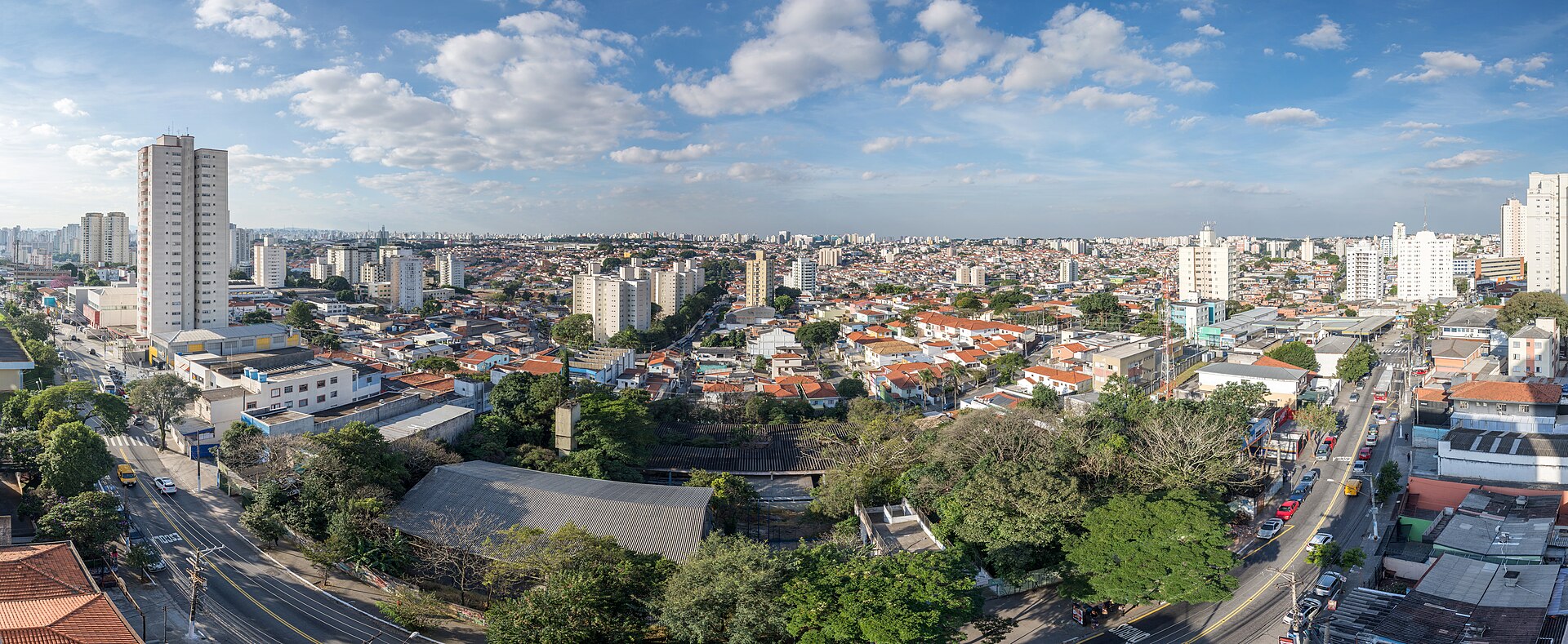
São Paulo, Brazil’s financial capital, operates the largest civil helicopter fleet anywhere on the planet. Industry bodies and the national aviation regulator put the count at more than four hundred registered aircraft, ahead of New York, Tóquio and London.
At peak hours the city handles roughly two thousand two hundred take-offs and landings a day. That works out to about one rotor movement every forty-five seconds.
The aircraft hop between a web of more than two hundred sixty rooftop helipads, linking the Faria Lima financial strip, the Paulista business avenue and the two main airports. No other city in the world has built a private air network on this scale.
For Brazil’s wealthiest executives, the helicopter is less a luxury than a workaround. Sprawling traffic that can swallow two hours of a working day has turned the rotorcraft into a tool for buying back time.
A whole industry has grown around that demand. Air-taxi operators, leasing firms, maintenance hangars and specialist insurers form a chain worth billions, and newer ventures now sell helicopter commutes by the seat using apps and demand-prediction software.
Why the helicopter fleet keeps growing
Demand has held up even through Brazil’s repeated economic wobbles. Importers of executive aircraft report selling far more rotorcraft now than a few years ago, and global makers such as Italy’s Leonardo have expanded local service and assembly to chase the market.
Rio de Janeiro is the country’s second hub for this kind of flying. Its rotorcraft shuttle between the city, the airports, coastal resorts like Angra dos Reis and inland farms and gated estates.
The appeal is obvious in a region where road journeys are slow and unpredictable. The catch is that more aircraft sharing the same low-altitude corridors means more chances for two of them to occupy the same patch of sky at the same moment.
When clean paperwork is not the same as safety
Here is the detail that should give foreign readers pause. Both helicopters in the Rio crash were, on paper, entirely in order with ANAC, the National Civil Aviation Agency that licenses aircraft in Brazil.
Public records show both had valid airworthiness certificates, one running into late 2026 and the other into early 2027. By the book, nothing was wrong.
Yet one of the two aircraft had already drawn the regulator’s attention. An inquiry opened in early 2025 over suspected irregular passenger operation, then was shelved for lack of conclusive evidence, and the operator was later fined the minimum penalty of eight thousand reais for failing to hand over requested documents.
That gap matters. Brazil’s rules already distinguish sharply between licensed air taxis, whose pilots face frequent assessments and high minimum flight hours, and private aircraft inspected once a year and flown by pilots with far lighter requirements.
Industry groups have warned for years that some privately registered machines are quietly used as unlicensed paid taxis, blurring that line. A valid certificate confirms a machine is fit to fly; it says nothing about how crowded the sky is around it.
A tale of two skies
São Paulo’s answer to its own congestion is telling. The air force, working with civil aviation authorities, built a dedicated control system known as Helicontrol that manages routes, altitudes and radio traffic for rotorcraft alone.
It is, by most accounts, the only system of its kind in the world, created precisely because the density of flights demanded it. Rio, the country’s second helicopter city, has no equivalent dedicated layer of its own.
The investigation into the June crash will take months and is being handled by Brazil’s air-accident bureau alongside the civil police. Whatever its findings, the underlying pressure will not ease on its own.
A growing fleet, a fixed amount of usable airspace and a regulatory line that is easier to cross than to police all point the same way. For a region selling itself to investors and visitors, how Brazil manages its crowded skies is now a question worth watching.
More: Brazil news in English, every day from The Rio Times.
Frequently Asked Questions
Which city has the world’s largest helicopter fleet?
São Paulo holds the biggest civil helicopter fleet in the world, with more than four hundred registered aircraft. It sits ahead of cities such as New York and Tóquio, helped by heavy traffic that pushes executives into the air.
Were the helicopters in the Rio crash operating legally?
Both aircraft were registered as airworthy with Brazil’s aviation regulator, with valid certificates at the time. One of them had earlier been fined for failing to provide documents during a complaint over suspected irregular operation.
Does Brazil have special air-traffic control for helicopters?
São Paulo runs a dedicated rotorcraft control system called Helicontrol, widely described as the only one of its kind worldwide. Rio de Janeiro, the country’s second helicopter hub, does not have an equivalent dedicated system of its own.
Connected Coverage
Three Killed In Rio Helicopter Crash, As Investigators Examine A Routine Flight Gone Wrong
Leonardo Helicopters Eyes Brazil for Local Production Expansion
This article was produced by The Rio Times’ automated newsroom system. How we use AI · Report an error · Editorial responsibility: Matthias Camenzind, Editor-in-Chief