Ecuador’s Puerto Bolivar Is 93% Done With a US$30 Million Cold Store for Bananas
Ecuador · Logistics
Key Facts
- —What happened Ecuador’s second-biggest banana port is finishing a US$30 million cold warehouse so growers harvest any day.
- —How big a jump The Puerto Bolivar cold store, 17,000 m², holds 15,000+ pallets, double the footprint, nearly triple the original capacity.
- —The real story The warehouse frees exporters from sailing schedules, letting them negotiate shipping slots and improve fruit quality on arrival in Europe.
- —The catch The port is only ~30% occupied, built ahead of demand to compete, not relieve congestion.
- —Who it touches Guayaquil, 200 km north, faces a 12.5m draft limit versus the 15m larger vessels want, giving Ecuador a second option.
- —What comes next Completion is expected between October and November, but the date that matters is the first commercial load-out, not the ribbon-cutting.
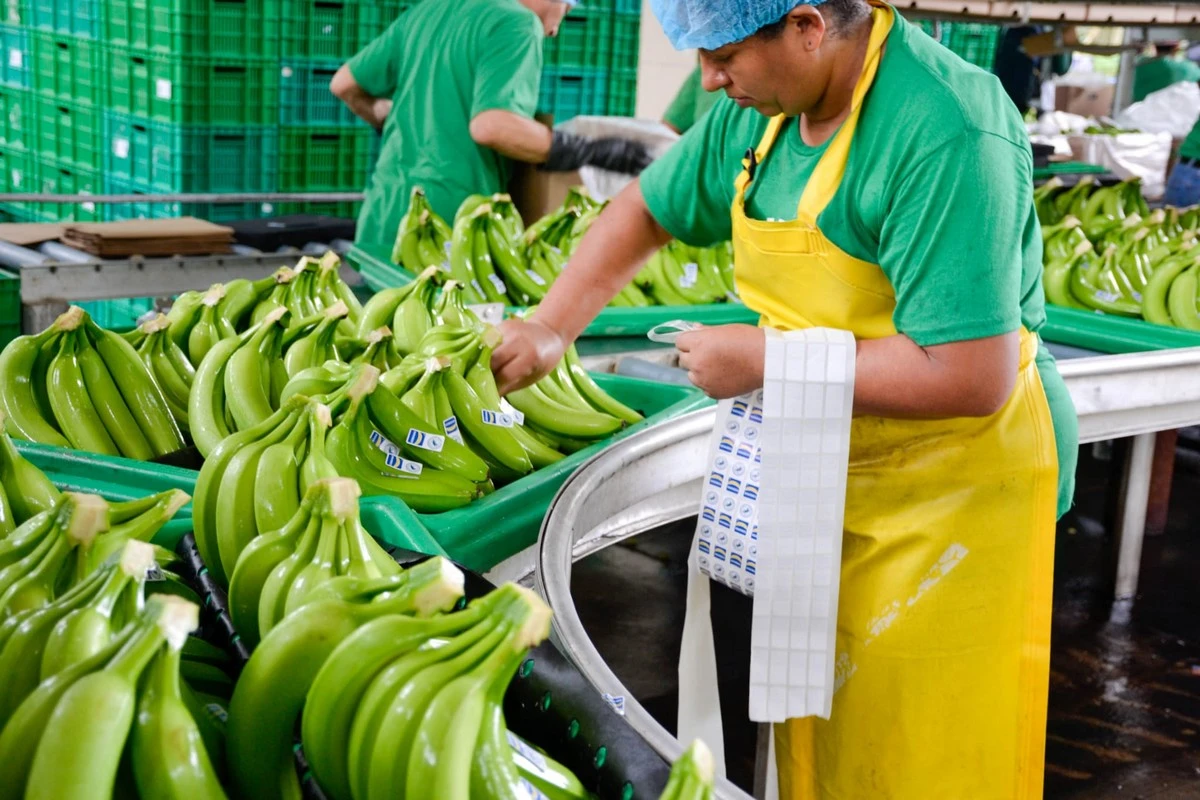
Right now an Ecuadorian banana grower harvests when the ship is coming. The point of this warehouse is to let them cut on any day of the week.
Ecuador’s second-biggest banana port is finishing a refrigerated warehouse that could change the rhythm of harvesting on the country’s southern coast. The Puerto Bolivar cold storage building, in Machala, cost about US$30 million, covers 17,000 square metres and holds more than 15,000 pallets. It is 93% complete and in technical testing, with completion expected between October and November.
What the Puerto Bolivar cold storage actually fixes
The problem is not that Ecuador cannot grow bananas. It is that the fruit and the ship have to meet at the same moment.
Without cold storage at the terminal, a grower in El Oro province harvests to the vessel’s schedule. If the ship is late, fruit sits in a truck in the heat. If the ship is early, the cutting crew works a rushed week. Either way the produce ages while the paperwork catches up — and condition on arrival in Rotterdam or Antwerp is what gets paid for.
Jimmy Blacio, chairman of the board of the Puerto Bolivar port authority, put the aim plainly: the objective is that producers can cut their fruit any day of the week and not only when the ship arrives. That, he said, will bring efficiency, better quality and considerably shorter operations. He made the commercial version of the argument too — the warehouse will optimise dwell time for producers and ships alike, and in logistics, time means money. In the same breath he was talking about queues of trucks at the port entrance, which is the congestion this project is actually aimed at.
A port with room, not a port that is full
It would be easy to write this up as relief for an overloaded system. That is not what the numbers say.
By Blacio’s own account the investment made at Puerto Bolivar so far represents around 30% occupancy, leaving close to 70% of capacity to grow into. This is a terminal building ahead of demand, not one gasping for air.
Guayaquil, some 200 kilometres north, is the one with a ceiling in view — and even there the constraint is not the yard. Contecon, the main concessionaire, has said its terminal could be saturated by 2029, while the immediate limit is the access channel’s draft of about 12.5 metres against the 15 metres larger vessels want, with the dredging project stalled.
So the honest framing is competitive, not remedial. Puerto Bolivar is positioning to take cargo that currently leaves through other Ecuadorian terminals — shrimp, coffee and minerals alongside its bananas — and is working on new routes, including direct connections to Asian ports.
How the project grew
Yilport’s own published description of a Puerto Bolivar cold store is for a much smaller building: 7,500 square metres, about 5,750 banana pallets, notionally ready by the end of 2022. What is being finished now is roughly double that footprint and nearly triple the pallet capacity, four years later. The equipment comes from Japan, Germany, the United States and China, and the racking is automated.
Two cautions. The US$400 million cumulative figure comes from the port authority, not an independent audit, and it should be read against the US$750 million Yilport committed to over the concession’s 50 years. And 93% is a progress statement, not a delivery. The date that matters is the first commercial load-out, not the ribbon-cutting.
Why this matters if you are in the region
If you buy, ship or finance perishables anywhere on the Pacific coast of South America, this changes one variable: where fruit can wait. Cold storage at the quayside decouples harvest from sailing, and that decoupling is what lets an exporter negotiate on schedule instead of accepting whatever slot is offered.
The demand side supports it. European Union shipments of Ecuadorian bananas rose about 13% in the first half of 2026, and the EU took roughly a third of the country’s boxes — the largest single destination, with Russia second.
For growers in El Oro, the practical effect is a week that can be planned. For freight buyers, it is a second Ecuadorian option with genuine headroom.
More: Brazil news, every day from The Rio Times.
Frequently Asked Questions
How much did the Puerto Bolivar cold store cost?
About US$30 million. It covers 17,000 square metres and holds more than 15,000 pallets.
When will it be finished?
Completion is expected between October and November 2026. As of mid-August the build was 93% complete and the refrigeration, fire-suppression and automation systems were in testing.
Who operates Puerto Bolivar?
YilportEcu S.A., part of the Turkish group Yilport, under a delegated-management concession signed in 2016 that began operating in March 2017. The port authority says Yilport has invested more than US$400 million since then, against an original commitment of US$750 million over 50 years.
What will the warehouse be used for?
Bananas above all. The port is also courting shrimp, coffee and minerals that currently leave Ecuador through other terminals.
How big are Ecuador’s banana exports?
Ecuador exported 378.41 million boxes in 2025 worth US$4.08 billion FOB, on AEBE figures. Acorbanec counted 210.75 million boxes in the first half of 2026, up about 5.5% on the same period a year earlier.
Is Puerto Bolivar running out of space?
No. The port authority’s chairman puts current occupancy at around 30%, with close to 70% of capacity still available. The warehouse is being built ahead of demand rather than to relieve congestion.
Connected Coverage
Noboa Takes Ecuador’s Shopping List to China
Ecuador Canada Trade Agreement Signed in Ottawa
Ecuador’s Non-Oil Exports Reach Record as Trade Surplus Expands
Sources: El Universo — refrigerated warehouse enters final phase; Forbes Ecuador — the 2025 port table; Expreso — banana exports up 5.5% in H1 2026; Autoridad Portuaria de Puerto Bolívar; Primicias — Guayaquil channel draft and capacity
This article was produced by The Rio Times’ automated newsroom system. How we use AI · Report an error
Read More from The Rio Times