Panama Debt Refinancing Pushes US$3.3 Billion to 2031
Panama · Economy
Key Facts
—Total operation size EUR 2.9 billion (~US$3.3 billion), including EUR 500 million (~US$570 million) in new financing for 2026.
—Debt repaid early Approximately EUR 2.4 billion (~US$2.7 billion) of existing sovereign loans were refinanced ahead of schedule.
—New maturity profile The refinanced debt maturities were extended to 2031, smoothing the government’s repayment schedule.
—Tranche details Santander provided EUR 1.2 billion at a fixed 4.83%; Bank of America/Merrill Lynch provided EUR 1.7 billion at a fixed 4.67%.
—Fiscal backdrop The Panama Canal reported record nine-month FY2026 toll revenue of US$4,802 million, a 17% year-on-year increase.
Panama debt refinancing has moved forward with a EUR 2.9 billion (~US$3.3 billion) sovereign operation that repays existing loans early and secures fresh financing for 2026. The government of President José Raúl Mulino structured the deal to extend maturities to 2031 and lower near-term refinancing risk.
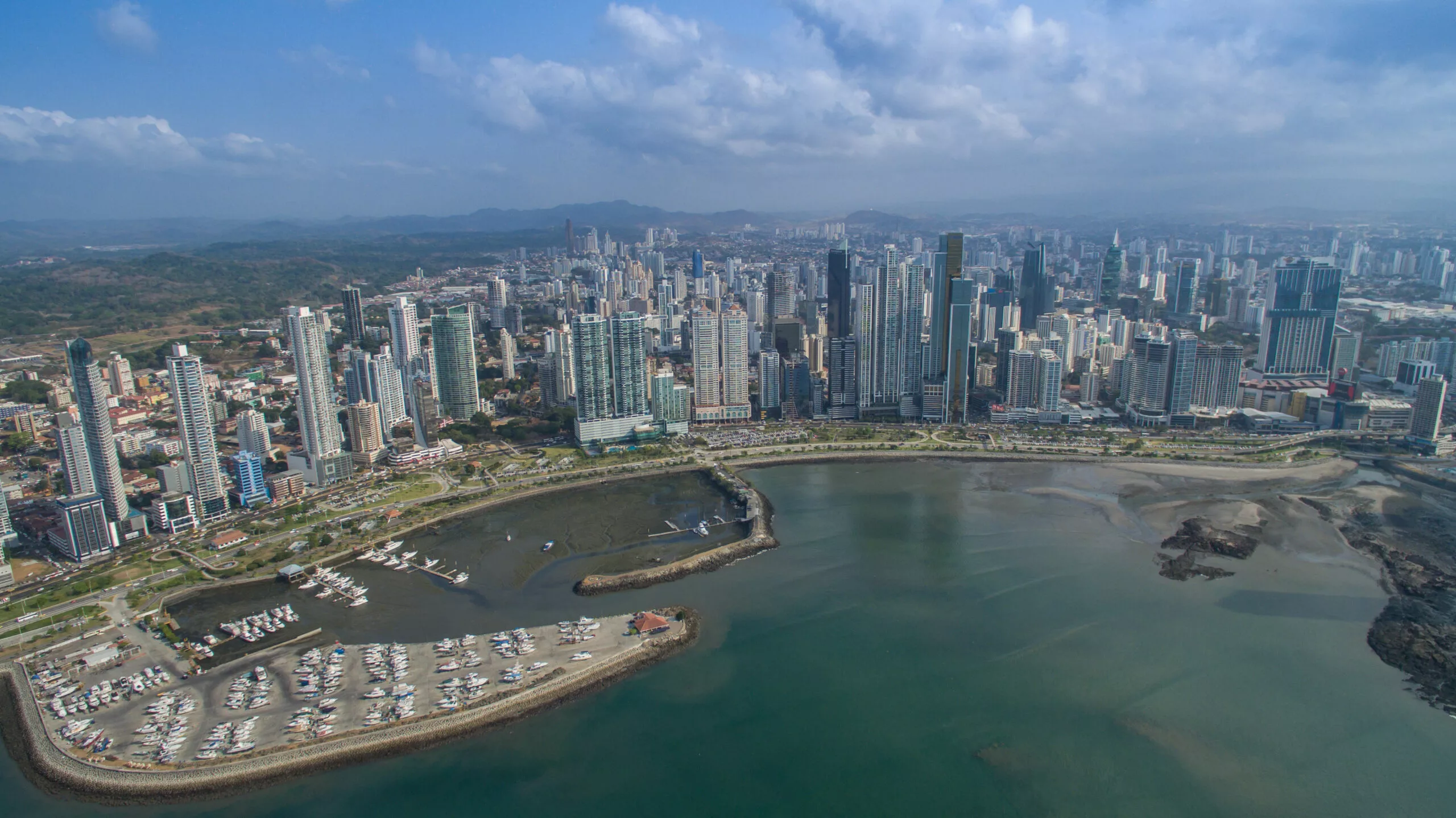
How the Panama Debt Refinancing Works
The operation was split into two distinct tranches arranged by international banks. Spain’s Santander handled a EUR 1.2 billion (~US$1.37 billion) portion carrying a fixed interest rate of 4.83%.
A second, larger tranche of EUR 1.7 billion (~US$1.94 billion) was arranged by Bank of America/Merrill Lynch at a fixed rate of 4.67%. The blended cost of the new debt reflects Panama’s effort to lock in predictable financing costs.
Of the total EUR 2.9 billion package, roughly EUR 2.4 billion (~US$2.7 billion) was used to repay existing obligations before their original due dates. The remaining EUR 500 million (~US$570 million) represents new money to support the government’s 2026 budget requirements.
By pushing maturities out to 2031, the Mulino administration buys time to stabilize public finances. For foreign investors and expats monitoring sovereign risk, the deal reduces the immediate pressure of large principal repayments.
A Broader Fiscal Strategy Under President Mulino
This refinancing is not an isolated event. It follows Panama’s return to the global bond market in February 2026 with a US$3 billion dual-tranche sale, the country’s first such issuance under President Mulino.
That earlier operation raised US$3 billion in a dual-tranche sale. It was Panama’s first international bond issuance under President Mulino, and was widely read as a test of investor appetite.
Taken together, the bond sale and the latest bank-loan refinancing signal a coordinated liability-management strategy. The government is actively reshaping its debt profile after a period when rating agencies flagged concerns about Panama’s fiscal deficit and liquidity.
The use of both public bond markets and private bank placements shows Panama is keeping multiple funding channels open. This dual-track approach helps preserve market access even if one avenue becomes more expensive.
Panama Canal Revenue Provides a Strong Backdrop
Underpinning the sovereign’s credit story is the performance of the Panama Canal. The waterway’s Authority reported record toll revenue of US$4,802 million for the first nine months of fiscal year 2026.
That figure represents a 17% increase compared to the same period a year earlier. Net profit rose even faster, climbing 19% to reach US$3,614 million.
Total transits through the canal grew by 5.2%, driven primarily by strong container-ship and liquefied petroleum gas (LPG) carrier traffic. The canal is a critical chokepoint for global trade, and higher volumes translate directly into stronger public revenue.
For a foreign audience, the canal’s performance is a key fiscal indicator. The Panama Canal Authority contributes significant dividends to the central government, making its financial health a direct input into sovereign debt sustainability.
What This Means for Foreign Investors and Residents
For expats and international investors following Panama, the refinancing reduces a layer of short-term sovereign uncertainty. Extending debt maturities to 2031 means the government faces fewer immediate rollover risks.
The fixed-rate structure on both tranches also shields Panama from potential interest-rate volatility over the medium term. In a global environment where central-bank policy can shift quickly, locking in rates below 5% is a defensive move.
However, the operation does not eliminate Panama’s broader fiscal challenges. The country still runs a sizable deficit, and the new financing adds to the overall debt stock even as it smooths the repayment curve.
Foreign residents should watch how the Mulino administration balances canal-driven revenue growth against spending pressures. The canal’s record results provide a buffer, but commodity trade flows can change with global economic cycles.
Credit Quality and Market Reception
Panamanian officials presented the refinancing as evidence of strong counterparty confidence, citing the participation of major global banks. The fixed rates achieved are competitive for a sovereign with Panama’s credit profile.
The earlier February 2026 bond sale had already tested market appetite. That deal was described by financial news outlets as Panama’s return to international capital markets after a stretch of relying more heavily on bank loans.
Rating agencies continue to monitor Panama’s fiscal trajectory closely. The combination of proactive debt management and record Canal revenue may help stabilize the sovereign’s credit outlook, but sustained fiscal discipline remains essential.
For now, the EUR 2.9 billion operation buys time and predictability. The government’s ability to refinance at fixed rates with extended maturities suggests lenders still view Panama’s long-term fundamentals as intact.
Connected Coverage
Related reporting from The Rio Times: A War Far Away Is Making the Panama Canal Richer Than Expected.
More: Panama news in English, every day from The Rio Times.
Frequently Asked Questions
What is the total value of Panama’s latest debt refinancing?
The operation totals EUR 2.9 billion (~US$3.3 billion). It includes approximately EUR 2.4 billion (~US$2.7 billion) to repay existing loans early and EUR 500 million (~US$570 million) in new financing for 2026.
Which banks arranged the Panama refinancing tranches?
Santander arranged a EUR 1.2 billion tranche at a fixed 4.83% rate. Bank of America/Merrill Lynch arranged a EUR 1.7 billion tranche at a fixed 4.67% rate.
Both tranches mature in 2031.
How does the Panama Canal’s performance affect the country’s debt profile?
The Panama Canal reported record nine-month FY2026 toll revenue of US$4,802 million, up 17% year-on-year. Net profit rose 19% to US$3,614 million.
These contributions to state coffers support sovereign debt sustainability.
Sources: Santander; Bank of America/Merrill Lynch; Panama Canal.
This article was produced by The Rio Times’ automated newsroom system. How we use AI · Report an error
LatAm Markets: Live Signals → — real-time movers, turnover leaders and FX across Latin America.
Read More from The Rio Times