A War Far Away Is Making the Panama Canal Richer Than Expected
Trade
Key Facts
—The beat. The Panama Canal expects to top its $5.2bn revenue forecast for the year ending in September.
—The cause. The closure of the Strait of Hormuz pushed more ships toward the canal as a safer route.
—The traffic. Daily crossings peaked at 40 to 41 ships, up from a normal 34 to 35.
—The premium. One vessel paid an extra $4m in April just to jump the queue.
—The plan. A new administrator takes over in September to run an $8.5bn expansion program.
A conflict thousands of miles away has become an unexpected windfall for the Panama Canal. With the Strait of Hormuz shut for much of the year, ships have flocked to the waterway, pushing its revenue above forecast.
The authority that runs the canal expects a strong year. Its incoming chief said revenue for the year ending in September will come in a little above the initial estimate, helped by heavier traffic.
Why the Panama Canal is winning from a distant war
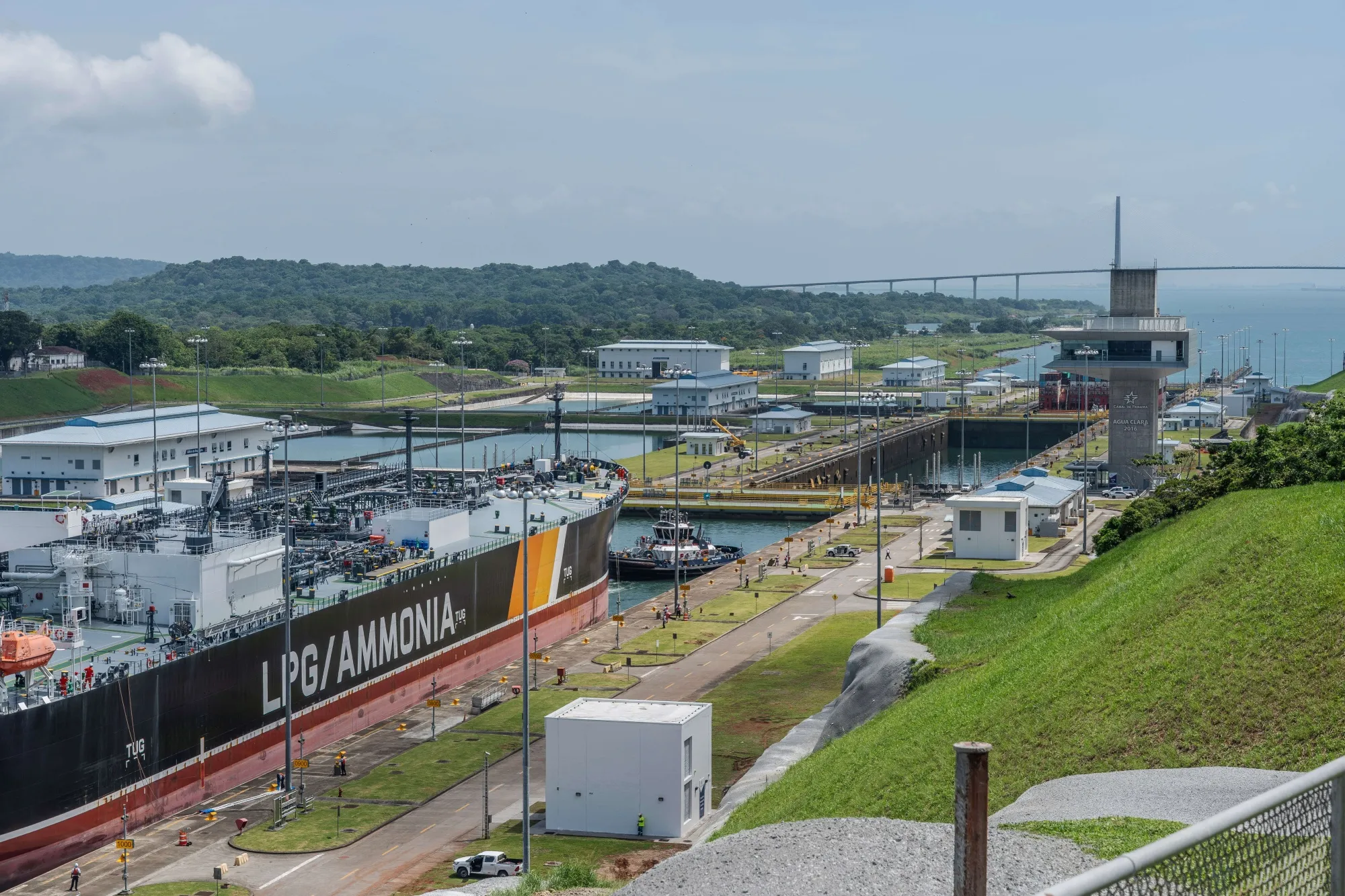
The logic is simple substitution. When the Strait of Hormuz closed, ships carrying gas and fuel needed a safer path, and many chose the canal linking the Caribbean to the Pacific.
The traffic numbers tell the story. At the peak, the canal handled forty to forty-one ships a day, well above its usual thirty-four to thirty-five, before easing back as tensions cooled.
Gas tankers led the rush. Buyers in Japan, China and South Korea turned to American suppliers to replace Middle Eastern gas, sending liquefied natural gas carriers through the canal in large numbers.
The shift has proved sticky. Even after a deal to reopen the strait, the canal is still handling about one gas tanker a day, as American suppliers keep shipping to Asia along the new route.
Oil followed the same path. Tankers carrying American crude to Asian buyers also increased their crossings, reinforcing the canal’s role as a bridge between Atlantic energy and Pacific demand.
Paying to skip the line
Congestion created a lucrative sideline. As waits grew, shipowners bid in auctions for priority slots, and in April one vessel paid an extra four million dollars simply to jump the queue.
Those auction fees add up. On top of rising traffic, the premium payments have helped lift total revenue past the canal’s own forecast of about five billion dollars for the year.
In round figures, that means clearing well over $5bn. It is a remarkable outcome for a chokepoint that carries only a small share of world trade yet sits at the heart of energy flows between the oceans.
The United States is the biggest user. Around seven in ten ships using the canal are heading to or from American ports, so its fortunes track the rhythm of United States trade closely.
The reversal is striking. Only a year or two ago a severe drought forced the canal to cut crossings and ration water, so a year of overflow demand marks a sharp change of fortune.
A new chief and a big plan
The windfall lands amid a leadership change. A veteran Panamanian engineer who helped oversee the canal’s last expansion takes over as administrator in September, for a term running to 2033.
Her in-tray is ambitious. She will oversee a program worth about eight and a half billion dollars, including a new dam and reservoir, two ports and a pipeline for liquefied petroleum gas.
The plan targets the canal’s weak spot. The new dam and reservoir are meant to secure the fresh water the locks depend on, the very resource that a recent drought showed could throttle traffic.
Construction is still a way off. The authority is prequalifying bidders for the reservoir and new ports, with work not expected to begin until late 2027 or early 2028.
For a foreign investor, the canal is a barometer. Its traffic and pricing offer a real-time read on how global trade is rerouting around conflict, and on the health of American energy exports.
The windfall may not last. As Middle East tensions ease and ships drift back to their usual routes, the canal’s bumper year is a reminder of how quickly a chokepoint’s fortunes can turn.
Why is Panama Canal revenue beating forecast?
The closure of the Strait of Hormuz pushed more ships, especially gas and fuel tankers, toward the Panama Canal as a safer route. Higher traffic and auction payments for priority slots have lifted revenue above the roughly five billion dollar forecast for the year.
How much busier has the Panama Canal been?
At the peak of the disruption the canal handled forty to forty-one ships a day, up from a normal thirty-four to thirty-five. One vessel paid an extra four million dollars in April just to secure priority passage.
What is next for the Panama Canal?
A new administrator takes over in September for a term to 2033, overseeing an expansion worth about eight and a half billion dollars. It includes a new dam and reservoir, two ports and a gas pipeline, aimed partly at securing the water the locks need.
More: Panama news in English, every day from The Rio Times.
Frequently Asked Questions
Why did the Panama Canal see a surge in traffic and revenue?
The closure of the Strait of Hormuz pushed ships carrying gas and fuel to seek a safer route, and many chose the Panama Canal. This diverted traffic helped push the canal's revenue above its $5.2 billion forecast for the year ending in September.
How much did daily ship crossings increase at the peak of the surge?
At its peak, the Panama Canal handled 40 to 41 ships per day, compared to its normal rate of 34 to 35 daily crossings. Traffic later eased back as tensions in the region cooled.
What major changes are coming to the Panama Canal's leadership and infrastructure?
A new administrator is set to take over the canal in September. The incoming chief will oversee an $8.5 billion expansion program.
Connected Coverage
This article was drafted with automated assistance and reviewed before publication. How we use AI · Report an error · Editorial responsibility: Matthias Camenzind, Editor-in-Chief