Moody’s Doubts Panama’s Investment Grade as a Shut Copper Mine Weighs
Key Facts
Panama, the dollar-based canal economy, has fought to keep its investment-grade credit rating since its biggest mine closed in 2023. A Moody’s analyst now says the agency is questioning that status, even as the deficit narrows.
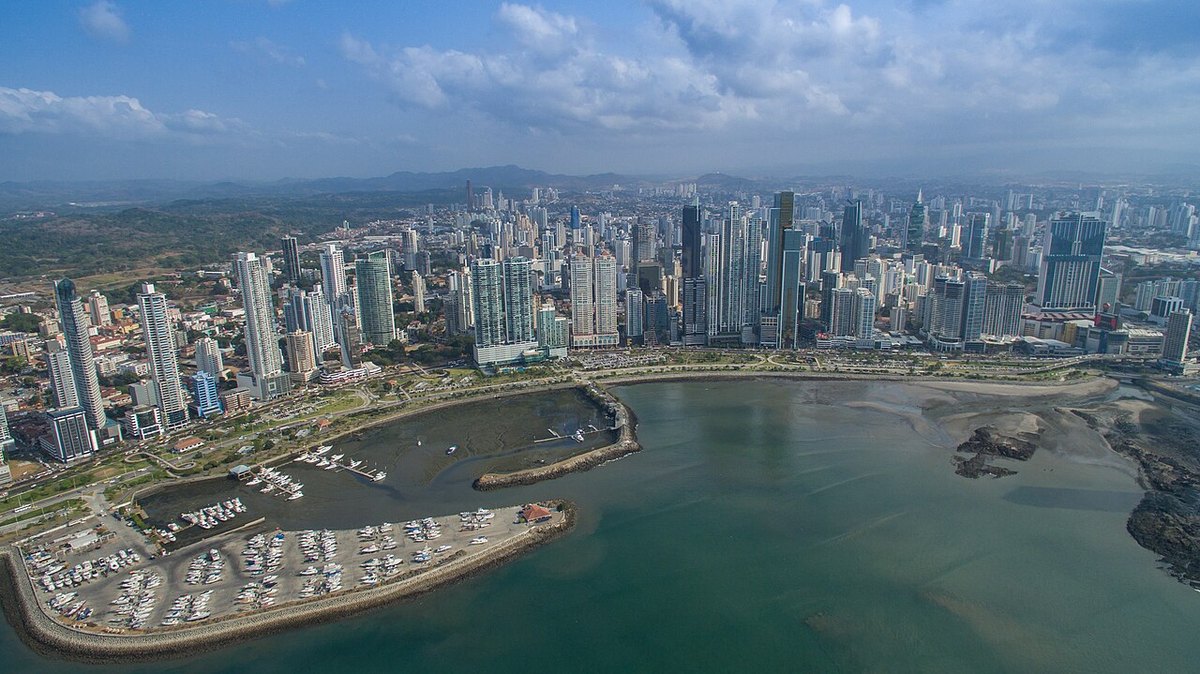
On 8 September, Moody’s analyst Jaime Reusche told a news agency that the agency questions Panama’s investment grade. Panama’s finance ministry reports a deficit of US$2.642 billion for January to July, down 10.6% on a year earlier.
Why It Matters Beyond Panama
Panama runs the canal that carries more than 5% of world trade each year. Its public finances therefore matter to shippers, bondholders and trading partners far beyond Central America.
The country uses the US dollar as legal tender, next to a local balboa fixed at one to one. That means Panama cannot print money or devalue its currency to ease a debt burden.
All figures in this article are therefore in US dollars, and no exchange rate applies. A credit rating is an agency’s judgment of how likely a government is to repay its bonds.
Investment grade is the top tier of that scale, and many large institutional investors buy only bonds within it. Losing the status at a second agency could narrow Panama’s pool of buyers and raise what it pays to borrow.
That matters for a country whose debt is projected to settle at 66% to 67% of GDP by the end of 2026. Much of the stress traces back to Cobre Panama, a giant copper mine shut in late 2023.
Panama’s Supreme Court unanimously ruled the mine’s contract law unconstitutional on 28 November 2023. President José Raúl Mulino, sworn in on 1 July 2024, inherited both the closed mine and a wide deficit.
Where the Ratings Actually Stand
Moody’s, S&P Global and Fitch are the three agencies whose ratings bond markets watch most closely. Moody’s rates Panama Baa3, the lowest investment-grade notch, with a negative outlook.
Standard and Poor’s rates it BBB minus, also the lowest investment-grade notch, with a stable outlook. Fitch rates it BB plus, which is below investment grade, and it has done so since March 2024.
Describing Panama simply as investment grade is therefore wrong, because it holds that status at two agencies out of three. Moody’s completed a periodic review on 30 May 2026, and the agency says such a review is not a rating action.
Panama is not on review or on watch, the formal steps that usually come just before a rating change. A negative outlook only signals which way a future move would go, and nothing more.
What the Moody’s Analyst Said
Jaime Reusche, Moody’s sovereign vice-president for the region, spoke to a news agency on 8 September. He said the agency is questioning whether Panama should keep its investment grade.
He also said Moody’s intends to resolve the negative outlook before the end of 2026. He then added that the timing is now uncertain, because the government says no mining decision will come before year end.
That is a real signal of concern from the agency that still gives Panama its investment grade. It is not a formal review, however, and it should not be reported as one.
The Deficit Figure, and Which One It Is
The finance ministry reports a non-financial public sector deficit of US$2.642 billion for January to July. That measure covers the central government plus state companies and agencies outside the financial sector.
The deficit equals 2.78% of gross domestic product, against US$2.955 billion, or 3.27%, a year earlier. The gap therefore narrowed by US$313 million, an improvement of 10.6%.
There is a second and larger number, the central government deficit of US$3.371 billion, or 3.54% of GDP. Anyone quoting a Panamanian deficit should say which measure they mean, because the two differ by more than US$700 million.
The Legal Ceiling It Has to Meet
Panama’s fiscal responsibility law sets a declining limit for the broad public sector deficit. The ceiling is 4.0% of GDP for 2025 and 3.5% for 2026.
It falls to 3.0% in 2027, 2.5% in 2028 and 1.5% by 2030. The reformed schedule was published in October 2024.
At 2.78% through July, the country is inside the 2026 ceiling so far. Full-year figures are what count, and 2025 closed at 3.68% after 6.23% in 2024.
The Government’s Case
The direction of travel is the government’s strongest argument with the agencies. The broad deficit has fallen from 6.23% of GDP in 2024 to 3.68% in 2025.
A pension reform passed in March 2025 created a new savings-based system with a solidarity guarantee. Everyone hired from 18 March 2025 enters it, while existing members move over in 2036.
The savings from the reform are therefore distant. Social security spending, as the next section shows, is still rising in the meantime.
What Is Driving the Spending
Social security spending reached US$2.848 billion in the first seven months, up US$179 million on the year. Interest payments came to US$1.732 billion over the same period.
Those two lines make up the bulk of the pressure on the budget. Neither can be cut quickly, because one follows pension rules and the other follows past borrowing.
The Mine Everything Hangs On
Cobre Panama is a roughly US$10 billion copper mine operated by the Canadian company First Quantum. It was ordered shut in late 2023 after the court ruling and weeks of street protests.
It is still closed, and the government says no reopening decision will come before the end of this year. Moody’s frames the outcome as binary, with a large gain on one side and a large loss on the other.
Reopening could add more than 0.4% of GDP in royalties to the state. An adverse outcome in international arbitration could cost up to nineteen percentage points of GDP.
That is the range inside which Panama’s rating now sits. The canal sits on the other side of the ledger, with fees and dividends worth roughly 3% of GDP a year.
Canal income now supplies about 28% of central government current income, up from 13% in 2016. That reliance means canal traffic, not only the mine, shapes the government’s room to manoeuvre.
Two Smaller Items From This Week
The cabinet gave a favourable opinion on two new free trade zones on 8 September. One is in La Chorrera in Panama Oeste, with investment of about US$1.95 million across two phases.
The other is in Cristobal in Colon province, at about US$18.78 million, for a combined US$20.7 million. More than 2,500 direct and indirect jobs are projected, a figure attached to the Colon zone.
These are modest sums, and the licences come from the free zones commission rather than the cabinet. A separate report said the International Monetary Fund would review Panama in mid-September, which we could not confirm.
Panama has no IMF lending programme, so there is nothing to review in that sense. The IMF’s last regular health check of Panama, known as an Article IV consultation, concluded in July 2025.
What It Means If You Invest In or Trade With Panama
Bondholders should watch Moody’s rather than headlines, since its rating is the one closest to the line. A Moody’s downgrade would leave S&P as the only agency still rating Panama investment grade.
Shipping and logistics firms face little direct risk from a rating change on its own. Residents and businesses would feel any rise in state borrowing costs through tighter public spending over time.
What Is Not Yet Known
It is not known when Moody’s will act on the negative outlook, and the agency itself calls the timing uncertain. It is not known whether Cobre Panama will reopen, or on what terms.
The outcome and cost of the arbitration claims tied to the mine remain open. Full-year 2026 deficit figures, which decide compliance with the legal ceiling, will not be available until next year.
Frequently Asked Questions
Why does this matter?
Panama runs a canal that carries more than 5% of world trade and uses the US dollar. Losing investment grade at Moody’s could raise its borrowing costs.
Has Moody’s put Panama on ratings review?
No. Panama carries a negative outlook dating from late 2024, and a completed periodic review is not a rating action.
Is Panama investment grade?
At Moody’s and Standard and Poor’s, at the lowest notch of each. Fitch has rated Panama below investment grade since March 2024.
Why does the closed copper mine matter so much?
Reopening could add more than 0.4% of GDP in royalties. An adverse arbitration ruling could cost up to nineteen percentage points of GDP.
Sources: Panama’s finance ministry, fiscal balance report to July, Panama’s finance ministry, fiscal balance index, Infobae, the Moody’s analyst on the mine and consolidation, La Estrella de Panamá, Moody’s affirms Baa3 with negative outlook, Newsroom Panama, Fitch affirms BB plus, Swissinfo, the fiscal responsibility ceilings, La Estrella de Panamá, the two new free trade zones, International Monetary Fund, the 2025 Article IV consultation, Wikipedia, Panama Canal share of world trade, Wikipedia, Panama’s dollarised economy, Wikipedia, the 2023 protests and the Supreme Court ruling, Wikipedia, President José Raúl Mulino
This article was produced by The Rio Times’ automated newsroom system. How we use AI · Report an error · Editorial responsibility: Matthias Camenzind, Editor-in-Chief
Copper in Latin America
- Copper in Latin America 2026: Mines, Prices and Politics
- Chile’s State Copper Giant Codelco Explained
- Peru Copper Mining Explained: Output, Big Mines, Exports and Risks in 2026
- Peru Natural Resources Explained 2026