RIO DE JANEIRO, BRAZIL – It has been a hundred days since designer Paulo Sampaio, 33, saw his life change abruptly. From a last free weekend outing to a walk in Ibirapuera Park, which ended up in a pub, he went into sudden isolation inside his home. It was the new reality imposed by the novel coronavirus pandemic, which was triggering its first signs of alarm in Brazil.

The following Monday, March 16th, schools were starting to close in São Paulo. Cultural activities were also interrupted, amid a range of measures aimed at slowing down mass contagion to ensure that the public health system would not collapse. Like many São Paulo citizens, Sampaio joined the home office movement and only left for essential activities. He lived through the first month relatively calm. But soon, time began to take its toll. Sleep stopped coming; getting out of bed became a daunting task.
There were indications that his mental health was calling for help, something that many other Brazilians have been experiencing, according to a study by the Ministry of Health. The survey, conducted by telephone between April 25th and May 5th with 2,007 people from all regions, showed that 89 percent of adult Brazilians claim to have embraced isolation. And four out of ten people had sleep disorders or declared little interest in doing things during the pandemic.
Sampaio sees himself in the statistics. During this period, he saw friends being fired due to the economic crisis triggered by the shutdown of economic activities; he lost a grandfather to the disease, and he felt that online contact with friends and family would no longer supply him with the same intensity of social relations he was used to.
The passing of time led him to question the dictum that he often repeated to his friends: “Soon all this will pass.” “I always said that, but now I don’t know when and if the normalcy that I thought was satisfactory will return. When will we be able to greet our friends with a hug?” he wonders, albeit having no qualms about the need to continue to comply with the distancing measures.
The discouragement and difficulty to get out of bed each morning soon interfered with his professional activity. “I was left with creative blocks that affected my work and created a string of problems,” he says. His bosses noticed and approached him to understand what was going on. With the support of colleagues at work, he decided to begin therapy to cope with the “new normal” imposed by the pandemic. “A few days ago, I sought professional help because things were changing a lot. I started to worry about having some serious psychological disorder and not being able to come back by myself,” he says. Sampaio continues to work from home and now tries to cope with the blank canvas that takes over his mind whenever he thinks about the near future. “Normality is that we no longer have a deadline [to return to normal]. I feel like a kind of zombie a lot. I have a blank canvas feeling in my mind.”
The side effects of the required quarantine during the pandemic also found their way into the home of sociologist Teresa Maia. The Ministry of Health’s study points out that the female public adhered to social isolation better – 91.6 percent of women said they left home only for essential activities in the two weeks preceding the interviews, while this percentage stood at 86.3 percent for men. In Teresa’s home, the quarantine also affected her husband and five-year-old son. The child had crying fits in the first month of isolation, and the parents organized regular online sessions with his friends and family to help him cope with isolation. The idea worked, and soon the crying spells subsided. But it has not been easy for Teresa to cope with the burden of domestic and professional work.
“She has a flexible home office schedule that changes everything. If we felt we needed to be available on WhatsApp before, the pandemic converted any time of day into working hours,” says Teresa. Stopping work at a later time changed the whole family’s habits, everyone now sleeps later. Teresa says sleep started to become irregular in the first weeks of quarantine, but only recently did she feel her heart pounding and anxiety symptoms. She did not seek psychological help, but agreed with her partner to discuss their feelings during isolation to try to lighten the “new normal”.
The family has been in isolation for about 100 days. Teresa even took part in a food distribution project in the first month, but for over a month she has not left home to go to the grocery store, a task that has been done by her partner throughout the pandemic. “We miss the sun, the wind, the coexistence with nature”, she says. After many requests from her son to go for a bike ride in a little square near her home in São Paulo, Teresa decided to allow a quick ride last week. An attitude that, according to her, would have been unimaginable a month ago, but which stems from the relaxation of quarantine in São Paulo.
“I don’t agree with the relaxation of quarantine from what I see in the data and cases increasing, but this [the government decision] has an influence. I can’t explain it”. She says the stroll lasted about an hour, and the family chose a time when the square was emptier and wore masks and sanitizer gel. These are precautions that Teresa doesn’t think can be abandoned in the short term and that are not followed by the majority of the population, despite the severity of the pandemic in the country.
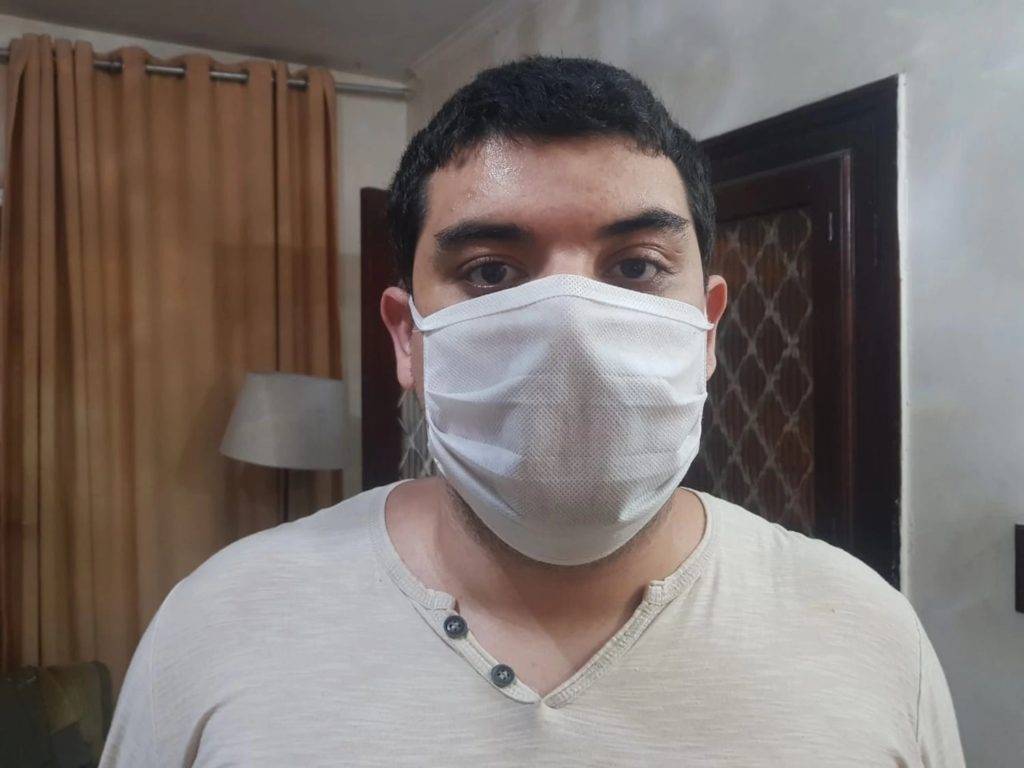
The Ministry of Health’s study points out that only 37 percent of Brazilians comply with the ideal measures to prevent coronavirus. In this calculation, the portfolio considered those who said they had been in social isolation two weeks before the survey interview, had kept their distance from people with symptoms of the disease, had performed regular hand hygiene and of frequently used objects, had followed complementary hygiene practices (such as changing clothes and shoes when coming home and not sharing personal items), had avoided touching their faces and had covered their noses with their elbows when sneezing.
“Considering that 37.5 percent of the adult population in Brazil referred to the concurrent implementation of the aforementioned practices, and considering the current pandemic scenario, strengthening the population’s guidance on protective measures is recommended,” stresses the Ministry of Health.
These are precautions that have been strictly followed by university student Yuri Diniz Arnaut, 22. After he was ordered to be quarantined, he left the capital of São Paulo – where he is studying physical education – and went to his family’s home in São Vicente, in the Baixada Santista coastal region. He adopted all the preventive measures because he cares for his father, 65 years old, who is in the risk group of Covid-19 because of his age. If at the start of the pandemic he felt anxiety and panic attacks for fear of contracting the novel coronavirus, he now has the same symptoms, but on account of the sense of idleness.
“The feelings are still the same, but I think what caused that feeling has changed,” he says. He says he has not sought psychological help due to financial issues and unwillingness. He’s been trying to disconnect himself from social media because he feels more pressured to produce and the discouragement of seeing people breaking quarantine at a critical time like this.
“What has helped me face this are my WhatsApp groups of friends,” he says.
Source: Beatriz Jucá, El País
More: Brazil news in English, every day from The Rio Times.
This article was produced by The Rio Times’ automated newsroom system. How we use AI · Report an error · Editorial responsibility: Matthias Camenzind, Editor-in-Chief