Oil Falls About 4% as Washington Calls the Saudi Pipeline Outage Temporary
Key Facts
- Washington calmed supply fears, saying Saudi Arabia’s damaged East-West pipeline would restart within days. American crude fell about 4% to near US$102 a barrel.
- Saudi Arabia is rerouting crude through Oman while the East-West pipeline is repaired, adding supply flexibility.
- Petrobras New York shares fell 3.95% to US$20.91, dragging Brazil’s deepwater complex lower.
- Argentina’s YPF dropped about 5% in New York, with shale now supplying roughly 72% of the company’s own crude output.
- Guyana’s government take rose to 39.8% of Stabroek Block output including royalties after renegotiation.
- The Errea Wittu FPSO arrived on 20 August and could start producing about 250,000 barrels per day in late 2026.
Today’s Focus
The crude rally snapped on Wednesday, 16 September 2026, after the United States energy secretary said Saudi Arabia’s damaged East-West pipeline would resume operations within days and called the disruption temporary. American crude fell about 4% to around US$102 a barrel, and Brent dropped a similar amount to about US$105. US commercial crude stocks fell by 640,000 barrels to 423.4 million in the week to 11 September, a smaller draw than the market expected, which gave prices no support.
Added supply news came from Saudi Arabia, which is sending more crude through Oman while the East-West pipeline is repaired. Tanker rates have topped US$1 million a day as vessels avoid the Strait of Hormuz, but that friction did not stop the session’s downward move.
For Latin America, the read was immediate and mostly negative. Petrobras shares fell 3.95% to US$20.91, Ecopetrol lost 4.38% to US$17.46, and Argentina’s YPF dropped 5.14% to US$54.65.
Guyana remains the regional bright spot, with the Errea Wittu FPSO on site and operators guiding to a fourth-quarter start-up that could lift the Stabroek Block toward one million barrels per day.
What matters today. A one-day pullback on a repair timetable does not change a market still shaped by Hormuz supply risk and triple-digit crude. Confirmation of Saudi flows through Oman is the next test.
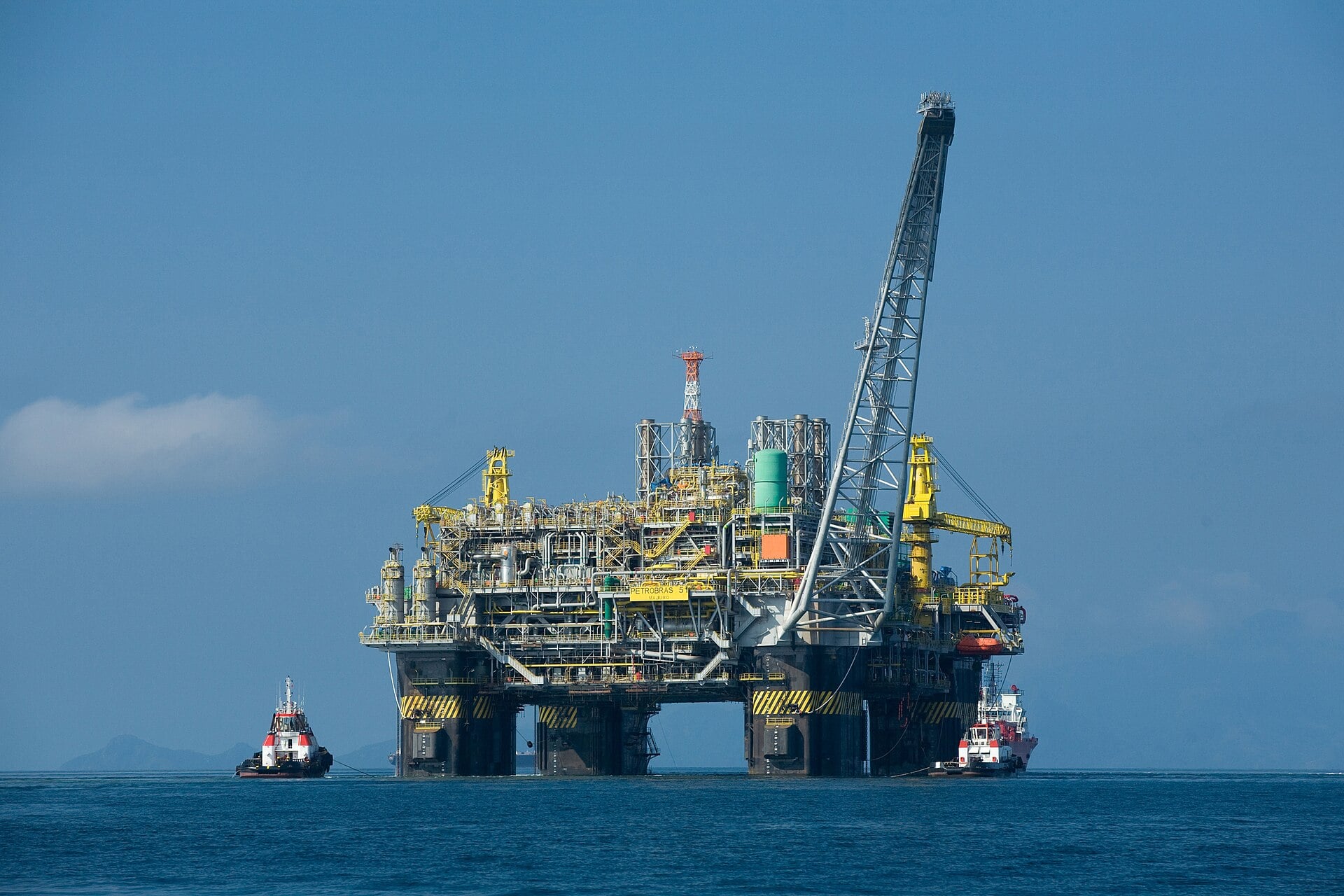
01 The session in one read
Crude tracked lower on Wednesday, 16 September 2026, once Washington signalled that the Saudi pipeline outage was temporary. American crude gave back a slice of the war-risk premium built up over previous sessions, falling about 4% to near US$102. The weekly American stock draw of 640,000 barrels was smaller than expected and added nothing on the bullish side.
The rerouting matters as much as the repair timetable. Saudi Arabia is shipping more crude through Oman while the East-West pipeline is fixed, which tells traders that a key exporter has workarounds even as the Strait of Hormuz remains dangerous.
The clearest driver of Wednesday’s fall was Washington’s message that the Saudi pipeline outage is temporary. But with tanker rates at record highs and Saudi Arabia rerouting exports through Oman, the physical market remains tight. The next test is confirmation of those Oman flows, because any delay would quickly reverse this dip.
02 The board
Every Latin American oil proxy on our board fell harder than the US crude benchmark. Petrobras lost 3.95% to US$20.91, Ecopetrol dropped 4.38% to US$17.46, and YPF slid 5.14% to US$54.65.
That outsized reaction reflects both leverage to crude and local investor caution. YPF carries the added weight of Argentina’s rapid shale transition. Shale now accounts for about 72% of the company’s own crude production, which leaves its valuation more sensitive to short-term price swings.
| Asset | Level | Change |
|---|---|---|
| WTI crude (USO) | US$156.65 | -3.22% |
| Petrobras | US$20.91 | -3.95% |
| Ecopetrol | US$17.46 | -4.38% |
| YPF | US$54.65 | -5.14% |
Source: RT close, 2026-09-16. Where a commodity has no spot feed, an exchange-traded tracker or leading producer is shown as a labelled proxy.
Live Market IntelligenceThe live market board
Rio Times · Live Market Intelligence
Latin America — Cross-Market Board
| Instrument | Last | Change | YoY | Prev. | High | Low | Volume |
|---|---|---|---|---|---|---|---|
| IBOV | 185,547.66 | -0.51% | +21.85% | 186,502.64 | 168,310 | 167,142 | — |
| IPSA | 11,235.54 | -0.77% | — | 11,322.60 | 11,210 | 10,984 | 1,513,213,483 |
| IPC MEX | 63,507.11 | -1.11% | +12.17% | 64,216.98 | 66,121 | 65,405 | 108,886,187 |
| MERVAL | 3,028,871 | -1.65% | +30.51% | 3,022,485 | 3,042,365 | 2,991,150 | — |
| COLCAP | 2,511.76 | -2.16% | — | 9.04 | 9.05 | 9.02 | 4,133 |
| BVL PERÚ | 58,496.57 | +0.80% | — | — | — | — | — |
| USD/BRL | 5.16 | +0.01% | -5.13% | 5.16 | 5.18 | 5.14 | — |
| EUR/BRL | 5.95 | +1.01% | -5.83% | 5.89 | 5.98 | 5.94 | — |
| USD/MXN | 17.06 | -0.24% | -8.58% | 17.10 | 17.08 | 17.01 | — |
| USD/CLP | 913.98 | +0.04% | -5.67% | 913.65 | 915.11 | 906.68 | — |
| USD/COP | 3,140 | +0.03% | -22.04% | 3,139 | 3,141 | 3,105 | — |
| USD/PEN | 3.36 | -0.66% | -4.82% | 3.38 | 3.38 | 3.35 | — |
| USD/ARS | 1,493 | +0.10% | +12.96% | 1,491 | 1,494 | 1,480 | — |
| USD/UYU | 40.27 | +1.24% | +1.80% | 39.77 | 40.27 | 40.23 | — |
| USD/PYG | 5,939 | +1.68% | -19.54% | 5,841 | 5,939 | 5,925 | — |
| USD/BOB | 11.64 | -0.76% | +72.04% | 11.73 | 11.72 | 11.64 | — |
| USD/DOP | 58.34 | +1.25% | -3.44% | 57.62 | 58.34 | 58.04 | — |
| USD/CRC | 445.92 | +0.89% | -9.71% | 441.97 | 448.50 | 445.92 | — |
03 What moved it
The primary catalyst was Washington’s statement that the damaged Saudi East-West pipeline would restart within days, which undercut the previous session’s sharp rally. A weekly American stock draw of 640,000 barrels, smaller than expected, gave prices nothing to lean on and pushed traders to reassess near-term demand strength. Futures retreated even as the physical shipping market hit new extremes.
Tanker rates reached US$1 million a day for the first time as owners demanded enormous compensation to approach the Strait of Hormuz. Saudi Arabia’s decision to route barrels via Oman added the one piece of bearish supply news in an otherwise constrained system.
04 The Latin American read
Brazil’s pre-salt complex and Petrobras remain the region’s reference point for foreign capital. A 3.95% fall in Petrobras shares signals that global funds were taking profit rather than adding exposure during the pullback.
Guyana’s boom is the counterweight. Output in the Stabroek Block, operated by ExxonMobil with 45%, averaged around 914,000 barrels per day in the first quarter, and the government’s take has risen to 39.8% of output including royalties after fiscal renegotiation.
Argentina’s YPF is now more than ever a shale story. With shale at 72% of crude production, Wednesday’s 5.14% drop shows how quickly Vaca Muerta optimism can be repriced when benchmark crude loses ground.
05 The names to watch
Petrobras is the first read on whether the inventory-driven slide becomes a regional equity correction. Its New York shares at US$20.91 are now testing levels that foreign investors watch closely.
In Guyana, the Errea Wittu FPSO arrived on 20 August and is designed for about 250,000 barrels per day. ExxonMobil guides to a fourth-quarter start, while the Guyanese government has said September is possible, a gap that will shape the next output headlines.
ExxonMobil holds 45% of Stabroek, Chevron has 30% after the Hess acquisition, and China’s CNOOC holds 25%. The consortium’s earnings power explains why a one-day crude dip rarely changes the long-term investment calculus.
06 The outlook
The pullback looks more like profit-taking than a structural shift while tanker scarcity and Hormuz avoidance keep physical supply tight. The key test is whether American inventories start building in next week’s data, because a genuine build would challenge the prevailing narrative of relentless tightness.
07 What to watch
- Saudi Oman flows: Whether crude actually moves via Oman promptly will show if the bearish pipeline fix is real.
- US inventory trend: A shift from draws to builds would weaken the case for sustained prices above US$100.
- Errea Wittu start-up: If Guyana’s new FPSO starts in September rather than the fourth quarter, output headlines could turn bullish.
- YPF shale economics: Argentina’s Vaca Muerta drillers need crude to hold above the level that keeps shale exports profitable.
Frequently Asked Questions
Why did oil fall on Wednesday?
The United States said Saudi Arabia’s damaged East-West pipeline would restart within days, which undercut the prior rally, and Saudi Arabia’s plan to export via Oman eased supply fears.
How did Latin American oil shares react?
Petrobras fell 3.95% to US$20.91, Ecopetrol lost 4.38% to US$17.46, and YPF dropped 5.14% to US$54.65.
What is the USO fund?
The USO is an exchange-traded fund that tracks WTI crude futures, so its US$156.65 close reflects the benchmark’s 3.22% daily decline.
Where does Guyana fit in?
Guyana’s Stabroek Block, led by ExxonMobil, is nearing one million barrels per day and the government’s take has risen to 39.8% including royalties.
Market data: RT
This article was produced by The Rio Times’ automated newsroom system. How we use AI · Report an error
LatAm Markets: Live Signals → — real-time movers, turnover leaders and FX across Latin America.
Read More from The Rio Times