Niger Doubles Its Stake in a Big Uranium Project to 40%, Ending a Lawsuit
Key Facts
- The country. Niger is a landlocked Sahel state, south of the Sahara, of about 28 million people. Its economy, about US$22 billion (World Bank, 2025), is smaller than Iceland’s. It has mined uranium since 1971.
- Why it matters. Since a July 2023 coup, a military government has rewritten foreign mining deals. It took projects from France’s state-controlled Orano and from Canada’s GoviEx, unsettling foreign investors.
- Why now. Uranium demand is firming as countries extend and build reactors. Western lenders are returning: on 16 September a US government lender conditionally approved up to US$414 million for another Niger mine.
- What happened. On Wednesday, 23 September 2026, Niger signed a mining convention for Madaouela with Australian-listed Atomic Eagle. The state’s stake doubles from 20% to 40%, and the company drops its arbitration claim.
- Who is involved. Atomic Eagle, the renamed Tombador Iron, absorbed GoviEx in November 2025. It keeps 60% and operational control. Mines Minister Colonel-Commissioner Abarchi Ousmane signed for Niger.
- What it means for you. Investors see that negotiation can recover a seized asset, at the price of a bigger state share. Travellers should note that Western governments warn against travel to most of Niger.
- Still open. Whether the arbitration is formally withdrawn, when an estimate under Australian rules appears, and how Niger funds its 25% paying share.
Niger has doubled its stake in the Madaouela uranium project to 40%. The deal ends a two-year legal fight with the Australian-listed miner Atomic Eagle.
Niger, a West African country run by a military government since 2023, is one of the world’s oldest uranium producers. Its mines around the desert town of Arlit have fed French and European nuclear plants for five decades.
Madaouela lies near Arlit, in the Agadez region of northern Niger. Canada’s GoviEx spent some US$160 million developing it before the junta took the permit away in July 2024.
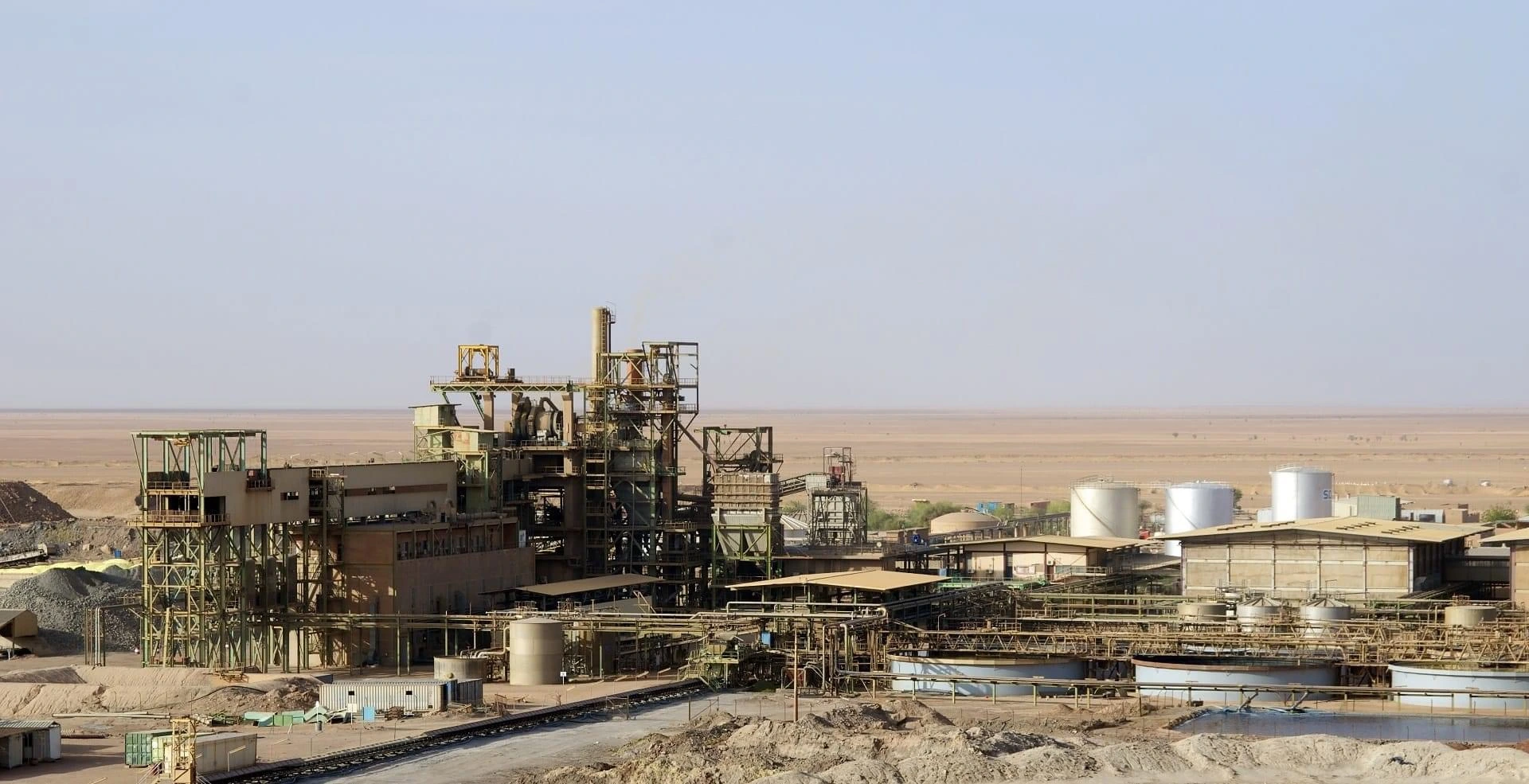
What was signed in Niamey
The mining convention was signed on Wednesday, 23 September, in Niamey, the capital. Mines Minister Colonel-Commissioner Abarchi Ousmane signed for Niger, and Chief Executive Phil Hoskins for Atomic Eagle.
A mining convention is the contract that fixes a project’s tax, legal and operating rules for years. This one took effect on signing and runs for an initial ten years, with renewal provisions.
The exploitation permit is held by Madaouela Mining Company, known as MAMICO. Atomic Eagle owns 60% and keeps operational control, while the state owns 40%.
The state’s share has two parts. Fifteen points are “free-carried”, meaning the company funds them; 25 points are “contributing”, so Niger must pay its share of costs.
Atomic Eagle will pay Niger US$5 million within 30 days of signing and another US$5 million when construction starts. Stabilisation clauses mean later tax or legal changes should not apply to the project.
Niger may buy and market output up to its 40% share. In certain circumstances it may requisition up to half, but it cannot override sales contracts MAMICO has already signed.
Niger “has prioritized dialogue and negotiation to usher in a new phase based on partnership and development”, the mines ministry said. Reuters reported that it did not disclose the financial terms.
How the dispute began
GoviEx, based in Vancouver, began work in Niger in 2007 and published a feasibility study for Madaouela in late 2022. Under its old arrangement, the state held 20% and the company 80%.
In July 2024, a year after the coup, the government told GoviEx it no longer held the permit. Officials had pressed for faster development; GoviEx said the legal withdrawal procedure was not followed.
In December 2024 GoviEx filed a claim at the World Bank’s International Centre for Settlement of Investment Disputes (ICSID). The two sides paused the case in early 2025 and signed a negotiating roadmap on 18 February 2025.
GoviEx then combined with Australian-listed Tombador Iron in November 2025, and Tombador renamed itself Atomic Eagle. A framework settlement followed on Monday, 24 August 2026.
Under the August terms, the arbitration is to be withdrawn within seven days of the convention’s signing. Atomic Eagle said on 24 September that it would now take the steps required to discontinue it.
Madaouela and the Orano precedent
Madaouela contrasts sharply with the fate of Orano, France’s state-controlled nuclear fuel group. Niger withdrew Orano’s permit for the giant Imouraren deposit in June 2024.
In June 2025 the junta nationalised Somaïr, the Arlit mine that began production in 1971 under French control. Orano has turned to international arbitration against Niger, and that fight continues.
Atomic Eagle chose a different path. It gave up 20 percentage points of equity and got its asset back, with a new permit and stabilised terms.
The lesson for other miners is that Niger is not nationalising everything. Operators willing to accept a larger state share can still reach a deal.
How big is the deposit
GoviEx estimated the Madaouela uranium resource at 116.5 million lb of uranium oxide (U3O8), the concentrate sold to nuclear fuel makers. That is a weight, not a sum of money: roughly 53,000 tonnes.
Of that total, 96.9 million lb sits in the better-defined measured and indicated categories, and 19.6 million lb is inferred. The estimate was prepared under Canadian rules known as NI 43-101.
The Australian stock exchange treats it as a “foreign estimate” until it is restated under the Australasian JORC Code. Atomic Eagle aims to publish a JORC resource by the end of 2026.
Atomic Eagle also owns the Muntanga uranium project in Zambia. The company says it is weighing development, funding and partnership options for both assets.
Why uranium, why now
Demand for uranium has firmed as governments extend old reactors and plan new ones. Supply from Niger, meanwhile, has been disrupted by the Orano dispute and by insecure export routes.
Niger produced about 158,900 tonnes of uranium in total up to 2024, according to the World Nuclear Association. Its deposits sit in the Tim Mersoi Basin around Arlit, alongside Imouraren and the Dasa project.
On 16 September Canada’s Global Atomic reported a conditional loan approval of up to US$414 million for Dasa. The lender is the US International Development Finance Corporation (DFC).
Conditions include a viable export route and a direct agreement with Niger.
That approval comes two years after the junta ordered American troops out of the country. Atomic Eagle called it an encouraging sign but stressed that it applies only to Dasa.
What this means for investors and visitors
For mining investors, the Madaouela uranium deal shows that a seized asset can be recovered by negotiation rather than litigation. The price was a quarter of the company’s stake, plus up to US$10 million in payments.
The risks remain real. Export routes to the coast cross insecure territory, and the Orano cases show how quickly relations with a foreign operator can collapse.
For travellers, Western governments warn against travel to most of Niger because of armed groups and kidnapping risk. Business visits are largely confined to Niamey, where the foreign community is small.
What Is Not Known
It is not yet confirmed that the ICSID case has been formally discontinued. No timetable for construction, financing or first production has been published.
Beyond a US$40 million credit from Atomic Eagle against its future contributions, Niger has not said how it will fund its 25% contributing share. Nor is it clear whether Madaouela and Dasa will compete for the same export route and lenders.
Frequently Asked Questions
What is the Madaouela uranium project?
A large undeveloped uranium deposit near Arlit, in Niger’s northern Agadez region. It holds an estimated 116.5 million lb of uranium oxide, a figure still to be restated under Australian reporting rules.
What does Niger get from the new deal?
Its stake doubles from 20% to 40%: 15% free-carried and 25% contributing. Atomic Eagle pays US$5 million within 30 days of signing and US$5 million more when construction starts.
What happens to the arbitration case?
GoviEx filed the case at ICSID, the World Bank’s investment disputes centre, in December 2024. It was paused in early 2025, and Atomic Eagle is now taking the agreed steps to discontinue it.
Who is Atomic Eagle?
An Australian-listed uranium company, formerly Tombador Iron, which combined with Canada’s GoviEx in November 2025. It also owns the Muntanga uranium project in Zambia.
Sources
Atomic Eagle ASX announcement via SightLine U3O8 — Madaouela Mining Convention formally executed with Republic of Niger (24 September 2026) · World Nuclear News — Agreement clears way for resumption of Niger uranium project (25 September 2026) · Miningmx, citing Reuters — Niger doubles stake in Madaouela uranium project (24 September 2026) · World Nuclear News — Atomic Eagle reaches agreement on Niger uranium project (24 August 2026) · Miningmx — Atomic Eagle returns to Niger’s Madaouela uranium project (24 August 2026) · World Bank — Niger population and GDP data (2025)
This article was produced by The Rio Times’ automated newsroom system. How we use AI · Report an error
Read More from The Rio Times