Moody’s: deposits in Uruguay are 76% in US dollars, the highest in Latin America
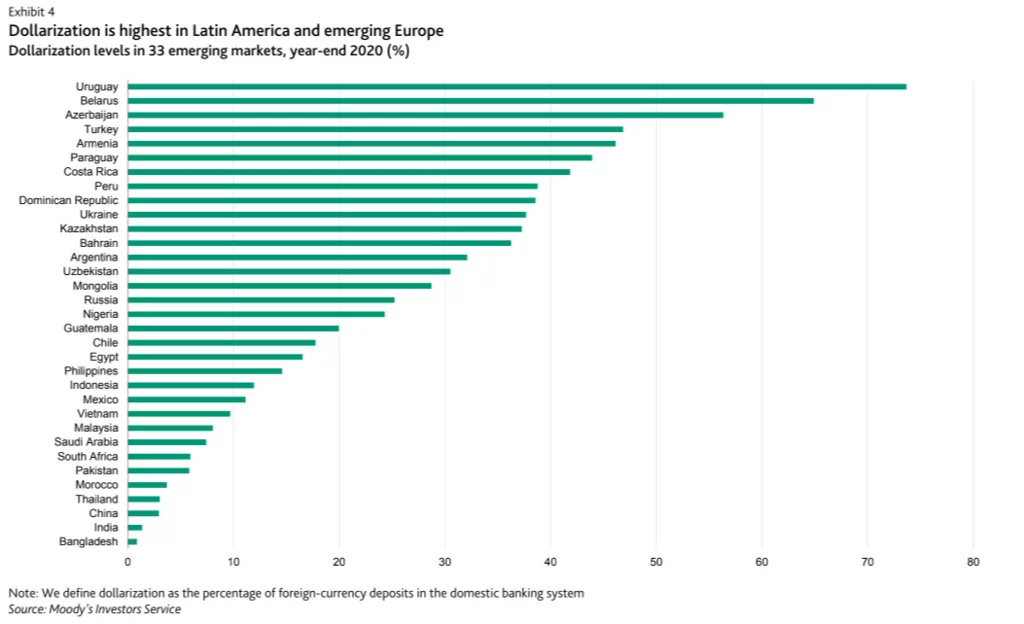
RIO DE JANEIRO, BRAZIL – In Latin America, at the end of 2020, Uruguay had the highest level of dollarization with 74% of deposits, followed by Paraguay, Costa Rica, and Peru with 44%, 42%, and 39%, respectively, according to a report by Moody’s risk rating agency. The agency defines dollarization as the percentage of foreign currency deposits over the total in the domestic banking system.
The phenomenon is most marked in Latin America, emerging Europe, and the Commonwealth of Independent States (CIS) – former Soviet states. In emerging Europe, Belarus and Azerbaijan top the list with figures of 65% and 56%, with Turkey (47%), Armenia (46%), and Ukraine (38%) also in the top five.
The rating agency does not expect Uruguay’s dollarization rate to decline in the coming years. “High inflation and continued peso depreciation will continue to drive Uruguayan savers to the safety of dollars,” the agency projected. As a result, “approximately 76% of bank deposits are in dollars as of September 2021.”
In addition, “non-resident deposits, mainly from Argentine savers, had a share of around 10% of the system’s total. The proportion has declined in recent years, although it remains higher than in neighboring countries,” the report noted.
For Moody’s, high dollarization means long-term risks for banks and is very difficult to reverse. “Normally, regaining confidence in the local currency and gradually reducing loans and deposits in dollars takes many years of strong policies, even when macroeconomic conditions have stabilized and inflation has declined,” said the publication.
However, in the Uruguayan case, several factors shield the banking system from the risks of high dollarization. The rating agency highlighted the country’s large volume of international reserves and a mostly positive trade balance since 2016, which relieves pressure on reserves. It also opined that the BCU’s last four interest rate hikes – which took the Monetary Policy Rate from 4.5% to 6.5% – will help protect the national currency from depreciation.
The report was prompted by concerns about the effects of U.S. inflation-fighting policy on the most dollarized economies. “As U.S. interest rates rise, capital flows to emerging economies are likely to slow, negatively impacting economic growth in those countries and weakening their currencies,” the document warned.
More: Brazil news in English, every day from The Rio Times.
This article was produced by The Rio Times’ automated newsroom system. How we use AI · Report an error · Editorial responsibility: Matthias Camenzind, Editor-in-Chief