Mexico Gives Movistar Buyer Six Months to Close Deal

BUSINESS · MEXICO
Key Facts
- —The country Mexico, where Spain’s Telefónica runs Movistar, the third-largest mobile operator when the sale was announced in April, El Economista reported.
- —What happened The competition authority approved the US$450 million sale to a US-led consortium and gave the parties six months to close, Expansión and El Economista reported on 2 October.
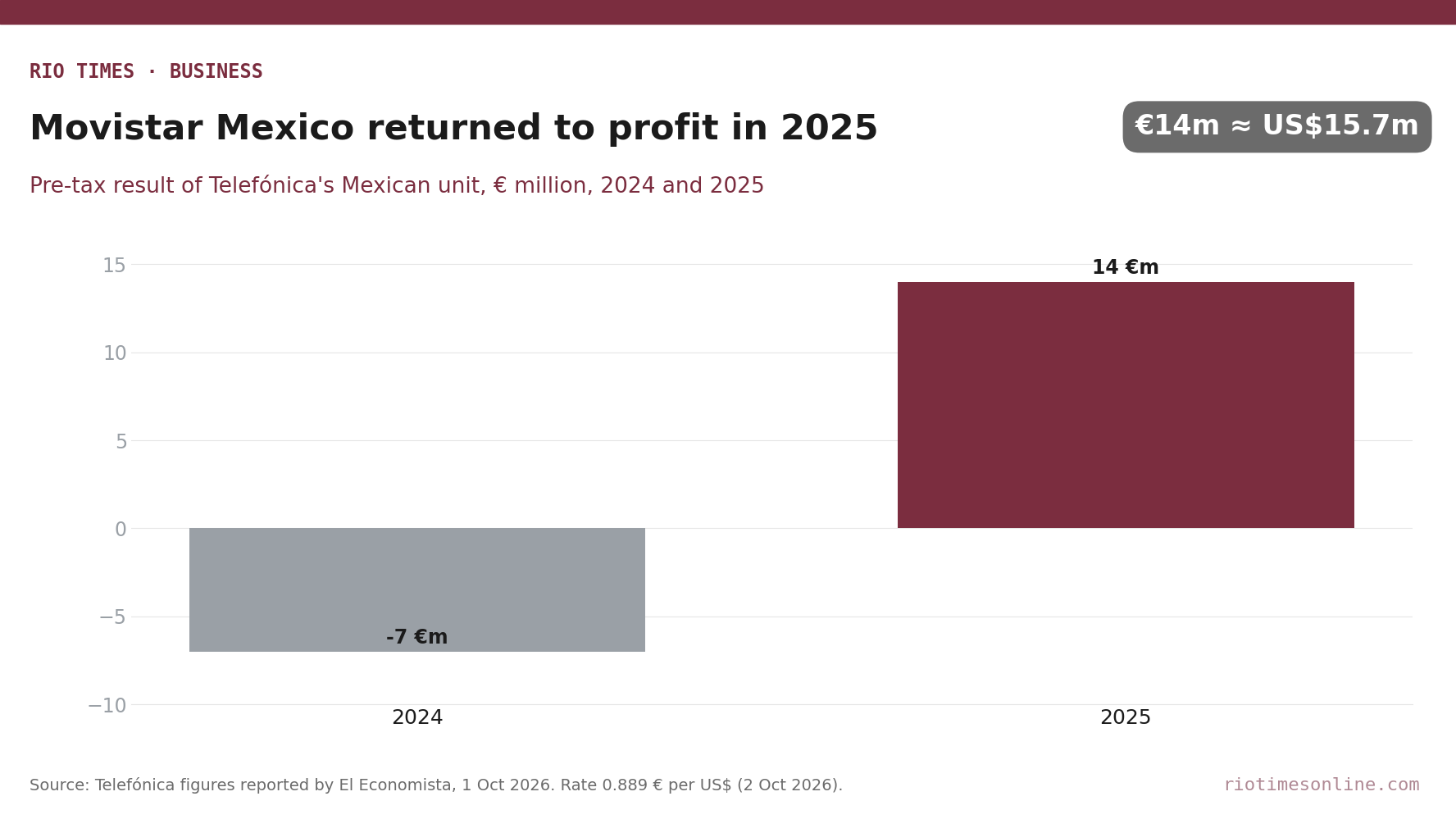
- —The numbers Movistar Mexico had 20.1 million customers (Expansión, 1 October) and more than 1,500 staff. Its 2025 pre-tax profit was €14 million (about US$15.7 million), El Economista reported.
- —What it means for you Movistar lines keep running on AT&T’s network. The buyer says it will keep that wholesale deal, which runs to 2030.
- —Still open Whether other regulators, including the telecoms regulator, must still sign off, and the final price after adjustments.
The Telefónica Movistar sale in Mexico has cleared competition review, and the buyers now have six months to close it. Mexico’s new antitrust body, the National Antimonopoly Commission (CNA), set the deadline in a resolution reported on 2 October.
The buyer is Melisa Acquisition, a consortium led by US firm OXIO and Newfoundland Capital Management. It agreed in April to pay US$450 million for Telefónica’s Mexican business.
What the regulator decided
The CNA found the deal had “few probabilities” of harming competition, according to the public version of file CNT-106-2026. Both Expansión and El Economista reported the terms from that resolution.
The commission’s board approved the merger on 24 September with four votes in favour, Expansión reported. The parties had formally notified the deal on 28 May.
The approval is valid for six months from the business day after notice takes effect. Expansión puts the closing deadline in March 2027.
The term can be extended once, for a similar period, if justified. With that extension, El Economista calculates a final deadline in the last week of September 2027.
What OXIO is buying
The Telefónica Movistar deal covers all shares in Pegaso PCS and Celular de Telefonía, the two companies that make up Telefónica México. Through Pegaso, the buyer also gets a stake in GTAC, a fibre-optic network, though the size is redacted.
Movistar handed back its mobile spectrum and no longer runs a national access network. Since 2019 it has operated as a virtual operator hosted on AT&T’s infrastructure.
It keeps its network core, customer systems and service centres. Expansión counts 20.1 million prepaid and postpaid customers; the headline of its 2 October report rounded this to 21 million.
The unit improved before the sale. Its pre-tax result went from a €7 million loss (about US$7.9 million) to a €14 million profit in 2025, El Economista reported.
Euro figures use 0.889 euros per US dollar, the rate at the close on 2 October. The same report said the unit lost customers, revenue and market share over that year.
Why Telefónica is leaving
The Telefónica Movistar sale is part of the group’s retreat from Spanish-speaking Latin America. The group wants to focus on Spain, Brazil, Germany and the United Kingdom.
It has already sold units elsewhere, including its Chile business. In Mexico it faces a market dominated by América Móvil, which leads in users, revenue and infrastructure.
OXIO plans to move the operation onto a cloud platform and add satellite links and artificial intelligence services. In September it said customer data would be stored in Amazon Web Services data centres in Querétaro.
What happens after closing
Once the deal closes, both companies have 30 business days to prove it to the CNA. They must also file data showing the final value of the transaction in Mexico.
Telefónica said in April that the price was subject to adjustment. Missing the filing could bring daily fines, the resolution warns.
What Is Not Yet Known
The CNA says its resolution does not prejudge permits from other authorities. When the deal was announced, Telefónica named the telecoms regulator, the Telecommunications Regulatory Commission (CRT), as another approval needed.
Neither company has said publicly whether that approval has been granted. The final price and the exact closing date also remain unannounced.
Sources: Expansión (2 Oct 2026); Expansión (1 Oct 2026); El Economista (2 Oct 2026); El Economista (1 Oct 2026).
This article was produced by The Rio Times’ automated newsroom system. How we use AI · Report an error · Editorial responsibility: Matthias Camenzind, Editor-in-Chief
In depth
LatAm Markets: Live Signals → — real-time movers, turnover leaders and FX across Latin America.