Madagascar’s Military Steps In After Parliament Moves To Oust Rajoelina
Madagascar has entered a rare moment when street anger, collapsing services, and a constitutional showdown all converged.
After weeks of youth-led protests over blackouts, dry taps, corruption, and poor governance, the National Assembly voted to impeach President Andry Rajoelina.
Minutes later, an elite army faction said on national radio that it was assuming control and would steer a transition. Rajoelina, who had tried to preempt the vote by posting a decree on Facebook dissolving the Assembly, left the country citing threats to his life.
The spark was practical, not ideological: people were fed up with daily basics failing. But the crisis quickly became a struggle over who holds legitimate authority—Parliament with its impeachment, the presidency with a social-media decree, or the military claiming to restore order.
That tug-of-war matters because it determines who commands the security forces, signs budgets, and negotiates with donors.
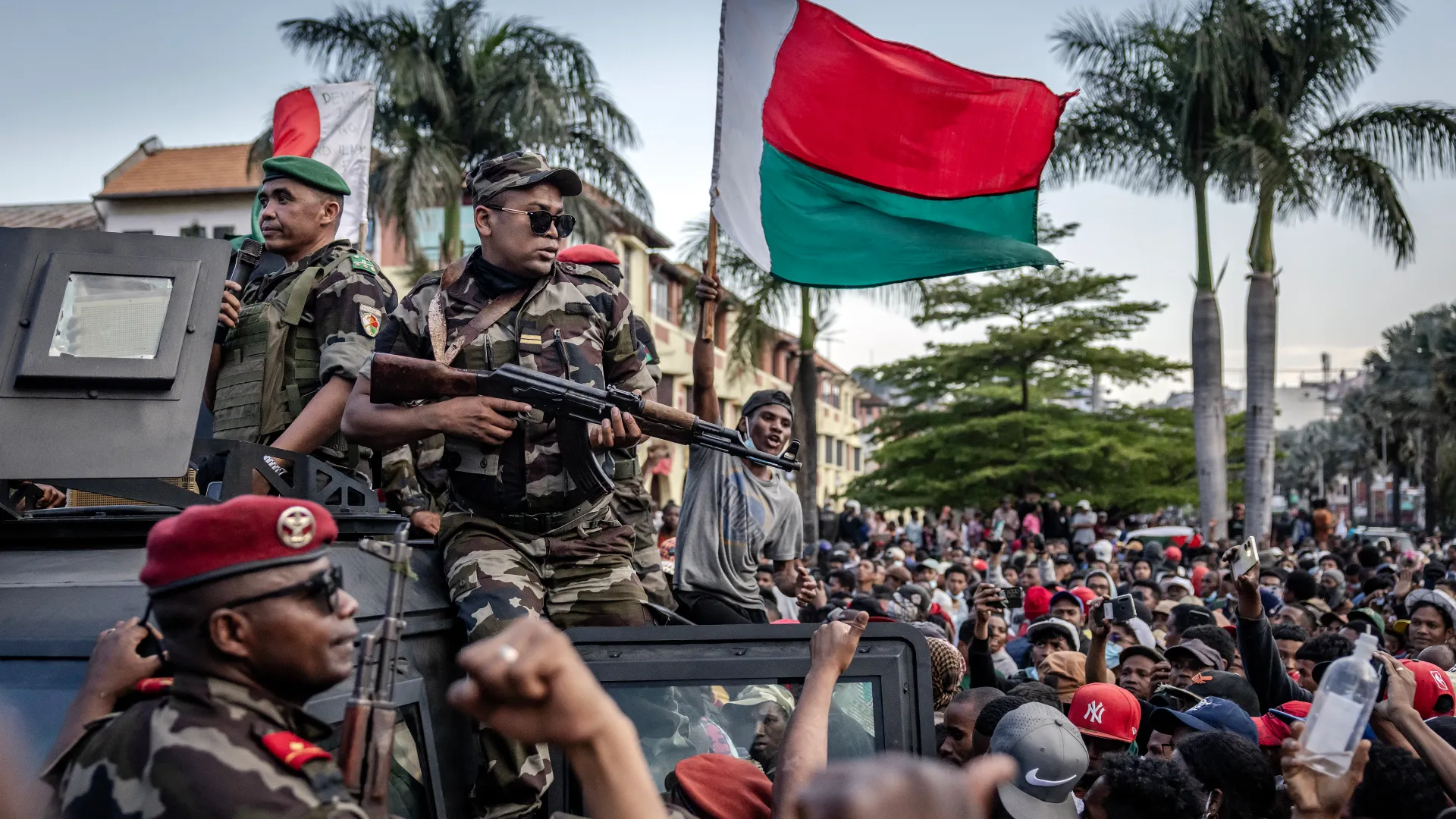
The army figure at the center is Colonel Michael Randrianirina of CAPSAT, the same unit that helped propel Rajoelina to power in 2009 and this time swung behind demonstrators—escorting crowds and refusing to fire.
The movement’s stage was Antananarivo’s May 13 Square, where thousands gathered daily, many from Gen-Z circles waving a skull-and-crossbones banner that has become their signature.
Anger also tapped into resentment over Rajoelina’s ties to France; officials and diplomats say he departed aboard a French military aircraft.
Behind the street scenes lies a deeper story. Madagascar is a nation of roughly 30 million people, with a median age under 20 and about three-quarters living in poverty. Per-capita income has fallen since independence.
That fragility makes any power vacuum risky: it can scare off investment, disrupt aid programs, and unsettle exports such as vanilla, a mainstay of foreign earnings.
What happens next will set the tone for years. A swift, credible, civilian-led transition with clear dates could stabilize prices, keep donors engaged, and calm the streets.
A prolonged duel between rival authorities would drain confidence, worsen service failures, and leave households and businesses—already stretched—shouldering the cost of uncertainty.
This article was produced by The Rio Times’ automated newsroom system. How we use AI · Report an error · Editorial responsibility: Matthias Camenzind, Editor-in-Chief
Part of our ongoing coverage
Africa: The New Scramble — the great-power contest over the continent.