Mexico · Expat City Guide
Key Facts
- Budget. Most expats live comfortably on about US$1,100 to US$1,500 a month, including rent.
- Housing. A one-bedroom apartment in the historic centre runs roughly US$500 to US$800, often with bills included.
- Safety. Mérida is consistently ranked the safest city in Mexico, and Yucatán has the country’s lowest homicide rate.
- Residency. Temporary residency generally needs about US$4,400 a month in income, or around US$72,000 in savings, proven to a Mexican consulate.
- Community. An estimated 4,000 to 6,000 foreign residents live here, mostly from the United States, Canada, and Europe.
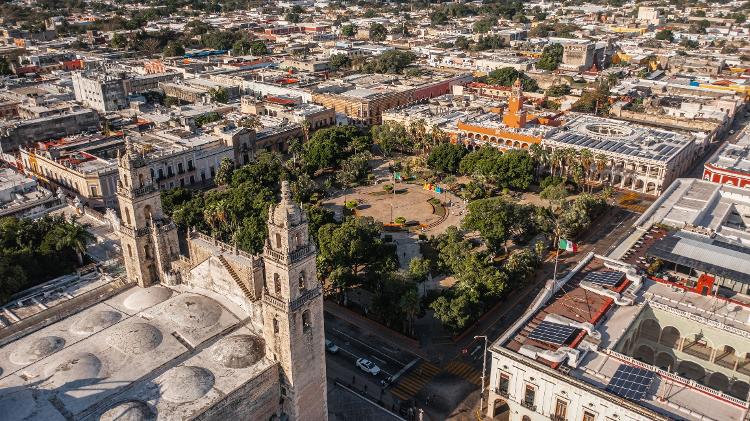
Mérida, the capital of Mexico’s Yucatán state, has quietly become one of the country’s most popular places to settle for retirees, remote workers, and families. The draw is a rare combination: colonial charm, a deep Maya cultural identity, a genuinely low cost of living, and a safety record that surprises almost everyone who arrives. Here is what you need to know about living in Mérida as an expat in 2026.
Cost of living in Mérida
Mérida remains one of the better-value cities in Mexico. A single person can live comfortably on about US$1,100 to US$1,500 a month, and couples not much more.
Utilities for a typical apartment run around US$60 a month, fast home internet is about US$25 to US$30, and groceries for two come to roughly US$350. One thing to keep in mind: a weaker peso and rising rents in the centre mean your money does not stretch quite as far as it did a few years ago, with the exchange rate sitting near 17.4 pesos to the US dollar in mid-2026.
Where to live: the best neighbourhoods
The historic Centro is where most newcomers start, with its grand old houses, walkable streets, and the highest concentration of cafés, restaurants, and fellow foreigners. Nearby Santa Ana and Santiago are quieter but just as central and full of character.
García Ginerés, a leafy area near Paseo de Montejo, is a long-time favourite for its calm, residential feel. Families and those who want a modern home with a pool tend to head north to areas like Altabrisa and Cabo Norte, where the housing is newer and the malls and hospitals are close.
Visas and residency
Most expats who stay long term apply for temporary residency, which is renewable and can lead to permanent residency. You qualify mainly by proving financial solvency at a Mexican consulate in your home country, generally by showing monthly income of about US$4,400 over the previous six months, or savings of roughly US$72,000 held over the past year.
These figures are tied to a Mexican benchmark called the Unidad de Medida y Actualización (the Unit of Measure and Update), set at 117.31 pesos (about US$6.70) for 2026, so they shift a little each January. Fees rose in 2026, and every consulate applies the rules slightly differently, so it is worth checking with the specific one you will use before you book an appointment.
Healthcare
Healthcare is one of Mérida’s pleasant surprises. The city is a recognised medical-tourism hub with several well-regarded private hospitals, including the long-established Clínica de Mérida, and well-trained, often English-speaking doctors.
Care typically costs 50 to 70 percent less than in the United States, which is a major reason retirees feel comfortable here. Many expats pay out of pocket for routine visits and carry private insurance for anything larger.
Safety
Safety is the single biggest reason people choose Mérida over other Mexican cities. It is regularly ranked the safest city in the country and among the safest in the Americas, and Yucatán’s homicide rate of around two per 100,000 is comparable to Canada’s.
The popular expat neighbourhoods are well-lit, walkable, and calm at night. None of this means switching off common sense, but the day-to-day feeling of security is what keeps long-stayers here.
Nightlife, food, and culture
Mérida’s social life centres on Calle 60 and the grand Paseo de Montejo, where cantinas, mezcalerías, rooftop bars, and casual restaurants draw a mix of locals and foreigners. What expats consistently praise is the balance: unlike resort towns, the bars here still feel like places residents actually use, and that crossover between meridanos and newcomers is the social glue of the city.
Add free weekend concerts, a strong Maya food scene, and easy weekend trips to cenotes and the coast, and the lifestyle is hard to beat for the price.
Building a life here
The foreign community in Mérida is large enough to plug into quickly but not so large that it crowds out local life. Newcomers find their footing through neighbourhood cafés, Spanish classes, and active online groups, and many say the Centro is the easiest place to meet people in the first few months.
Spanish goes a long way day to day; while you will find English in expat circles and private healthcare, learning the basics opens far more doors.
More: Latin America news in English, every day from The Rio Times.
Frequently Asked Questions
How much does it cost to live in Mérida as an expat?
Most expats live comfortably on about US$1,100 to US$1,500 a month including rent. A one-bedroom apartment in the centre runs roughly US$500 to US$800, utilities about US$60, internet US$25 to US$30, and groceries for two around US$350.
Is Mérida safe?
Yes. Mérida is consistently ranked the safest city in Mexico, and Yucatán has the country’s lowest homicide rate, around two per 100,000 — comparable to Canada.
The main expat neighbourhoods are walkable and calm at night.
What do I need for residency in Mexico from Mérida?
Temporary residency generally requires proving monthly income of about US$4,400 over six months, or savings of roughly US$72,000 over a year, at a Mexican consulate. Requirements are tied to the UMA benchmark and vary slightly by consulate, and fees rose in 2026.
Which neighbourhoods are best for expats?
Centro is the most popular starting point, with Santa Ana, Santiago, and García Ginerés close behind for a quieter but central feel. Families often prefer the modern north, around Altabrisa and Cabo Norte.
Where is the nightlife in Mérida?
The bar and restaurant scene centres on Calle 60 and Paseo de Montejo, where cantinas, mezcalerías, and rooftop spots draw both locals and the city’s foreign community. Centro is the easiest area to start and to meet people.
This article was produced by The Rio Times’ automated newsroom system. How we use AI · Report an error · Editorial responsibility: Matthias Camenzind, Editor-in-Chief
The Mérida Guide
What The Rio Times publishes for foreigners in Mérida, Mexico.
This month
Coming up in Mérida
Living in Mérida
- Three New Cafés in Mérida Worth a Visit for Expats and Nomads
- Mexico’s Mérida Earns Top AAA Credit Rating on Budget Surplus
Understand Mexico