Liberia Is About to Ship Four Times the Iron Ore It Used To
LIBERIA · MINING
Key Facts
- —The investment ArcelorMittal’s expansion costs US$1.8 billion, raising total investment to US$3.5 billion, largest since civil war.
- —The payment In early 2026, the company paid US$200 million for mining rights and reserved railroad access.
- —The volumes Shipments rise from 5 million tonnes yearly to 20 million in 2026, targeting 25-30 million.
- —The infrastructure Rail and port capacity expands to 30 million tonnes yearly, from Nimba county to Buchanan port.
- —The legal change A mining code rewrite would raise state’s equity stake in projects from 10-15% today toward 25% goal.
- —The catch The World Bank calls Liberia’s 2025 growth of 5.1% jobless, since it did not translate into more jobs.
ArcelorMittal’s Liberia iron ore expansion will raise shipments from about five million tonnes a year to nearly twenty million. The US$1.8 billion project brings the company’s total commitment to US$3.5 billion.
Liberia aims for 25 to 30 million tonnes. The World Bank has already called the growth jobless.
What the Liberia iron ore expansion involves
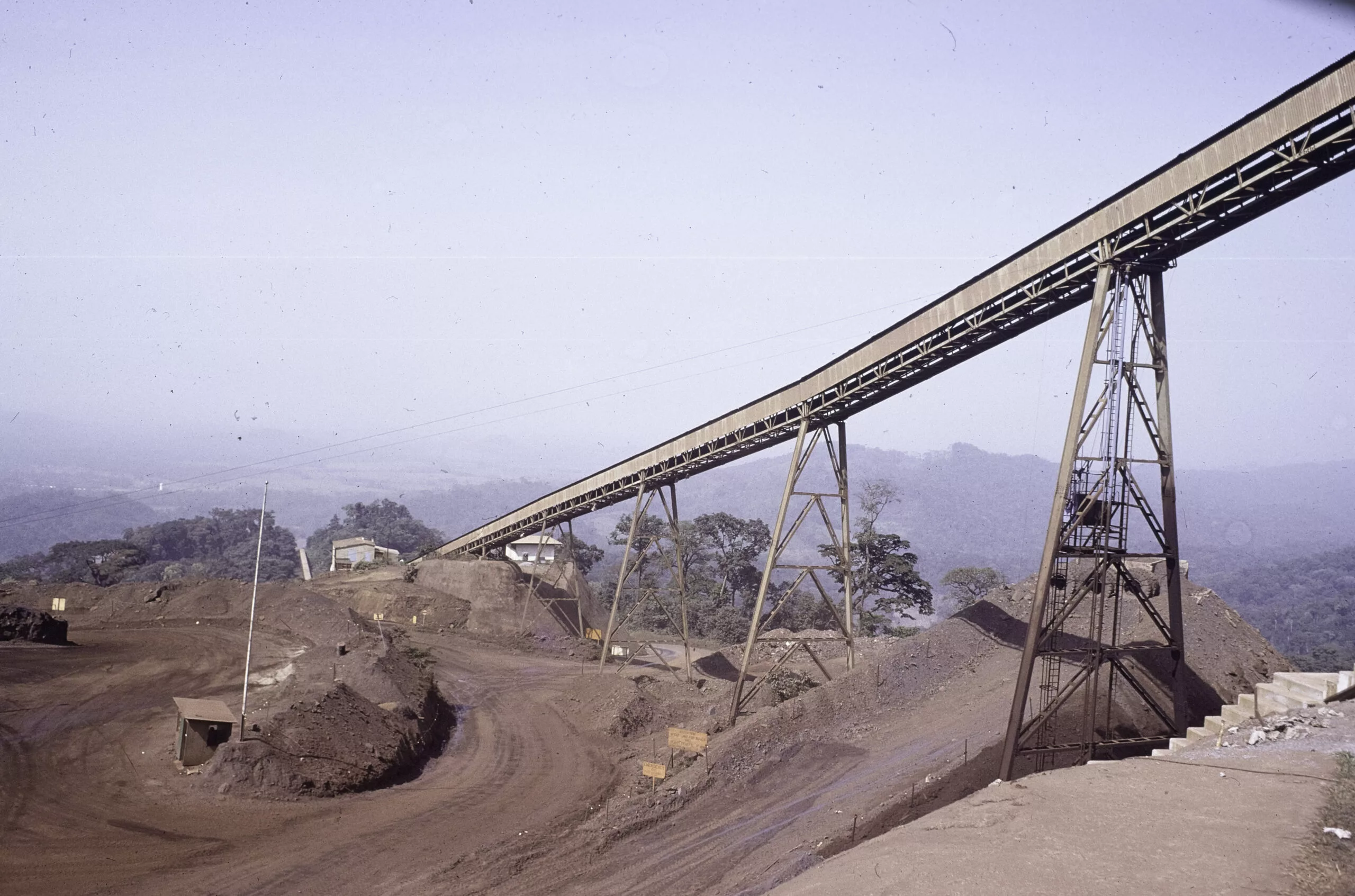
ArcelorMittal has been mining in Nimba county since taking over ground originally developed by the LAMCO consortium in the 1960s. The corridor runs by rail from the highlands to the port of Buchanan.
This phase is a US$1.8 billion expansion of mine, rail, and port capacity, under a mining deal that now runs to 2050. It lifts total investment to US$3.5 billion, the largest since the civil war ended.
In Q1 2026, the company paid the government US$200 million. This covered a mining rights extension and reserved railroad access.
The railroad access is as valuable as the mining rights.
Rail and port works are sized for up to 30 million tonnes a year. Shipments are moving from roughly 5 million tonnes historically towards 20 million this year.
The railway is the real asset
In West African iron ore, the constraint is almost never the ore. It is the several hundred kilometres between an inland deposit and a deep-water berth.
That is why the payment covered reserved railroad capacity explicitly. Whoever controls the line controls which deposits are economic and which are not.
Liberia’s mining code rewrite would open that corridor to other users and raise the state’s stake in projects toward 25 percent. Multi-user rail access is the difference between one mine and a mining province.
The comparison with Guinea’s Simandou project is unavoidable. Both are cases where the railway, not the geology, determined the timetable.
Live Market IntelligenceCommodities — Live Market Board
Rio Times · Live Market Intelligence
Commodities — Live Market Board
-0.03%
| Instrument | Last | Change | YoY | Prev. | High | Low | Volume |
|---|---|---|---|---|---|---|---|
| GOLD | 4,461 | +1.78% | +33.20% | 4,383 | 4,503 | 4,421 | 139,824 |
| SILVER | 65.59 | +1.26% | +73.05% | 64.77 | 66.98 | 64.81 | 46,406 |
| BRENT | 88.88 | -0.03% | +34.42% | 88.91 | 90.07 | 88.12 | 29,713 |
| WTI | 83.11 | -0.11% | +31.57% | 83.20 | 84.35 | 82.40 | 166,848 |
| COPPER | 6.61 | +0.03% | +46.70% | 6.61 | 6.71 | 6.61 | 39,543 |
| LITHIUM | 75.20 | +1.47% | +62.95% | 74.11 | 75.80 | 75.08 | 89,275 |
| IRON ORE | 161.91 | — | +58.10% | 161.91 | 161.91 | 1 | |
| SOY | 1,184 | +3.20% | +17.05% | 1,148 | 1,199 | 1,168 | 163,179 |
| CORN | 480.50 | +10.02% | +29.34% | 436.75 | 480.75 | 459.50 | 341,248 |
| WHEAT | 655.00 | +3.93% | +29.70% | 630.25 | 657.75 | 631.50 | 128,793 |
| COFFEE | 317.25 | -5.51% | +0.67% | 335.75 | 321.20 | 313.55 | 21,747 |
| SUGAR | 16.43 | -1.79% | -3.01% | 16.73 | 17.11 | 16.22 | 171,992 |
| COCOA | 5,719 | +3.18% | -34.96% | 5,543 | 5,779 | 5,574 | 26,773 |
| ORANGE JUICE | 138.55 | -0.47% | -45.38% | 139.20 | 141.05 | 137.50 | 703 |
| COTTON | 85.03 | +2.33% | +26.78% | 83.09 | 82.90 | 81.96 | 16,546 |
| BEEF | 223.60 | -3.93% | -5.18% | 232.75 | 226.40 | 223.00 | 16,126 |
| CATTLE | 339.10 | -3.16% | -1.82% | 350.17 | 345.50 | 338.60 | 10,164 |
| USD/BRL | 5.16 | +0.01% | -5.13% | 5.16 | 5.18 | 5.14 | — |
Growth that has not reached households
The World Bank has described Liberia’s 2025 growth of 5.1 percent as jobless, since it did not create many new jobs. Modern open-pit mining uses heavy machinery, not large workforces.
ArcelorMittal directly and indirectly employs around 8,000 people in Liberia, a modest number for a project of this size. Royalties and taxes, not payroll, are meant to carry the benefits to the wider country instead.
That depends entirely on collection and on how the fiscal terms were written. Liberia has also faced domestic scrutiny over missing revenue from higher iron ore volumes.
The pattern is one Latin American readers know from Peru and Chile. Extraction booms raise national accounts long before they raise living standards, and sometimes never do.
Liberia has also taken a seat at the Security Council
Separately from mining, Liberia started a two-year term on the UN Security Council on 1 January 2026.
It won 181 votes in the General Assembly for this non-permanent seat.
It is the country’s first seat since 1961, and it will chair the Council in December. For a state that spent the 2000s as a subject of Security Council resolutions, that is a reversal worth noting.
The two developments are connected in a practical way. A government seeking large-scale foreign investment benefits from the diplomatic visibility a Council seat provides.
President Joseph Boakai has framed both as evidence of international reengagement. The test is whether either converts into domestic capacity.
The risks in a single-investor economy
Liberia’s mining sector is effectively one company plus prospects. That concentration means the national growth rate is a function of one firm’s capital allocation decisions.
ArcelorMittal is a global producer with assets across several continents and reports quarterly to public markets. A downturn in steel demand is transmitted directly to Monrovia.
Iron ore prices have been volatile through 2026, with Chinese steel demand the dominant variable. Every tonne Liberia ships is priced by decisions made in Asia.
The mitigation is new entrants under the rewritten law. Until they arrive, the country’s fortunes are tied to one balance sheet.
Guinea and Sierra Leone are competing for the same investors on the same coast. Capital allocated to one corridor is capital not allocated to another.
What to watch next
The first thing is actual shipped volumes against the 20 million tonne target, which is a large step up from historic levels.
The second is whether the rail corridor is genuinely opened to third parties, which determines whether other deposits become viable.
The third is whether royalty receipts appear in the budget at the scale the expansion implies.
Frequently Asked Questions
How much is ArcelorMittal investing in Liberia?
The current expansion costs US$1.8 billion. This brings the company’s total investment in the country to US$3.5 billion.
It is the largest since the civil war.
How much iron ore will Liberia export?
Shipments are rising from about 5 million tonnes a year to 20 million in 2026. The country targets 25 to 30 million tonnes.
What did the US$200 million payment cover?
It was paid in the first quarter of 2026 for a mining rights extension and for reserved access to railroad capacity.
Is the growth creating jobs?
The World Bank has described Liberia’s 2025 growth as jobless. The economy grew 5.1 percent that year without creating many new jobs.
Is Liberia on the UN Security Council?
Yes. It began a two-year non-permanent term on 1 January 2026, its first seat since 1961, and will chair the Council in December.
Connected Coverage
- The World Bank says Liberian growth is jobless. The IMF review unlocked funding.
- Africa: The New Scramble tracks the minerals contest.
This article was produced by The Rio Times’ automated newsroom system. How we use AI · Report an error · Editorial responsibility: Matthias Camenzind, Editor-in-Chief
LatAm Markets: Live Signals → — real-time movers, turnover leaders and FX across Latin America.