Equatorial Guinea Is Running Out of Gas and Looking Next Door
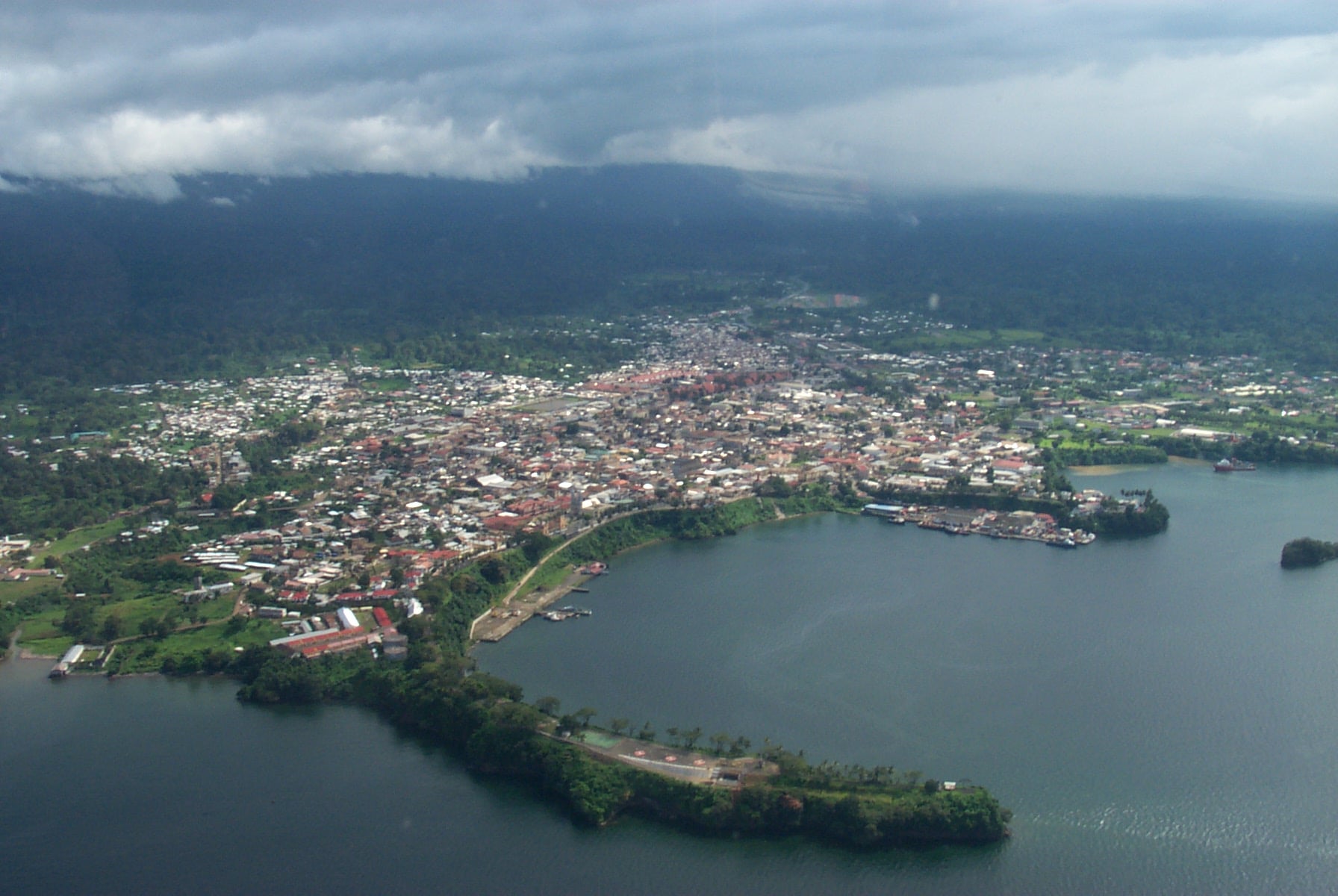
EQUATORIAL GUINEA · ENERGY
Key Facts
- —The contraction World Bank: economy shrank 5.4% in 2025; expects 3.5% contraction in 2026 and 2027.
- —The cross-border deal On 3 February 2026, Cameroon and Equatorial Guinea signed a deal to develop Yoyo-Yolanda gas field.
- —The reform record Since 2024, under IMF programme, ministers passed new tax law and reformed customs.
- —The undeveloped side Gold, diamonds and other minerals remain largely undeveloped.
- —The neighbourhood On 28 July 2026, Gabon and Equatorial Guinea signed deal implementing World Court ruling on islands.
- —The catch Despite high oil and gas income per person, human development lags far behind.
Equatorial Guinea’s gas output is falling fast enough to shrink the whole economy. The World Bank estimates it contracted by 5.4 percent in 2025.
Another contraction is expected in both 2026 and 2027, the World Bank says.
Why Equatorial Guinea’s gas decline is the whole story
A February 2026 deal with Cameroon offers some relief. The two countries agreed to jointly develop the shared Yoyo-Yolanda gas field.
This is the government’s most concrete answer so far.
The country became wealthy in the 1990s and 2000s on offshore oil, then switched to gas as its oil fields matured. Both fuels are now in decline.
The World Bank says the economy shrank by about 5.4 percent in 2025. It expects a further 3.5 percent contraction in both 2026 and 2027.
Falling oil and gas output is the cause each time.
There is very little else in the national accounts. Agriculture, services and construction all depend on oil and gas money moving through the state.
That makes the decline a question about the country’s future, not just one sector’s. Nearly every government plan is really a plan to slow it down.
The Cameroon field is the clearest option
On 3 February 2026, Cameroon and Equatorial Guinea signed an agreement in Malabo, Equatorial Guinea’s capital. They agreed to jointly develop the Yoyo-Yolanda gas field, which lies beneath both countries’ waters.
This kind of cross-border deal, called a unitisation agreement, is complex but sensible. Neither country can efficiently develop half of a shared gas field alone.
Equatorial Guinea has an advantage Cameroon lacks: a liquefied natural gas, or LNG, plant at Punta Europa, on Bioko island. Cameroon’s gas could be turned into fuel there instead of at a new plant.
Equatorial Guinea has long promoted itself as a regional gas hub. The idea is to buy or share gas from neighbours and keep its under-used plant running.
A settled maritime border helps
On 28 July 2026, Gabon and Equatorial Guinea signed an agreement in Addis Ababa, Ethiopia. It carries out a ruling by the International Court of Justice, the United Nations’ top court for disputes between countries.
The court ruled in May 2025 that three small islands, Mbanié, Cocotiers and Conga, belong to Equatorial Guinea. Gabon agreed to pull its troops out of Mbanié under the new deal.
Unresolved sea borders scare off offshore investors more than almost anything else. No company wants to spend money on waters two countries both claim.
Gabon is now settled, and Cameroon is a partner rather than a rival. Malabo’s offshore map is cleaner than it has been in decades.
Clean maps do not create new gas finds by themselves, though. Exploration success is still needed, and that has proved hard to come by.
Licensing rounds have drawn only modest interest in recent years. Investors have preferred newer, more promising regions over an ageing one like Equatorial Guinea’s.
Reform arrived late and partially
In 2024, Equatorial Guinea agreed to a programme with the International Monetary Fund, or IMF, a global lender that advises struggling economies. This kind of programme provides no loans; it only tracks reforms.
Since then, the government has passed a new tax law that widens the tax base. It has also reformed customs administration and published some extractive-industry contracts.
Those are real technical changes, but they came late. They arrived only after gas revenue had already peaked, which is the hardest moment to reform anything.
The country also has undeveloped mineral resources, including gold and diamonds. None has been mined at scale, and doing so needs skills the oil era never built.
That is the country’s recurring problem. It has one of the highest incomes per person in Africa, yet human development scores far below it.
Fewer than two million people live there, which makes the gap harder to explain. Few countries have earned so much oil money per head and shown so little for it.
What Equatorial Guinea needs once the gas runs out
The honest answer is a working tax system outside oil and gas, something the country has never had. Hydrocarbon money made ordinary taxation unnecessary, so it was never built up.
Closer ties with its neighbours are the other option. Equatorial Guinea belongs to CEMAC, the Central African Economic and Monetary Community, whose six members share a currency.
That regional bloc is under strain, with Gabon and Congo-Brazzaville both facing their own debt problems. Equatorial Guinea’s decline adds to the pressure.
The gas-hub idea remains the most realistic industrial plan on the table. It uses a plant that already exists, rather than one still needing to be built and paid for.
Whether it works depends on Cameroonian and Nigerian gas being available on reasonable terms. Malabo has little power to set that price.
Nigeria has its own liquefied-gas ambitions and little reason to send gas south. That leaves Cameroon as the realistic partner.
What to watch next
The first thing to watch is whether the Yoyo-Yolanda agreement turns into a construction plan with a timetable and an operator.
The second is how much gas flows through the Punta Europa plant, the real test of whether the hub plan is working.
The third is the wider CEMAC region’s foreign-currency reserves, since Equatorial Guinea’s downturn adds to a shared problem.
Frequently Asked Questions
Why is Equatorial Guinea’s economy contracting?
Its oil and gas output is falling. The World Bank estimates the economy shrank 5.4 percent in 2025.
It expects a further 3.5 percent contraction each year in 2026 and 2027.
What is the Yoyo-Yolanda agreement?
Cameroon and Equatorial Guinea signed it on 3 February 2026. Under the deal, they will jointly develop a natural gas field that lies beneath both countries’ waters.
Why does Equatorial Guinea want its neighbours’ gas?
It already has a gas-processing and export plant at Punta Europa on Bioko island. Falling domestic output is leaving that plant under-used.
What reforms has the government made?
Since 2024, under a monitoring programme with the International Monetary Fund, ministers have passed a new tax law and reformed customs administration. They have also published some extractive-industry contracts.
Has the border dispute with Gabon been settled?
Yes. On 28 July 2026, Gabon and Equatorial Guinea signed an agreement carrying out a 2025 World Court ruling over three disputed islands.
Connected Coverage
- The border settlement that unlocked offshore work is part of the islands deal with Gabon.
- The regional fiscal picture shows debt strain elsewhere in CEMAC.
- The wider contest is tracked in Africa: The New Scramble.
This article was produced by The Rio Times’ automated newsroom system. How we use AI · Report an error · Editorial responsibility: Matthias Camenzind, Editor-in-Chief