Equatorial Guinea Oil Round Offers 24 Blocks as Output Falls
EQUATORIAL GUINEA · ENERGY
Key Facts
- —The offer Twenty-four upstream blocks across offshore and onshore basins, promoted through 2026 by the ministry responsible for mines and hydrocarbons.
- —The terms Enhanced fiscal terms have been advertised. No royalty rates, profit splits or signature bonuses have been published.
- —The gap No bid submission deadline, block list or data room notice had been published at the time of writing, months after the stated launch window.
- —The contraction Real GDP fell 6.4% in 2025 and is projected to fall a further 2.7% in 2026. Hydrocarbon output dropped 16.8% in 2025.
- —The dependence Hydrocarbons supplied about 79% of all government revenue in 2025, at 14.2% of GDP out of total revenue of 17.9%.
- —The long view The IMF notes the overall economy is now smaller than it was in 2005, and non-hydrocarbon output sits near its 2011 level.
Equatorial Guinea is offering 24 exploration blocks to an industry that has been leaving. The country’s economy is now smaller than it was in 2005, and the round has yet to publish a deadline.
What Is on Offer
Equatorial Guinea has put 24 upstream blocks on the market. They span offshore and onshore basins, and the round has been promoted through 2026, including at an investment forum in Paris in April.
The country is running an open door policy alongside the round, meaning companies may approach the ministry directly and negotiate rather than waiting for a formal bid window. Supporting technical work includes a seismic programme reported at around US$60 million, covering reprocessed two and three dimensional data.
Three blocks have been signed recently, identified as EG-06, EG-11 and EG-23. The last of those covers 600 square kilometres, with contingent resources estimated at 104 million barrels of oil and condensate plus 215 billion cubic feet of gas. Those are contingent resources, not reserves, which means commercial recoverability has not been established.
Producing fields include Ceiba and Okume in Block G, Zafiro, Venus in Block P, and Alba. A first cargo of liquefied natural gas shipped from the Punta Europa complex under a new operator in June 2025.
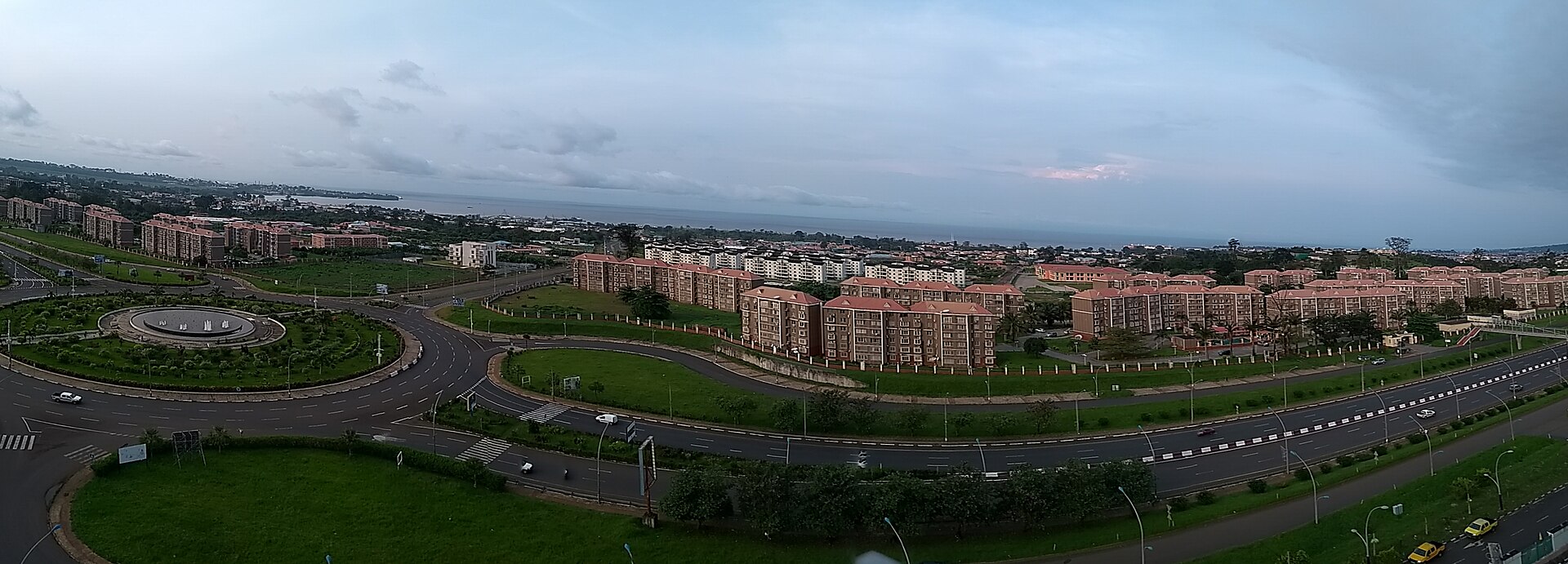
The Round That Has Not Quite Started
Here is the awkward part, and it belongs in any honest account. We could find no published bid submission deadline, no full block list, no model production sharing contract and no data room notice.
The round was announced for a launch window in the second quarter of 2026. Promotion has continued since. The formal machinery that lets a company actually bid has not appeared in public.
That absence is itself information. Licensing rounds in competitive basins publish terms early, because operators need months to run subsurface work and get internal approvals. A round that is marketed without terms is either still being designed, or is functioning mainly as an invitation to bilateral negotiation under the open door policy.
The advertised fiscal terms illustrate the same point. Enhanced terms aimed at increasing exploration and profitability have been described. No rates have been given. An operator cannot model a project on an adjective.
An Economy Smaller Than It Was in 2005
The macroeconomic backdrop explains why the country needs the round to work.
Real GDP contracted 6.4% in 2025, after growing 0.9% in 2024. The IMF projects a further contraction of 2.7% in 2026 and 1.3% in 2027, with weak positive growth only from 2028. Hydrocarbon GDP fell 16.8% in 2025 and is projected to fall 9.5% in 2026.
Production data underline it. Hydrocarbon output fell 14% year on year across the first three quarters of 2025, with oil specifically down 25%, on temporary stoppages in maturing wells. Maturing is the operative word. These are late-life fields.
The IMF put the long arc in a single sentence worth quoting. With hydrocarbon production shrinking steadily, the overall economy is now smaller than it was in 2005, and even non-hydrocarbon output remains around its 2011 level. That is two decades of reversal.
Non-hydrocarbon GDP did grow, by 2.3% in 2025, with 1.9% projected for 2026. It is not growing fast enough to offset what is happening underground.
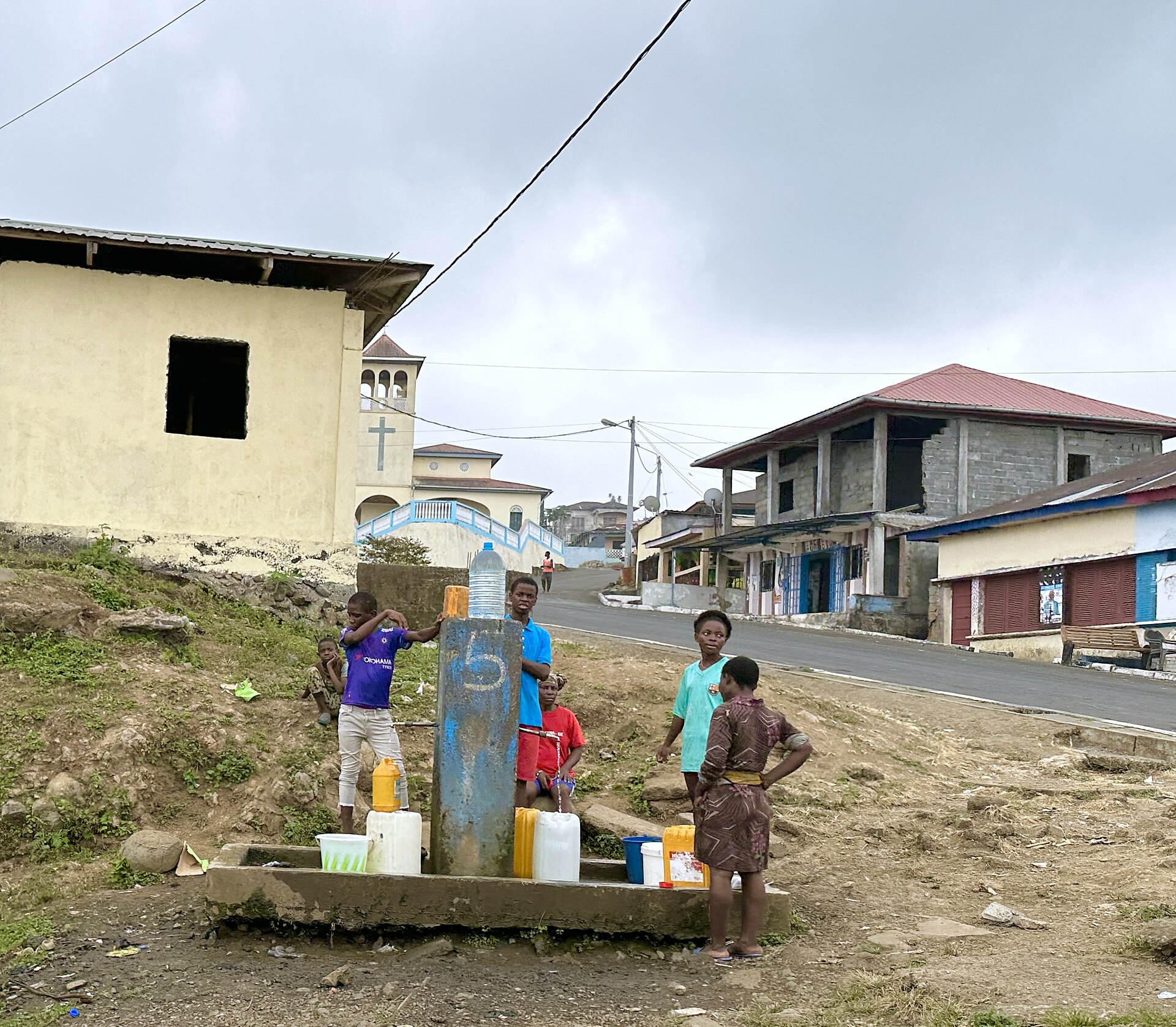
Eight in Every Ten Government Francs
The fiscal arithmetic is stark. Total government revenue was 17.9% of GDP in 2025. Hydrocarbon revenue accounted for 14.2 percentage points of that, which is close to 79% of everything the state collects. Both figures are projected to fall in 2026.
Nominal GDP was about 7,462 billion CFA francs in 2025, roughly US$12.85 billion. Public debt rose to 39.2% of GDP from 36.4%, with the authorities aiming to hold it below 50%. The overall fiscal balance was minus 2.2% of GDP in 2025 on a commitment basis, with minus 3.5% projected for 2026.
The non-hydrocarbon primary balance, which is the anchor the IMF actually watches, sat at minus 17.8% of non-hydrocarbon GDP. Inflation was comparatively contained, easing to 2.6% by October 2025 from a peak above 3% in early 2023.
One regional detail matters. The country’s contribution to the pooled reserves of the Bank of Central African States remained negative in 2025, after losses in 2023 and 2024. In a currency union, that is a burden shared with neighbours.
What the IMF Wants Before Real Money
Equatorial Guinea has been under a staff monitored programme, which is worth explaining because the name misleads. A staff monitored programme is an informal arrangement between a country and IMF staff. It carries no money and no board endorsement. It is a way of building a track record.
Completion of the third review was approved at management level in December 2025 and announced in February 2026. All quantitative conditions for end-June 2025 were met, and two of four structural benchmarks for end-September. The 2026 budget was approved as a benchmark.
Moving to a programme that actually disburses depends on governance reform, and the Fund named one specific step: publication of a hydrocarbon sector transparency report. That is a precise, checkable condition, and it is a useful thing for an outside observer to watch.
For a company weighing a bid, the sequence matters. A country in a monitored programme with an unmet transparency benchmark is a country where contract terms, payment reliability and dispute resolution deserve more diligence than usual, not less.
Gas Is the Hedge, and It Is Already Running
The more interesting part of the Equatorial Guinean story is not oil. It is what the country is doing with the infrastructure oil paid for.
The Punta Europa complex on Bioko Island was built to liquefy gas from the Alba field. Alba has declined, and the operator has pursued what the industry calls a gas megahub. The idea is to keep the plant running by piping in gas from fields too small to develop on their own, including fields in neighbouring waters. A first cargo under the new arrangement shipped in June 2025.
That model changes what a new block is worth. An exploration success that would be stranded in isolation becomes commercial if it can tie back into existing processing. For a bidder, proximity to that infrastructure may matter more than block size.
It also explains the emphasis on gas in the offer. Oil production is in structural decline and the fields are mature. Gas has somewhere to go, and the plant that receives it is already built and paid for.
None of that solves the fiscal problem on its own. Gas volumes tied into an existing plant generate revenue, but they do not restore the scale of the oil receipts the state budget was built around.
What This Means If You Live or Invest Here
For foreign residents, the practical effects of a contracting economy show up slowly and then steadily. Public investment thins. Contract payment cycles lengthen. The non-oil businesses that serve the hydrocarbon sector feel the decline before the headline figures do.
The currency is the CFA franc of Central Africa, pegged to the euro and managed regionally. That removes exchange rate risk, and it also removes devaluation as a tool. Adjustment happens through spending and through the real economy rather than through the currency.
For anyone contracting with public entities, the fiscal numbers are the risk to price. A state drawing four in every five francs from a declining resource, with a negative contribution to regional reserves, is a state where payment timing deserves scrutiny.
For investors weighing the round itself, the honest reading is that this is a country that needs capital more than capital needs it. That can mean genuinely attractive terms. It can also mean terms that are attractive because the risks behind them are real. Without published fiscal terms, neither can be assessed.
The transparency benchmark is the single most useful signal to track. If a hydrocarbon sector transparency report is published, the country moves closer to a funded IMF programme, and the contracting environment becomes easier to read. If it is not, that tells its own story.
What Is Not Known
Whether the licensing round has formally opened is not established. No bid deadline has been published, months after the stated launch window.
The fiscal terms are not public. No royalty rates, profit oil splits or signature bonuses have been disclosed.
The 24 blocks have not been identified individually in public. Only EG-06, EG-11 and EG-23 are named, and those are recently signed rather than on offer.
Current production in barrels per day is not reliably available. Figures circulating in trade press date from 2023 and do not sit comfortably with the production trend the IMF describes.
And whether the transparency report the Fund asked for has been published is not confirmed.
Connected Coverage
- Taxes in Morocco for Expats 2026: The 37% Band Starts Early
- Kenya Residency Visa Requirements 2026: Class K Starts at 35
- Is Tanzania Safe for Expats in 2026: A Level 3 With One Hotspot
Sources
- IMF — Equatorial Guinea, third review of the staff monitored programme, February 2026
- Offshore Technology — Equatorial Guinea announces 2026 licensing round
- World Oil — Equatorial Guinea to launch 2026 upstream licensing round
Frequently Asked Questions
How many blocks is Equatorial Guinea offering?
Twenty-four upstream blocks across offshore and onshore basins, promoted through 2026. The blocks have not been identified individually in public, and no bid submission deadline had been published at the time of writing.
What are the fiscal terms?
They have not been published. Enhanced terms aimed at increasing exploration and profitability have been advertised, but no royalty rates, profit oil splits or signature bonuses have been disclosed.
How is the Equatorial Guinean economy performing?
Real GDP contracted 6.4% in 2025 and is projected to fall a further 2.7% in 2026. Hydrocarbon GDP fell 16.8% in 2025. The IMF notes the overall economy is now smaller than it was in 2005.
Is there an IMF lending programme?
No. The country has been under a staff monitored programme, which carries no money and no board endorsement. Progress toward a programme that disburses depends on governance reform, including publication of a hydrocarbon sector transparency report.
This article was produced by The Rio Times’ automated newsroom system. How we use AI · Report an error
Read More from The Rio Times