Brazil Court Backs Second Debt Rescue for Itaipu Builder Andrade Gutierrez
Key Facts
Andrade Gutierrez, once among Brazil’s largest builders, never fully recovered from the Lava Jato corruption probe and stalled projects abroad. A judge has now approved its second debt restructuring in four years, forcing reluctant creditors to accept the terms.
A Belo Horizonte court approved two restructuring plans from six Andrade Gutierrez companies in a ruling published on 18 September 2026. Substitute judge Murilo Silvio de Abreu of the city’s 1st Business Court signed the decision, Gazeta Brasil reported, citing Valor.
Why This Matters
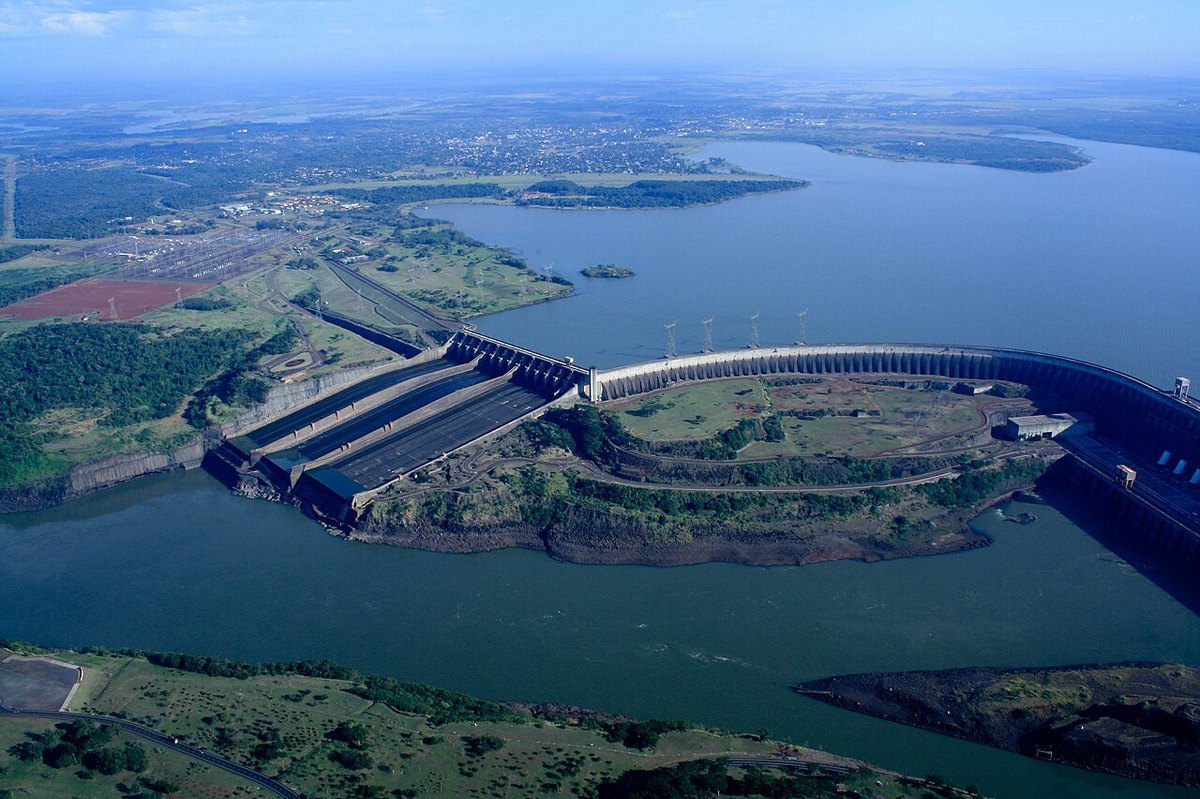
Andrade Gutierrez is a family-controlled engineering group from Minas Gerais, founded in Belo Horizonte in 1948. It helped build the Itaipu hydroelectric dam on the Brazil-Paraguay border in the 1970s, among many other large works.
In the 2010s it became one of the construction groups caught up in Lava Jato, the Petrobras corruption investigation. The ruling shows how far a big Brazilian builder can restructure its debts without a full court-supervised reorganisation.
The main company, Andrade Gutierrez Engenharia, owes R$3.40 billion (about US$660 million) under the approved plan. Conversions in this article use the central bank’s PTAX rate of R$5.1575 per US dollar on 18 September 2026.
The decision also tests Brazilian bankruptcy law, because one creditor alone held enough votes to push the plan through. Foreign bondholders are affected too, because the second plan covers international bonds maturing in 2029 and 2040.
A Builder Shaped by Lava Jato
The group was founded on 2 September 1948 by Gabriel and Roberto Andrade with Flávio Gutierrez, according to Wikipedia. Beyond Itaipu, its portfolio includes the Carajás railway in the Amazon, metro lines, refineries and airports.
Its then chief executive, Otávio Azevedo, was arrested in June 2015 in the investigation into corruption at state oil company Petrobras. In February 2016 the company signed a leniency agreement, a kind of corporate plea deal, with federal prosecutors.
That deal required R$1 billion in restitution, about US$194 million at today’s rate, Agência Brasil reported. In December 2018 it signed a second leniency deal with the comptroller general and the government’s legal service.
That agreement set R$1.49 billion (about US$289 million at today’s rate) in payments over 16 years. The government said the deal covered 54 contracts and let the company keep working for public bodies.
What the Judge Approved
The ruling covers six companies, including Andrade Gutierrez International, Portuguese unit Zagope and Inzag Germany. They were split into two plans, one for Brazilian units and one for international debt.
The first plan covers mainly unsecured claims and excludes suppliers that still provide services to the group. The second deals with international financial debt, including bonds with final maturities in 2029 and 2040.
Support was measured company by company, and every entity cleared the legal majority, according to the ruling as reported. Approval stood at 71.32% for Andrade Gutierrez Engenharia and 73.5% for Andrade Gutierrez Construções e Serviços.
The investment unit, Zagope and Inzag Germany each reached 79.2%, while the international arm reached 77.1%. With the ruling, the plans’ terms now also apply to covered creditors who did not sign them.
The Terms Creditors Must Accept
The plans offer creditors three ways to be repaid, according to Gazeta Brasil’s account of the decision. The first pays 36% of the claim, following the schedule set out in the plan.
The second repays the full principal, but stretches the final maturity to 2070. The third splits each claim into two portions, worth 31% and 69% of its value.
The creditor that signed the plan chose that third option, the report said. Neither report sets out interest rates or the timing of the first payments.
How an Out-of-Court Restructuring Works
Brazil’s bankruptcy law offers two main paths for struggling companies. The better-known one, recuperação judicial or judicial reorganisation, puts the whole business under court supervision.
The lighter path, recuperação extrajudicial or out-of-court restructuring, lets a company negotiate first and seek court approval later. Under Article 163 of Law 11,101, a plan binds all covered creditors once holders of over half of each class sign.
Tax claims are excluded, and labour claims can only be included through collective bargaining with the relevant union. Creditors get 30 days to object, but only on limited grounds such as a missing majority or fraud.
The law also bars a new plan within two years of a previous approval. The judge found that Andrade Gutierrez had met that interval, since its first plan was approved in November 2022.
Why a Second Deal Was Needed
The group filed the new request on 19 May 2026, Poder360 reported. It said creditors holding more than 70% of the claims had already consented before filing.
The company blamed stalled projects, higher interest rates and a stronger dollar. It said 47% of its projects had been halted or delayed, according to Poder360.
A highway project in Ghana worth R$1.4 billion (about US$271 million) stopped after the government defaulted on its debt. A hydroelectric plant in the Dominican Republic worth R$3.2 billion (about US$620 million) was postponed by government order.
O Bastidor reported that the Selic, Brazil’s benchmark rate, reached 15% instead of the 7.75% projected in 2022. The Brazilian units lost more than R$2 billion (about US$388 million) combined between 2022 and 2025, the same outlet reported.
The Objections and the Ruling
Three companies, Ciranda 4, Ciranda 5 and Ciranda 6 Energias Renováveis, challenged the plan in court. They argued that debts with different origins, sizes and maturities should have been placed in separate groups.
They also objected that a single signing creditor held R$2.43 billion (about US$470 million) of the main unit’s claims. O Bastidor identified the dominant creditor as Vert, a securitisation company, which has not commented publicly.
The judge rejected both arguments, ruling that such differences alone do not require separate classes. He also found that concentration of claims in one creditor does not, by itself, amount to abuse.
What Restructuring Experts Say
Juliana Biolchi heads Obre, a Brazilian observatory that tracks out-of-court restructurings. She told Valor, as cited by Gazeta Brasil, that the case asks how freely a company can choose which creditors to include.
In her view, intervention would require proof of irregularities, simulation, discrimination or abuse by the majority. The ruling therefore gives companies wide room to design plans around a few large, friendly creditors.
What It Means If You Invest or Do Business in Brazil
Holders of the 2029 and 2040 bonds are now bound by the plan, whether or not they signed it. They should check which of the three payment options applies to them and any deadlines for choosing.
Suppliers still working for the group were left out of the first plan, so their contracts are not rewritten by it. For investors in Brazilian credit, the case shows that a creditor with a clear majority can decide outcomes quickly.
Minority lenders to Brazilian companies may want stronger protections in loan documents, rather than relying on later objections. Andrade Gutierrez did not issue a public statement on the ruling in the reports reviewed by The Rio Times.
What Is Not Yet Known
It is not known whether the Ciranda companies will appeal to Minas Gerais’s state appeals court. The published reports do not say which investors stand behind the securitisation company that signed the plan.
O Bastidor reported that the filings list about R$11.6 billion (US$2.25 billion) across all six companies. The Rio Times could not confirm how that total relates to the R$3.40 billion (about US$659 million) covered at the main company.
It is also unclear when the Ghana road and the Dominican Republic plant might restart. Those projects will largely decide whether a third restructuring can be avoided.
Frequently Asked Questions
Why does this matter?
Andrade Gutierrez is one of Brazil’s best-known builders and a major name in the Lava Jato probe. Its second restructuring in four years shows how far out-of-court deals can bind reluctant creditors.
What is a recuperação extrajudicial?
It is an out-of-court restructuring that a company negotiates with creditors before a judge approves it. Once holders of over half of each covered class sign, the plan binds the rest.
How much debt is involved?
The main company owes R$3.40 billion (about US$660 million) under the plan. One creditor holds 71.32% of that amount.
Can creditors still challenge the plan?
Three renewable-energy companies objected, and the judge rejected their arguments. Whether they will appeal has not been reported.
Sources: Gazeta Brasil, court approves second Andrade Gutierrez restructuring, Poder360, Andrade Gutierrez files for out-of-court restructuring, Wikipedia, Otávio Azevedo’s 2015 arrest, O Bastidor, creditors and interest-rate assumptions, Agência Brasil, the 2018 leniency agreement, Planalto, Law 11,101 on restructuring and bankruptcy, Wikipedia, Andrade Gutierrez company history, Banco Central do Brasil, PTAX dollar rate
This article was produced by The Rio Times’ automated newsroom system. How we use AI · Report an error
LatAm Markets: Live Signals → — real-time movers, turnover leaders and FX across Latin America.
Read More from The Rio Times