Key Facts
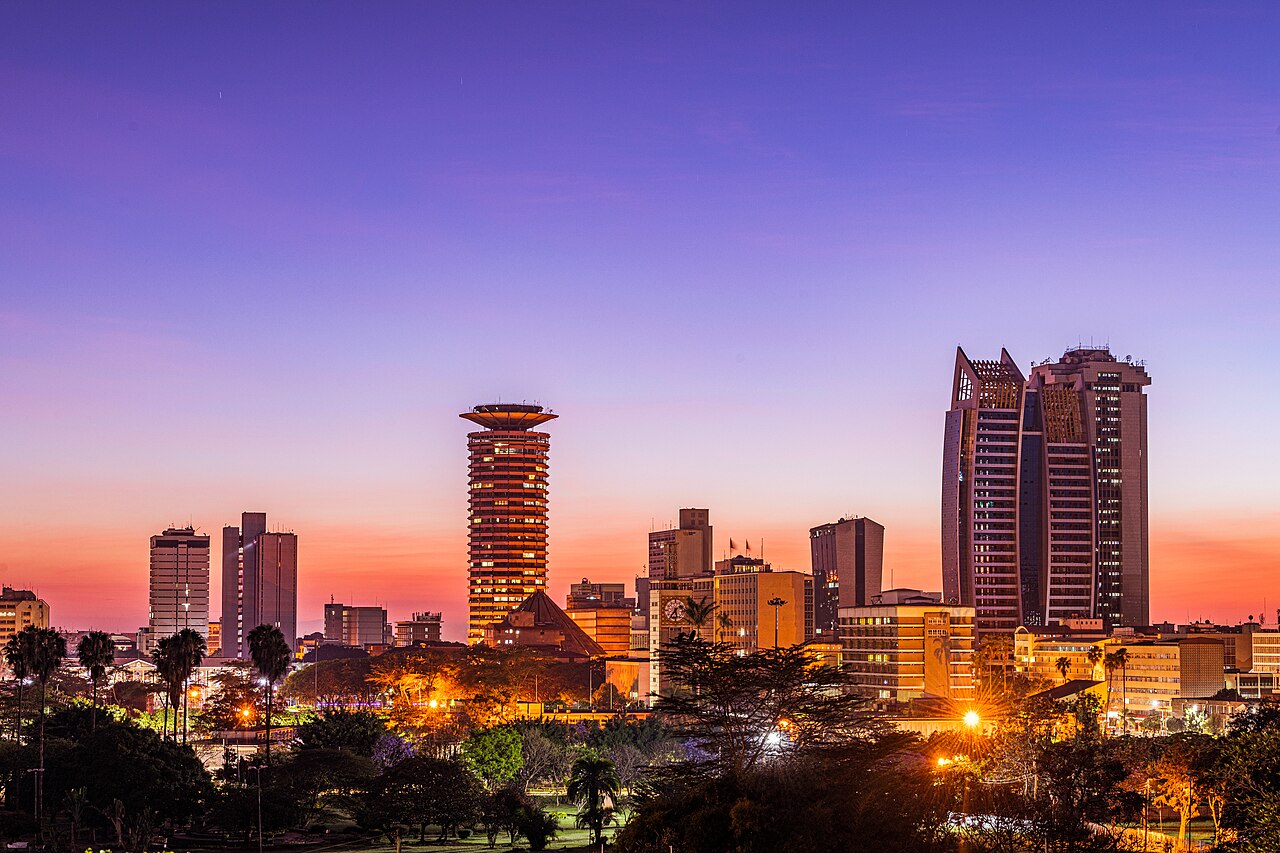
- —The country Kenya is East Africa’s largest economy, with about 57 million people and annual output of roughly US$136 billion in 2025, slightly below that of the US state of New Mexico.
- —Why it matters An estimated 4 million Kenyans live abroad, about 600,000 of them in the United States. Their formal remittances reached US$5.04 billion in 2025, roughly 4 percent of Kenya’s economy.
- —Why now On 28 September the Independent Electoral and Boundaries Commission (IEBC) said overseas voter registration will grow from 12 to 26 countries before the August 2027 general election.
- —What happened Only 10,444 Kenyans abroad were registered to vote in 2022. They could vote for president but not for members of Parliament.
- —The numbers The IEBC targets about 400,000 new overseas voters. Kenyans in the US sent US$2.73 billion in 2025, 54.2 percent of all formal remittances, Central Bank of Kenya data show.
- —What it means for you Kenyans in the US, UK and Canada may get mobile registration centres beyond embassies. Investors should note that remittances slipped in the first seven months of 2026.
- —Still open Registration abroad waits for the IEBC’s next registration drive. Parliament has not yet changed the embassy-only rule that the High Court upheld in June.
Kenya will let citizens abroad register and vote in 26 countries for its 2027 election, up from 12. The Kenyan diaspora sends home more than US$5 billion a year, yet it still has no member of Parliament of its own.
Kenya, East Africa’s largest economy, is widening the vote for the Kenyan diaspora ahead of its August 2027 general election. The national electoral body plans to run overseas registration in 26 countries, more than double the 12 used in 2022.
The move revives an old complaint from Kenyans in the United States, Britain and the Gulf. They send home billions of dollars, but they cannot elect a member of Parliament and rarely vote at all.
What the electoral commission announced
The Independent Electoral and Boundaries Commission (IEBC) announced the expansion on Monday 28 September. Its chairman, Erastus Ethekon, said the commission had approved mapping additional countries for registration and voting.
Registration abroad will start when the commission launches the second phase of its continuous voter registration drive. Each country will count as a single polling centre, even where several Kenyan missions operate.
Documents the commission presented to Parliament name 16 candidate countries. They include Saudi Arabia, Australia, Sweden, Switzerland, the Netherlands, Ireland, Italy, Turkey, Nigeria, Ghana, Ethiopia and China.
The plan also lists mobile registration centres in South Africa, Canada, the UK and the US. The IEBC is targeting about 400,000 new overseas voters, according to the Daily Nation.
Ethekon cited Article 82(1)(e) of Kenya’s Constitution. It requires the progressive registration of citizens living abroad and the gradual realisation of their right to vote.
Why so few Kenyans abroad vote
Kenya first allowed limited voting abroad in 2013. In 2022 it ran polling in 12 countries, from Uganda and South Africa to the US, the UK, Germany and Qatar.
Turnout on paper stayed tiny. Registered diaspora voters rose from 4,223 in 2017 to 10,444 in 2022, according to figures the IEBC gave in court.
Foreign ministry data cited by the commission count about 1.46 million Kenyans registered across 111 countries. Only 62,688 are registered with Kenyan missions, and roughly 10,400 as voters.
The bottleneck is a 2012 regulation that ties registration and voting to embassies, high commissions and consulates. Kenyans living far from a mission must travel, sometimes across borders, to take part.
On 11 June 2026 the High Court in Nairobi dismissed a challenge to that rule by 93 Kenyans abroad. Justice Lawrence Mugambi accepted the IEBC’s argument that cost and diplomacy justify gradual expansion.
The commission had already asked the National Assembly in April to amend the regulation. It wants to register Kenyans abroad outside the current designated locations.
The money behind the Kenyan diaspora
Formal remittances reached a record US$5.04 billion in 2025, the Central Bank of Kenya (CBK) reported. That was 1.9 percent more than in 2024, the slowest growth in years.
The United States is by far the largest source. Kenyans there sent US$2.73 billion in 2025, or 54.2 percent of all formal inflows, according to CBK data.
Flows from Saudi Arabia fell 25 percent to about US$302 million after changes to Saudi labour rules. Britain, at about US$360 million, overtook Saudi Arabia for the first time in three years.
A 2025 household survey by the CBK, the national statistics office and FSD Kenya, a research trust, gives a wider picture. It estimated cash and in-kind remittances of KSh931.8 billion (about US$7.2 billion) between June 2024 and May 2025.
The trend has turned weaker in 2026. Inflows in the first seven months fell to KSh368.75 billion (about US$2.84 billion), the Daily Nation reported.
CBK Governor Kamau Thugge said on 12 August that the bank now expects growth of just 0.7 percent this year. It had earlier forecast about 6 percent.
Shilling figures are converted at 130 Kenyan shillings (KSh) per US dollar. That was the market rate at Friday’s close on 2 October 2026.
The call for diaspora seats in Parliament
The debate over representation sharpened on 3 October. Thomas Musau, a UK-based diaspora affairs advocate, argued in The Standard newspaper that Kenyans abroad deserve seats in the National Assembly.
Musau pointed to Article 97(1)(c) of the Constitution. It gives parties 12 nominated National Assembly seats for special interests, including youth, persons with disabilities and workers.
The diaspora is not named in that clause, so no party is obliged to nominate a diaspora member. Musau argued that courts have accepted that the listed groups are not exhaustive.
He urged parties to place a genuine diaspora representative on their nomination lists. In his view, embassies cannot change laws, budgets or electoral rules, while legislators can.
Diaspora groups have pressed the same case for years, including demands for their own MPs and senators. No law currently reserves a parliamentary seat for Kenyans abroad.
What it means for Kenyans abroad and investors
For the Kenyan diaspora in North America and Europe, the main change is access. Mobile centres in the US, UK and Canada could spare voters long trips to an embassy.
Overseas voters will still choose only the president, as in 2022. The Daily Nation describes the diaspora as a new battleground in the presidential race.
For investors, remittances matter because they are one of Kenya’s largest sources of US dollars. They help support the shilling and the country’s foreign-exchange reserves.
A slowdown in those flows, alongside political courting of voters abroad, makes diaspora policy a live economic issue. Fees, taxes and consular services for Kenyans abroad are likely campaign topics.
What remains unresolved
The commission has not yet published a start date for overseas registration. Funding is also uncertain, since the IEBC told the High Court it already faced a 2027 budget shortfall.
Parliament has not yet amended the embassy-only regulation. Without that change, the planned mobile centres may face legal questions.
The push for reserved diaspora seats remains an argument, not a proposal before Parliament. Any party nomination of a diaspora member would be the first concrete test.
Frequently Asked Questions
How many Kenyans abroad can vote in 2027?
Only 10,444 Kenyans abroad were registered in 2022. The electoral commission now targets about 400,000 new overseas voters in 26 countries for the August 2027 election.
Can Kenyans abroad vote for members of Parliament?
No. Overseas voters could only vote for president in 2022, and no National Assembly seat is reserved for the diaspora.
How much money does the Kenyan diaspora send home?
Formal remittances reached a record US$5.04 billion in 2025, according to the Central Bank of Kenya. The United States supplied 54.2 percent of that total.
Why can Kenyans only vote at embassies?
A 2012 regulation ties overseas registration and voting to Kenyan embassies, high commissions and consulates. The High Court upheld it in June 2026, and the commission has asked Parliament to change it.
Connected Coverage
Sources
- Daily Nation: IEBC expands diaspora voting to 26 countries (28 Sep 2026)
- Daily Nation: The diaspora vote factor (3 Oct 2026)
- Mwakilishi: IEBC plans to extend diaspora voting (29 Sep 2026)
- The Standard: Thomas Musau, Kenyan diaspora deserve seats in our National Assembly (3 Oct 2026)
- High Court of Kenya: Mukile & 92 others v IEBC, judgment of 11 June 2026
- Business Daily: CBK remittance data for 2025
- Daily Nation: Diaspora remittances fall in 2026 (22 Aug 2026)
- Central Bank of Kenya: Diaspora remittances data
This article was produced by The Rio Times’ automated newsroom system. How we use AI · Report an error · Editorial responsibility: Matthias Camenzind, Editor-in-Chief