Nairobi’s Small Importers Say a New Customs Floor Will Finish Them
KENYA · TRADE
Key Facts
—The change: The minimum customs value for a consolidated 40-foot container of general cargo rose from Sh2.5 million (about US$19,300) (about US$19,300 at roughly 129 shillings to the dollar) to Sh3.2 million (about US$24,700) (about US$24,700).
—The increase: That is Sh700,000 (about US$5,400) (about US$5,400) more per container, or about 28%.
—When: The new figure took effect around 20 to 21 August 2026.
—Who is affected: Mainly small traders who share containers, largely importing from China through Mombasa.
—The response: Traders in the Kamukunji, Gikomba and Nyamakima markets have threatened to close nationwide on Friday 28 August.
—How it was set: The figure was agreed in July between the revenue authority, the national chamber of commerce and the freight forwarders association, and is fixed for two years.
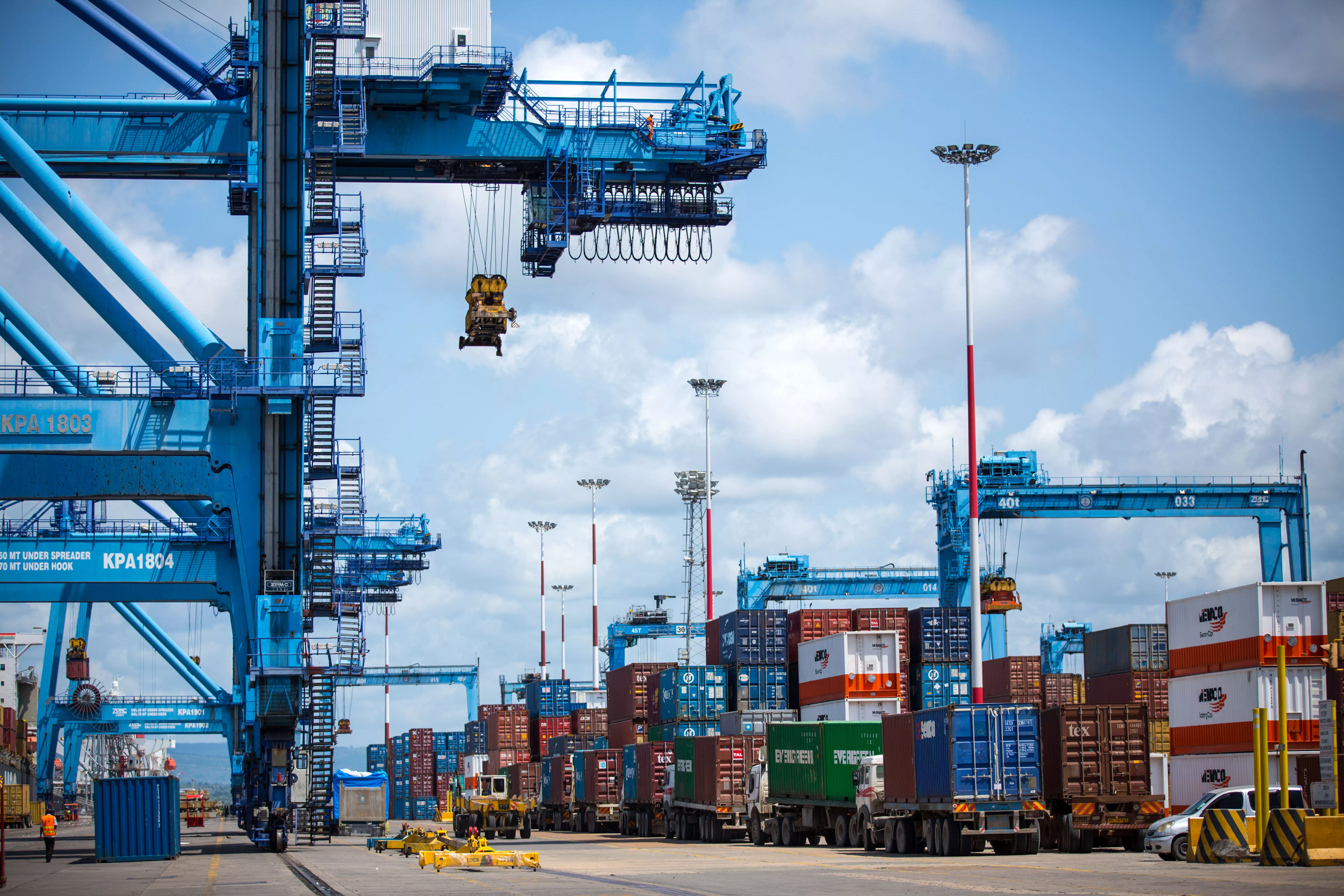
Kenya has raised the minimum customs benchmark for a shared 40-foot container from Sh2.5 million (about US$19,300) to Sh3.2 million (about US$24,700), and the small traders who use those containers say they cannot absorb it. They have threatened to shut businesses across the country on Friday.
What the customs benchmark is and what changed
A customs benchmark is a floor value, not a final valuation. It is the minimum figure the revenue authority will accept when calculating duty on a container whose contents are hard to verify.
Consolidated containers are the hard case, because a single box may hold goods belonging to dozens of small importers.
The floor for a 40-foot container of general consolidated cargo has moved from Sh2.5 million (about US$19,300) to Sh3.2 million (about US$24,700), an increase of Sh700,000 (about US$5,400).
The revenue authority says the earlier figure had stood for six years, despite an understanding that it would be reviewed annually.
Undervaluation of consolidated cargo is a long-standing complaint of the revenue authority and of larger importers who declare in full.
A floor value is the blunt instrument available when itemised verification is impractical.
Verifying every line in a shared box would take longer than the cargo can affordably sit at the port.
How the number was arrived at
The current figure is the calmer end of a fight that began in July.
A directive on 9 July proposed benchmarks ranging from Sh3.5 million (about US$27,000) (about US$27,000) to Sh10 million (about US$77,000) (about US$77,000) depending on the category of goods.
Freight forwarders and importers objected, cargo sat at the port accruing storage charges, and the higher figures were suspended within a fortnight.
An agreement reached at a joint meeting on 20 July, and announced at the end of the month, settled on Sh3.2 million (about US$24,700) from 21 August, fixed for two years, with the storage charges accrued under the July directive waived.
Consolidators may still request individual verification and valuation of a container rather than accept the floor.
In practice that takes time and expertise, which is precisely what the smallest traders lack.
The traders’ case
The complaint is about margin rather than principle. One Kamukunji trader of fifteen years told Capital FM that shipping a container from China would now cost Sh3.2 million (about US$24,700).
Another put it plainly: if they add the Sh700,000 (about US$5,400) there is no profit we will make.
Neither trader was named, and no association has publicly claimed to be convening Friday’s shutdown, which has spread online under the banner Businesses Under Siege.
That matters, because the two bodies that negotiated the figure in July, the Kenya National Chamber of Commerce and Industry and the Kenya International Freight and Warehousing Association, are on the other side of this argument.
The MSME Alliance of Kenya had already objected in mid-August, calling the 28% increase too significant a burden on constrained working capital.
It asked for the Sh2.5 million (about US$19,300) figure to be retained and for consultation before any future increase.
The revenue authority’s answer
The authority issued a media brief on 25 August, after the shutdown call was already circulating, framing the change as an anti-undervaluation measure.
It said the benchmark does not mean every container is valued at Sh3.2 million (about US$24,700), and that where actual value is higher, the higher value must be declared.
It also argued the point is fairness between traders: someone who declares correctly should not lose out to someone who does not.
It rejected the idea of a dispute with small traders, saying most traders and consolidators already comply.
Competition, it said, should rest on efficiency, quality and innovation rather than on avoided tax.
Why this argument keeps recurring
Consolidated cargo is where tax administration meets the informal economy, and neither side is being unreasonable.
Undervaluation is real, and so is the fact that a flat floor lands hardest on the smallest importer in the box.
Readers who have followed Latin American customs reform will recognise the shape of it, down to the market shutdown as the negotiating tool of last resort.
What is unusual here is the two-year price lock, which at least converts a recurring fight into a scheduled one.
Kenya has also been leaning on traders in these same markets over business registration and electronic invoicing.
The customs change lands on people already feeling watched, which explains some of the temperature of the response.
The two-year lock is the genuinely novel element and deserves more attention than the headline figure.
It converts an open-ended administrative discretion into something a trader can plan around.
More: Kenya news in English, every day from The Rio Times.
Frequently Asked Questions
What is the new customs benchmark in Kenya?
The minimum customs value for a consolidated 40-foot container of general cargo rose from Sh2.5 million (about US$19,300) to Sh3.2 million (about US$24,700), an increase of Sh700,000 (about US$5,400).
When did the new benchmark take effect?
Around 20 to 21 August 2026. An agreement announced in late July set the new figure to apply from 21 August and fixed it for two years.
Does it mean every container is taxed at Sh3.2 million (about US$24,700)?
No. The revenue authority says it is a minimum reference value, and that where the actual value of goods is higher, that higher value must be declared.
Which traders are protesting?
Traders in the Kamukunji, Gikomba and Nyamakima markets in Nairobi threatened to close businesses nationwide on Friday 28 August 2026.
Sources
This report is based on statements from the Kenya Revenue Authority as reported by The Standard, the July agreement as reported by The Star, and trader interviews by Capital FM.
Connected Coverage
Trade friction at East African ports is a recurring theme, from China’s growing share of Kenyan imports to Tanzania’s new scanner for Zanzibar’s Fumba port.
This article was produced by The Rio Times’ automated newsroom system. How we use AI · Report an error · Editorial responsibility: Matthias Camenzind, Editor-in-Chief
LatAm Markets: Live Signals → — real-time movers, turnover leaders and FX across Latin America.