Iran and Venezuela seal ‘unbreakable friendship’ and sign 20-year cooperation agreement
RIO DE JANEIRO, BRAZIL – Iran and Venezuela sealed their alliance on Saturday by signing a 20-year strategic cooperation agreement that provides for cooperation in oil, petrochemicals, tourism, food, and technology, which Venezuelan President Nicolas Maduro described as “truly amazing.”
President Nicholas Maduro arrived in the Islamic Republic on Friday for a two-day tour in an attempt to bolster relations between the two allies.
Iran is one of Venezuela’s main allies, alongside Russia, China, Cuba, and Turkey. And like Venezuela, it is subject to tough US sanctions.
Iranian President Ebrahim Raisi and his Venezuelan counterpart Nicolas Maduro attended the signing of the agreement at Tehran’s Sad Abad Palace, calling the meeting the beginning of an “unbreakable friendship.”
In speeches filled with references to “imperialism” and U.S. sanctions, both leaders emphasized their nations’ “resistance” and the importance of this agreement for the future of their peoples.
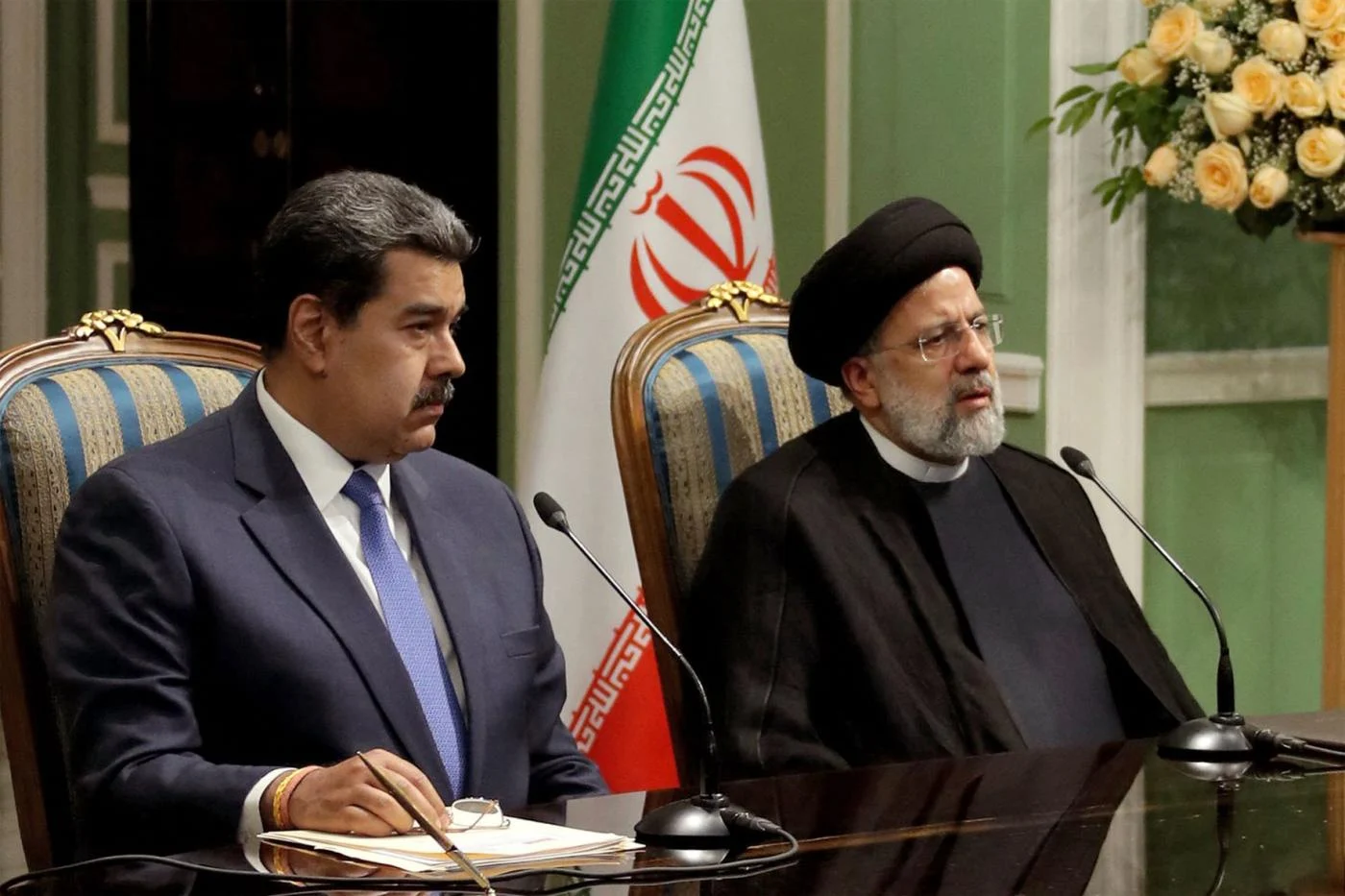
Maduro arrived in Tehran Friday at the head of a large delegation that included Venezuela’s ministers of foreign affairs, agriculture, communications, science, transportation, and tourism.
The visit to Iran is part of an international trip that has already taken him to Turkey and Algeria. “There are many fronts of cooperation between Iran and Venezuela,” Maduro said at a press conference with Raisi.
“In the fields of energy, oil, gas, refineries, petrochemicals, finance, and defense,” he said. Maduro also stressed that Iran has Venezuela’s support.
During the Venezuelan leader’s visit, Iran delivered an oil tanker built by the Salman Zarbi Industrial Shipping Company of Iran (SADRA), which belongs to the Aframax tanker category with a cargo capacity of between 80,000 and 125,000 tons.
This is the second tanker of this type that Iran has delivered to Venezuela in recent years, and according to Iranian authorities, two more are being built for Caracas.
“You can count on the president and the Islamic Republic of Iran, with all the support of the Bolivarian Revolution of Venezuela,” Maduro said.
For his part, Raisi reiterated that relations between the two countries are “strategic” in the face of “imperialism” that refers to the United States. “The signing of the 20-year cooperation document is a sign of the willingness of the high authorities of the two countries to expand relations in various fields,” Raisi said.
The Iranian leader said Venezuela has offered “perfect resistance to the sanctions and threats of imperialism,” “sanctions and threats” that the Iranian people have suffered from “for more than 40 years.”
The leaders did not discuss the agreement, but Maduro stressed cooperation to “consolidate the sovereignty and food security of our countries.”
To this end, Tehran and Caracas will cooperate in the technological field to produce more food for the population in Venezuela and also produce on Venezuelan soil for export to Iran and the region.
Maduro also announced that direct flights between Caracas and Tehran would begin on July 18, with a weekly frequency and a plan to increase connections later – an announcement that has been made repeatedly in the past without becoming a reality.
“Venezuela is open to tourism from Iran so they can come and enjoy the beauty of the Caribbean, South America, the Andes, the Amazon,” the Maduro said.
Finally, Maduro predicted the arrival of a “world of justice, without imperialism, a world of equality” to be built by Iran and Venezuela.
“Venezuelan and Iranian youth must know that the world of the future will be a world of justice, without imperialism, a world of equality, and it is up to us to build this future,” Maduro said.
Relations between Tehran and Caracas have been close since the era of the late President Hugo Chávez (1999-2013), underpinned by the mutual rejection of the United States.
Iran has become one of the Maduro government’s most essential allies recently, especially since 2020, when Venezuela suffered from a gasoline shortage and Caracas turned to Tehran to buy fuel.
In an interview on HispanTV last night, a few hours after arriving in Tehran, Maduro recalled Iranian aid.
“The delivery of oil to Caracas was a great help to the Venezuelan people,” Maduro said.
More: Brazil news in English, every day from The Rio Times.
This article was produced by The Rio Times’ automated newsroom system. How we use AI · Report an error · Editorial responsibility: Matthias Camenzind, Editor-in-Chief