Investigations Uncover Gangs and Millionaire Profits Behind Deforestation
RIO DE JANEIRO, BRAZIL – An investigation by the Federal Prosecutor’s Office (MPF) shows that illegal deforestation involves a series of crimes, such as corruption and land grabbing. Harvesting trees requires the use of heavy machinery and costs of at least R$800 (US$200) per hectare cut (one soccer field).

Corruption, criminal conspiracy, slave labor, violence, land grabbing, wood theft. Illegal deforestation in the Amazon is part of a set of felonies that go far beyond environmental crimes and involves costs – and millionaire profits. Investigations by the Federal Prosecutor’s Office’s Amazônia task force show that there are elaborate criminal organizations behind the issue. The fires are only the most visible aspect of this case.
“I will not ignore that there is indeed the deforestation of poverty, which is for subsistence purposes, but large-scale deforestation, which is the subject of concern, is a different matter. In southern Amazonas, we have seen cuts of 200, 500, and 1,000 hectares at once. And this is what a rancher with a considerable herd is doing, wanting to expand into an area that is not his. It’s the land grabber who invades public land. It has nothing to do with poverty,” prosecutor Joel Bogo told Estado newspaper, in Amazonas.
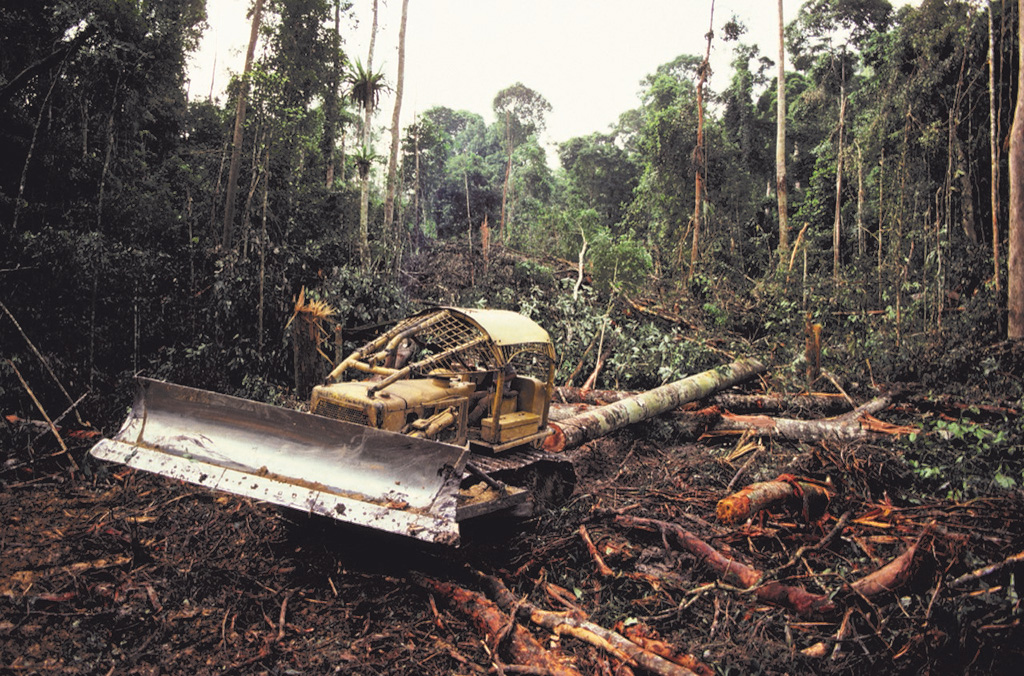
The cost of deforestation is high. According to him, it’s at least R$800 per hectare, but it can reach R$2,000. “It depends on the conditions. If you have many chainsaws, for instance, or use a chain tractor. A bulldozer, to open the roads, costs hundreds of thousands of reais. In 180-hectare deforestation in Acre, Ibama found 35 people working simultaneously, in slave-like conditions,” he says.
This problem is also acknowledged by agribusiness, which came out last week and asked the government to fight deforestation and fires. The Coalizão Brasil Clima, Florestas e Agricultura (“Brazil Coalition on Climate, Forests and Agriculture”), an organization that includes more than 200 agribusiness representatives, environmental defense agencies, academia and the financial sector, handed a manifesto to President Jair Bolsonaro, saying that this is necessary for Brazil to become an “agri-environment leader”.
“We have already experienced periods in which a significant drop in deforestation occurred in the middle of a cycle of productivity gains in agriculture and ranching. This history shows that deforestation is not required to increase agricultural production. Agribusiness is being undermined by gangs that operate illegally, tarnishing the sector’s reputation, increasing legal insecurity and unfair competition for producers and companies,” the manifesto points out.
In little more than a year, the District Prosecutor Office’s efforts, which involved the work of 15 prosecutors in Amazonas, Rondônia, Amapá, Acre, and Pará, resulted in six operations with criminal cases already being prosecuted. In Amazonas alone, 33 people have been criminally charged.
Gains depend on what will be done with the land at a later stage. Some of the cases investigated by the task force include large sums in the most varied environmental crimes. One of these cases is that of a family denounced for illegally extracting gold over almost ten years prospecting in Amapá. The Federal Police estimate that the group profited approximately R$19 million. In another case, involving logging on the Karipuna indigenous land in Rondônia, the environmental impact was estimated at over R$22 million.
Nine people and two companies were denounced for invading and surveying indigenous lands. A report by the Federal Police described large deforested areas and buildings being built for human occupation, under the false promise of legalizing the area. The operation reports that deforestation in the area rose from 1,195.34 hectares (from 2016 to 2017) to 4,191.37 hectares the following year.
In another illegal logging operation in the same region, reported by ‘Floresta Virtual’ (“Virtual Forest”), which investigated several logging companies alleged to have criminal organization ties with each other, only one of them was charged with abetting timber of illegal origin to the tune of R$12,334,437.16.
According to the NGO, one of the most significant cases involved Operation Ojuara, in which the Federal Prosecutor’s Office denounced 22 people for corruption, forming a private militia, disclosing confidential information, money laundering and criminal association, in a longstanding case in Acre and Amazonas.
“In order to carry out deforestation and land grabbing (appropriation of public land and falsification of documents to illegally take possession of this land), some ranchers even had links in public bodies,” says Bogo. There were crimes such as misrepresentation and corruption of public servants, he says. “It was an organized group, working with georeferencing. There was a whole distribution of tasks that led to the inference that this was organized crime.
Land grabbing
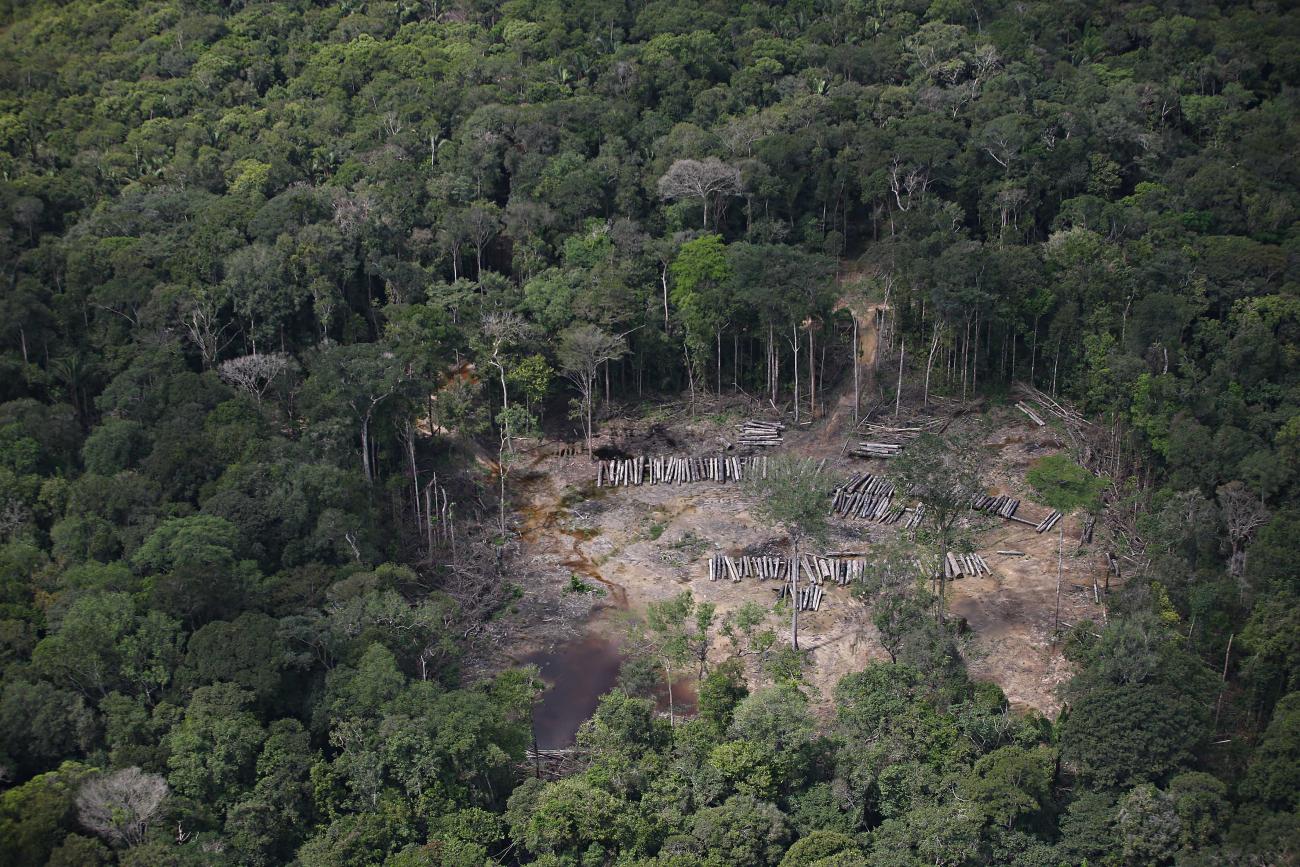
Deforestation for real estate speculation is the other side of the problem. The forest is cut down only to be sold. “A standing forest is worth little. Felling trees adds value. An area ready for grazing is much more expensive”, summarizes Bogo.
A study published in June in the Environmental Research Letters magazine shows that a large part of land grabbing profits comes from the incentives provided by the legislation itself. The study assessed the impact of a 2017 law that facilitated the legalization of occupied federal lands in the Amazon. The rationale was to grant valid land title rights to the most impoverished and to repair historical grievances against people who occupied the region after a call by the federal government in the 1970s and never saw their situation legitimized. For environmentalists, this would favor land grabbers.
“The law gives preference to those who are occupying the land. In addition to using it for free for many years, land grabbers can buy it for below-market prices,” says researcher Paulo Barreto, from the NGO Imazon, who conducted the study. The work assessed revenue losses that may have occurred in 32,490 lands – totaling 8.6 million hectares -, and are currently in the course of being granted legal title. “Short-term losses range from US$5 billion to US$8 billion. This has the potential to further increase deforestation since it stimulates future occupations with the hope of regularizing tenure,” he adds.
Considering future regularizations – in areas where the government is planning to expand the program – researchers have estimated that the potential for revenue loss could be close to US$20 billion.
More: Brazil news in English, every day from The Rio Times.
This article was produced by The Rio Times’ automated newsroom system. How we use AI · Report an error · Editorial responsibility: Matthias Camenzind, Editor-in-Chief