How Cannabis Legalization Could Reshape Brazil’s Justice System and Economy
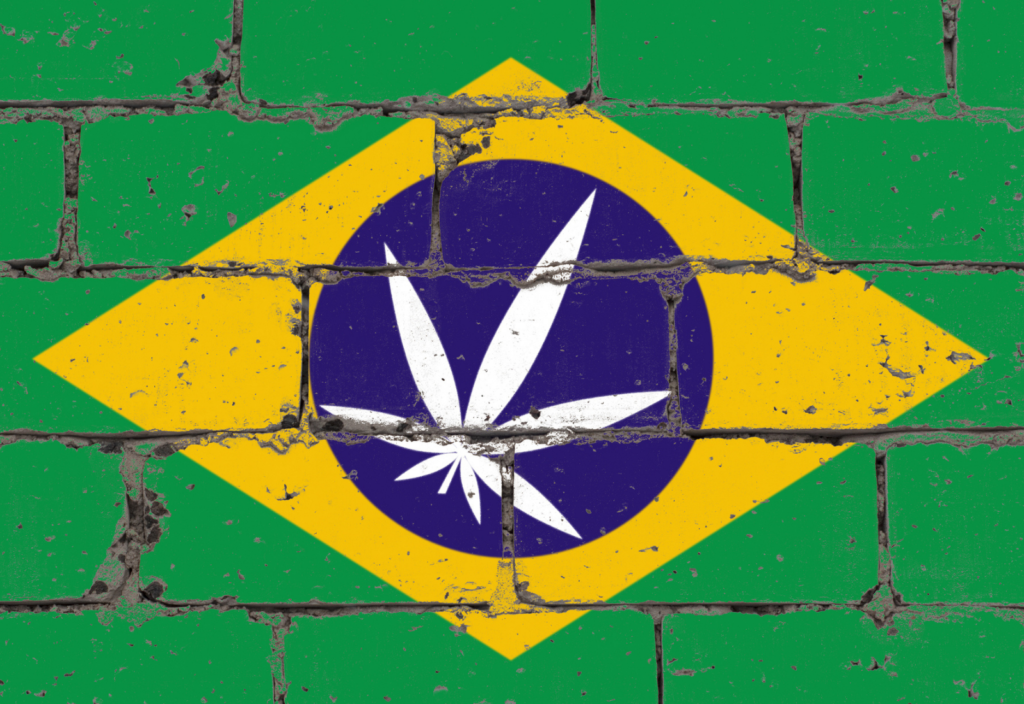
(Sponsored) In 2024, Brazil took a bold step toward cannabis reform. The country’s Supreme Federal Court ruled that adults can legally possess up to 40 grams of cannabis and cultivate six female plants for personal use.
While this landmark decision doesn’t amount to full legalization, it signals a significant shift in Brazil’s stance on drug policy – a change that could ripple through both its justice system and economic landscape.
A History Rooted in Punishment
Brazil’s drug laws have long been a subject of controversy. Enacted in 2006, Article 28 was intended to differentiate between drug users and traffickers.
However, it failed to define what constitutes a “personal quantity,” effectively granting law enforcement wide latitude in interpretation.
The result: a law that has disproportionately impacted Brazil’s poorest and most marginalized communities.
With over 835,000 individuals behind bars, Brazil ranks third globally for its prison population.
A significant proportion of these detainees are incarcerated for low-level, non-violent drug offenses – often involving cannabis.
As Human Rights Watch has documented, this punitive framework has fueled overcrowding and systemic abuse within the prison system.
The Supreme Court Ruling: A Legal Turning Point
The recent decision in case RE 635659 reframes possession for personal use as an administrative offense, not a criminal one. While trafficking remains illegal, the Court’s ruling introduces a clearer legal threshold, potentially sparing thousands from prosecution.
The judgment came after years of deliberation, prompted by a case involving an individual caught with just three grams of cannabis.
By setting limits – 40 grams and six homegrown plants – the Court offers guidance where lawmakers had remained vague. It’s a pivotal clarification, but one that hasn’t gone uncontested.
Brazil’s National Congress, dominated by conservative factions, swiftly introduced a constitutional amendment aiming to criminalize drug possession entirely, regardless of quantity.
Senate President Rodrigo Pacheco criticized the Court’s ruling, insisting that such decisions should rest with legislators, not judges. As Time Magazine reports, this sets up a tense standoff between Brazil’s judiciary and its political class.
Justice System Implications
If allowed to stand, the Supreme Court’s decision could have a measurable impact on incarceration. According to Instituto Igarapé, about one-third of all imprisoned women in Brazil are there for drug-related crimes, most of them non-violent.
Removing cannabis possession from the criminal docket could help reduce strain on the prison system and improve public trust in legal institutions.
Moreover, having a defined threshold between use and trafficking could help dismantle biases in policing. For residents of Brazil’s urban favelas – where cannabis arrests are common – this clarity could mean the difference between criminal records and freedom.
Cannabis as Economic Catalyst
Legalization carries not only legal but economic promise. Brazil’s diverse climate zones and well-established agriculture sector position it uniquely to become a cannabis powerhouse – both regionally and globally.
Brazil’s agricultural research agency, Embrapa, is spearheading a 12-year study to adapt cannabis strains to local environments, build a national seed bank, and evaluate regional production models. This forward-looking approach highlights the country’s potential to lead in cultivation and export.
Meanwhile, Brazil’s medical cannabis market is already thriving. In 2024, the sector served more than 672,000 patients – an increase of over 56% year-on-year – generating R$853 million in revenue (about USD $170 million).
According to International CBC, the majority of patients accessed cannabis through regulated import programs, with a growing number obtaining prescriptions via Brazilian associations and healthcare networks.
Global retailers like Herbies Seeds, known for providing access to high-quality genetics, are closely watching Brazil’s legislative developments.
Should the country fully embrace legalization, it could unlock new avenues for legal seed distribution, domestic cultivation, and regulated retail operations.
Remaining Hurdles
Despite the momentum, challenges persist. The cost of medical cannabis remains prohibitively high for many Brazilians, particularly in regions where public healthcare access is limited. Regulatory bottlenecks and limited domestic production options also complicate patient access.
On the legislative front, political resistance continues to cloud the future of reform. The proposed constitutional amendment – if passed – could undo recent progress, reinstating punitive measures even for small-scale possession.
This battle between progressive legal interpretation and conservative political control is shaping up to be one of the defining legal debates of the decade.
Looking Across Latin America
Brazil is not navigating these waters alone. Uruguay fully legalized recreational cannabis back in 2013, while Colombia has positioned itself as a leading exporter of medical cannabis.
Even Mexico’s Supreme Court has declared prohibition unconstitutional, though lawmakers there have yet to finalize a regulatory framework.
Brazil’s approach will likely draw on lessons from its neighbors – balancing public health, equity, and economic opportunity as it charts its own path.
What Lies Ahead
Brazil now stands at a critical juncture. The Supreme Court’s ruling offers more than a legal adjustment – it represents a chance to reevaluate outdated drug policies, correct social injustices, and stimulate economic innovation.
Whether the country advances toward full legalization or reverts under political pressure will depend on the choices made in the months ahead.
What’s clear is that cannabis reform is no longer a fringe issue – it’s a central debate with far-reaching implications for Brazil’s legal system, economy, and international standing.
More: Brazil news in English, every day from The Rio Times.