Oil Money Is Building Guyana a Real Military From Scratch
Defense · Guyana
—The surge. Guyana’s defense budget has jumped more than eightfold in just five years.
—The fuel. The money comes straight from the country’s booming offshore oil industry.
—The size. Even so, the force is tiny, at around three thousand troops.
—The shopping list. Priorities for this year are coastal radar, long-range drones and new patrol ships.
—The threat. Neighboring Venezuela claims two-thirds of Guyana’s territory, the oil-rich Essequibo.
—The crutch. For now, Guyana leans heavily on the United States, France and Brazil.
The Guyana military is being built almost from scratch on a tide of oil money, as one of the world’s newest petro-states scrambles to defend itself against a far larger neighbor that claims most of its land.
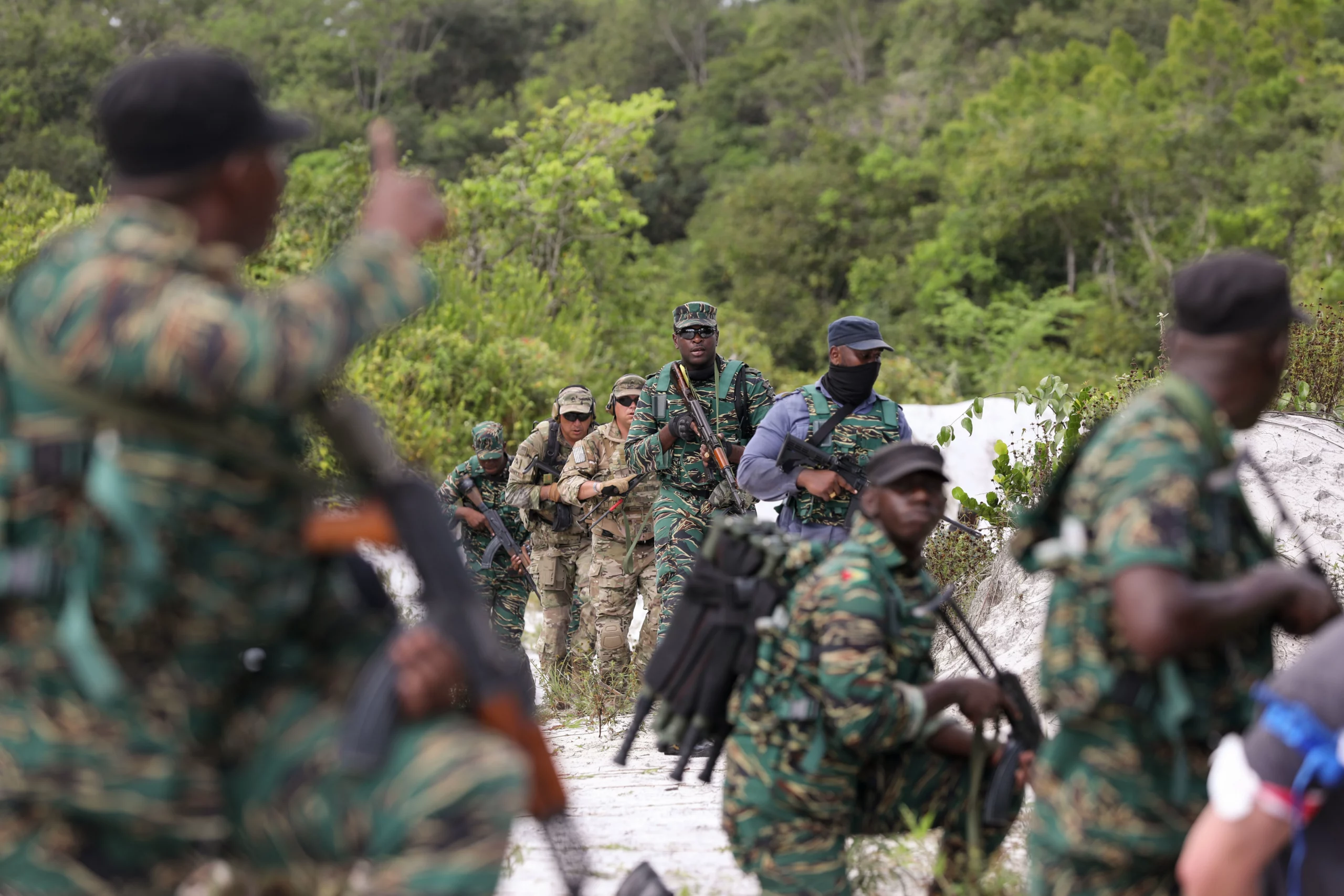
How oil is reshaping the Guyana military
A decade ago, Guyana was one of the poorest countries in South America with a token defense force. Then a string of giant offshore oil discoveries turned it into the fastest-growing economy on earth.
That wealth is now flowing into the armed forces. The defense budget has risen more than eightfold in proportional terms over five years, reaching about US$247 million.
It is a staggering rate of growth for such a small country. Yet the force remains modest, with only about three thousand troops to cover a vast and thinly populated territory.
The challenge is to turn money into real capability quickly. Building a credible military takes far longer than writing the cheques, and Guyana is starting from a very low base.
The numbers behind the boom explain the urgency. Offshore output has surpassed 900,000 barrels per day, transforming a national budget that was modest only a few years ago.
Part of that windfall is being poured into hard security. The government has framed a stronger force as the price of protecting the wealth that is now transforming the country.
A shopping list built around the border
The spending priorities reveal exactly what worries Georgetown. Top of the list are coastal radar systems and long-endurance drones to watch the country’s land and sea borders.
At sea, the focus is on protecting the offshore oil platforms that now drive the economy. Guyana is bringing in a large new ocean patrol vessel from a French shipbuilder to extend its reach.
In the air, the force has added light fixed-wing aircraft suited to its remote interior. It has also set up a drone and mapping center and signed for advanced helicopters.
There is institution-building too. A new national defense headquarters is planned, alongside a training institute meant to professionalize the officer corps.
Still leaning on friends
For all the spending, Guyana’s force has glaring gaps. It has no combat aircraft, no real air defense and no warships capable of a serious fight.
So it relies on partners to fill the holes. The United States, France and Brazil all provide surveillance, training and intelligence support that Guyana cannot yet supply itself.
That dependence is the heart of its strategy. Guyana cannot hope to match Venezuela‘s army, so it leans on powerful friends to deter any attack.
The threat is not abstract. This year Guyanese soldiers have come under fire more than once along the disputed river border with Venezuela.
Why it matters for investors
The oil that funds this buildup is also what makes Guyana a target. The same offshore fields drawing in foreign capital are the prize Venezuela is contesting.
For the energy firms operating there, security is now part of the business case. The platforms sit in waters a hostile neighbor disputes, and their safety depends on deterrence holding.
The buildup also signals how seriously Georgetown takes the risk. A government spending oil windfalls on radar and patrol boats is one bracing for a long standoff, not a quick fix.
For investors, the takeaway is that Guyana’s boom and its border risk are two sides of one coin. The country’s defense trajectory is now as worth watching as its oil output.
Frequently Asked Questions
Why is the Guyana military growing so fast?
Guyana’s defense budget has jumped more than eightfold in five years, funded by a huge offshore oil boom that made it the fastest-growing economy in the world. The money is being spent to defend against Venezuela, which claims two-thirds of Guyana’s territory.
What is Guyana buying with the money?
The priorities for this year are coastal radar systems and long-endurance drones to watch the borders, plus a large new patrol ship from a French builder to protect offshore oil platforms. Guyana is also building a new defense headquarters and a training institute for its officers.
Can the Guyana military defend the country alone?
It cannot defend itself alone, because with only around three thousand troops, no combat aircraft and no real air defense, Guyana depends heavily on the United States, France and Brazil for surveillance, training and deterrence. Its strategy rests on powerful partners rather than matching Venezuela’s much larger force.
Connected Coverage
US Navy Looms as Venezuela Nears Guyana’s Oilfields
Venezuelan Military Patrols Spark Renewed Tensions with Guyana
This article was produced by The Rio Times’ automated newsroom system. How we use AI · Report an error · Editorial responsibility: Matthias Camenzind, Editor-in-Chief
Read More from The Rio Times