Ghana and Korea unveil master plan for tax modernisation
Ghana · ECONOMY
Key Facts
—Master plan handover: Ghana received the tax modernisation master plan in August 2026, developed with Korea International Cooperation Agency support.
—Project origins: KOICA and Ghana signed the partnership on July 25, 2023, in Accra, represented by Donghyeon Lee and then Deputy Finance Minister John Kumah.
—Grant value: A related financing report put the KOICA grant at US$2.2 million for the tax modernisation master plan.
—Revenue target: Ghana aims to lift its tax-to-GDP ratio to 18–20 percent and non-tax revenue to 4 percent through 113 policy actions between 2024 and 2027.
—Recent progress: A 2026 analysis said Ghana’s tax-to-GDP ratio rose from about 12.3 percent to 14 percent in 2025.
—Broader finance: Ghana and Korea signed a US$2 billion framework arrangement in June 2024 under Korea’s Economic Development Cooperation Fund.
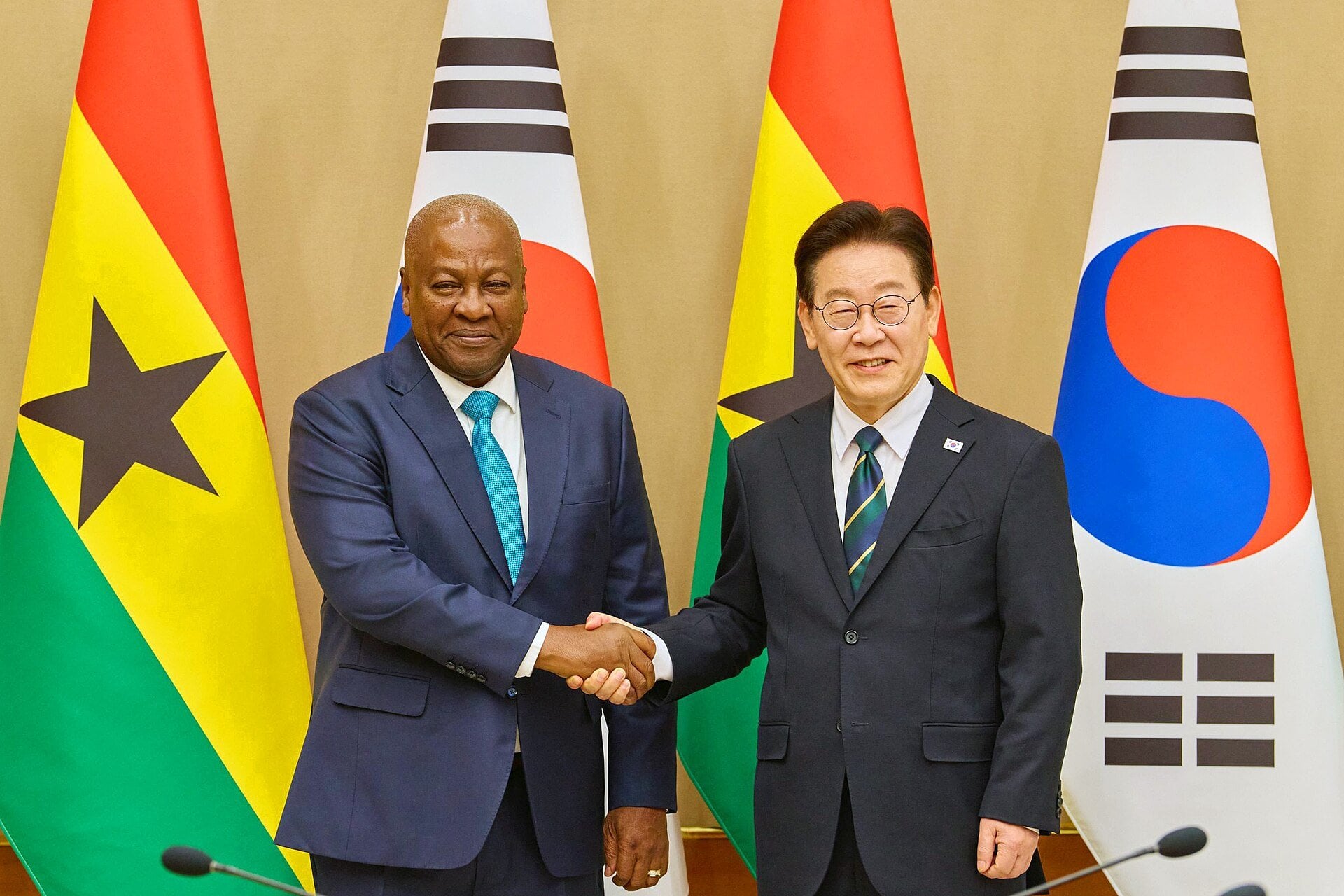
Ghana and South Korea have unveiled a tax modernisation master plan designed to broaden the tax base, improve compliance and digitise revenue administration. The plan, handed over in Accra in August 2026, sits inside Ghana’s wider push to lift domestic revenue after years of fiscal stress.
What the tax modernisation master plan contains
The master plan focuses on bringing Ghana’s informal sector into the tax net, improving income tax and value-added tax policy, and digitising tax administration. It also aims to create a data-driven intelligent tax system and expand taxpayer services through digital channels.
The plan was developed with support from the Korea International Cooperation Agency, known as KOICA, and input from the Korea Institute of Public Finance. Officials from Ghana’s Ministry of Finance and the Ghana Revenue Authority were involved in the work.
A related financing report said the US$2.2 million grant would support Ghana’s tax modernisation master plan, whose digital outputs include mobile money platforms, e-invoicing, linked customs systems, an electronic cash receipt system and an integrated tax portal. These tools are meant to make compliance easier while giving the state more visibility over commerce.
Why Ghana needs the revenue push now
Ghana’s own revenue strategy says the country wants to raise its tax-to-GDP ratio to 18–20 percent and non-tax revenue to 4 percent. The plan lists 113 policies and administrative actions to be carried out between 2024 and 2027.
A 2026 analysis said the tax-to-GDP ratio had already risen from about 12.3 percent to 14 percent in 2025. But the same analysis stressed that further gains are needed to stabilise the fiscal outlook and reduce reliance on borrowing.
The government’s medium-term revenue strategy explicitly includes measures similar to the Korea-backed project. These include a digitisation master plan, taxpayer assistance for the informal sector, third-party data sharing, an integrated tax application system and broader use of digital revenue tools.
Korea’s strategic interest in Ghana
Korea’s involvement is not purely aid. It reflects a model of developmental state diplomacy, in which Seoul exports administrative know-how, digital public-finance systems and policy consulting to partner countries.
In Ghana, this can serve several Korean interests at once. It can create commercial influence by helping shape digital public-finance infrastructure, position Korea as a practical partner in state capacity-building, and deepen its geopolitical presence in Africa.
The Korea-backed model is often presented as a knowledge-sharing partnership rather than a classic donor-recipient relationship. That framing gives it soft-power value in Africa and beyond, at a time of stronger competition among middle powers and larger players.
The money behind the partnership
The tax project sits alongside much larger Korea-Ghana financial ties. In November 2020, the two countries signed a US$400 million framework arrangement of concessional loans for 2020 to 2022.
In June 2024, Ghana and Korea signed a US$2 billion framework arrangement under Korea’s Economic Development Cooperation Fund. That facility is meant to support Ghana’s priority sectors over five years.
Korean support to Ghana has also covered health, agriculture, tax administration and infrastructure. The agencies involved include KOICA, KOTRA, KOFIH, Korea EXIM Bank and KOPIA.
Tax administration as a sovereignty issue
Tax administration is now as much a sovereignty issue as a technical one. Countries that digitise revenue systems gain better state capacity, better data and more control over informal and cross-border economic flows.
For Ghana, higher domestic revenue reduces dependence on external borrowing and conditional finance. Digital tax systems can also bring the informal economy into the formal fiscal net, while links to mobile money, customs data and e-invoicing give the state more visibility over trade.
The project fits the wider pattern covered by Africa: The New Scramble, where middle powers use development finance and digital expertise to build influence. For Korea, exporting its own public-sector digitalisation experience is a way to translate domestic success into international standing.
What to watch next
The formal handover in August 2026 marks the start of implementation, not the end of the process. The next test will be whether Ghana can turn the master plan into working digital systems that actually widen the tax base.
Ambassador Park Kyongsig linked the effort to Ghana’s Big Push economic agenda at a workshop in July 2025. Deputy Finance Minister Thomas Nyarko Ampem welcomed the plan and thanked Korea for supporting tax administration and public financial management reform.
The relationship dates back to the establishment of diplomatic relations on 14 November 1977, with a technical, economic cooperation and trade promotion agreement following in June 1990. The tax master plan is the latest chapter in a partnership that has grown steadily in scale and strategic weight.
More: Ghana news in English, every day from The Rio Times.
Background: Moraes Family Firm Warned of Corruption Risk in Master Advice.
Frequently Asked Questions
What is the Ghana Korea tax modernisation master plan?
It is a plan developed with KOICA support to broaden Ghana’s tax base, improve compliance and digitise tax administration. It was handed over to Ghana’s Ministry of Finance in August 2026.
How much did Korea contribute to the tax modernisation project?
A related financing report put the KOICA grant at US$2.2 million for the tax modernisation master plan, whose digital outputs include mobile money platforms and e-invoicing.
What is Ghana’s domestic revenue target?
Ghana aims to raise its tax-to-GDP ratio to 18–20 percent and non-tax revenue to 4 percent through 113 policy actions between 2024 and 2027.
Connected Coverage
For more on how middle powers and larger players are competing for influence across the continent, read Africa: The New Scramble.
Sources
This article was produced by The Rio Times’ automated newsroom system. How we use AI · Report an error
LatAm Markets: Live Signals → — real-time movers, turnover leaders and FX across Latin America.
Read More from The Rio Times