German Environmental Funding in 2017 Far Exceeded IBAMA’s Non-Compulsory Budget
RIO DE JANEIRO, BRAZIL – The German government transferred US$268 million (R$1.1 billion) to Brazil in 2017 for investment in environmental protection projects, according to information provided by the Ministry of Foreign Affairs at the request of G1 news site.

This amount is almost four times the budget of the Brazilian Institute of the Environment and Renewable Natural Resources (IBAMA) for non-compulsory expenditures in 2019 (R$286.7 million, which already includes the budget cut announced by the government, according to NGO Contas Abertas).
Among non-compulsory expenses are those ranging from water and electricity bills to the financing of anti-deforestation and firefighting actions.
When compared to the total authorized budget for IBAMA in 2019 (R$ 1.7 billion), which includes mandatory expenses such as employees’ salaries, the sum of transfers from Germany in 2017 was equivalent to 65 percent thereof. In 2017, IBAMA’s total expenditure was R$1.4 billion.
G1 asked Itamaraty to provide the amounts transferred in 2018, but, according to the ministry, last year’s data have not yet been compiled. The site also contacted the Ministry of the Environment but obtained no reply.
The German funding suspension was announced after the release of figures that pointed to an increase in deforestation and after other controversies involving Bolsonaro’s government and the environmental sector, including the dismissal of the director of the National Institute of Space Research (INPE), Ricardo Galvão, for disagreements regarding the disclosure of deforestation data.

G1 contacted the German embassy in Brasília, which did not wish to comment on Bolsonaro’s statements. When asked about transfers to environmental protection programs in Brazil, the embassy reported only that the “current portfolio of technical and financial cooperation with Brazil” is approximately €2 billion (R$9.2 billion).
The transfers from Germany reported to G1 by the Ministry of Foreign Affairs involve loans and donations to bilateral cooperation projects in the environmental field.
Among these projects are the Amazon Fund — which has recently gained notoriety due to disagreements between Bolsonaro’s government and the donors leading to the program’s discontinuation; the national plan for adequate treatment of solid waste; and the project for the protection of indigenous areas.
The largest transfer was a US$141.7 million loan for the Pro-Climate program. Coordinated by the National Bank for Economic and Social Development (BNDES), the program aims to finance projects focused on sustainable energy and energy efficiency.
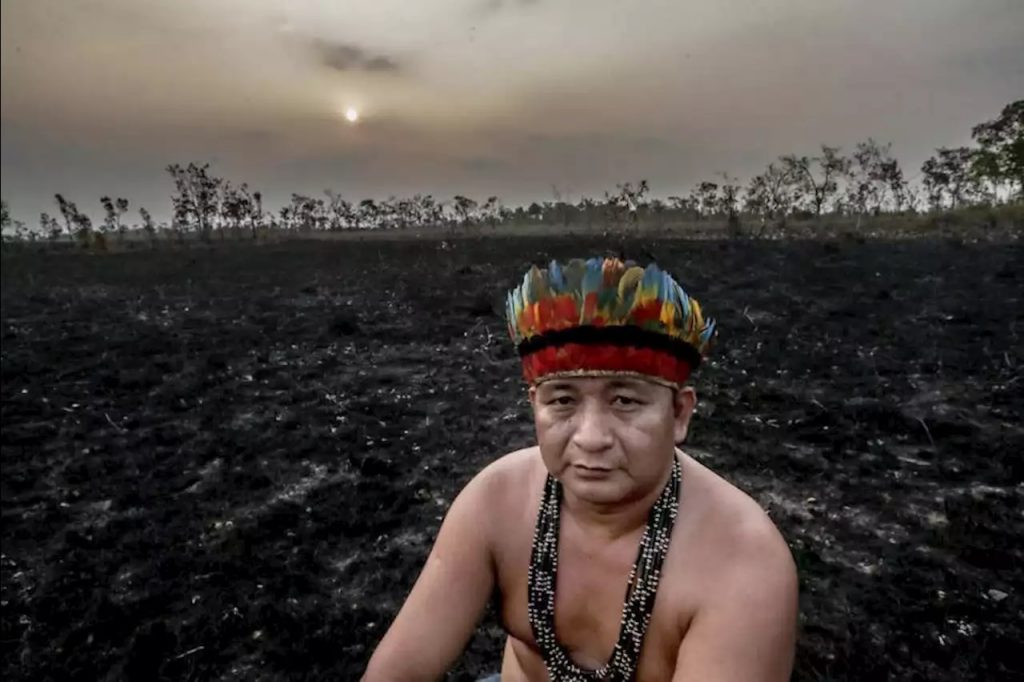
Adriana Ramos, Public Policy Advisor to the Socio-Environmental Institute (ISA), says that Brazil’s environmental policy “has always depended on international cooperation.”
According to her, the cooperation contributes to “enhance the actions and foster experiments and innovations.”
“In the current context, after the constraints imposed by the spending ceiling and by contingencies and budget cuts, cooperation becomes even more significant,” she said.
In her view, Germany’s decision to suspend transfers to Brazil is “understandable” given the “absence of specific plans and proposals from the Brazilian government” regarding environmental protection. She also criticized president Jair Bolsonaro’s reaction in the incident.
“Brazil’s response only corroborates the idea that the country does not want to progress in terms of environmental policy. On the contrary, it has rhetorically promoting illegal actions and environmental degradation,” said ISA’s Adriana Ramos.
WWF Brazil’s executive director, Maurício Voivodic, believes that the country will have “much to lose” with the suspension of international cooperation in the environmental area.
“The international cooperation funds have, for over two decades, played an important role in supporting Brazil in the implementation of its environmental policies. For this reason, it is regrettable that the current federal government has been signaling that it does not need this support,” says Voivodic.
More: Brazil news in English, every day from The Rio Times.
This article was produced by The Rio Times’ automated newsroom system. How we use AI · Report an error · Editorial responsibility: Matthias Camenzind, Editor-in-Chief