Energy
Key Facts
—The list grew. An official register of Petroperú’s non-strategic real estate went from 59 properties to 514 after the company handed over 455 more it did not consider crucial.
—The sale slipped. The first auction, due this week, now runs between August and September, after the incoming government takes office.
—The vehicle. A special-purpose company will be formally constituted next week, allowing Petroperú to draw a first $500m of a $2bn credit line from international private banks.
—The condition. The remaining $1.5bn arrives only once the first tranche has been released and utilized for its exclusive purpose.
—The near miss. Separately, ProInversión helped the company recover an unsecured $200m line to cover an instalment on a bank loan it could not otherwise pay.
—The repayment. The special vehicle, not the state, borrows the money, and nothing is due back until year seven.
Peru’s state oil company was preparing to auction fifty-nine buildings it no longer needed. Then it produced four hundred and fifty-five more, and the Petroperu asset sale slid past the change of government.
The properties belong to Petroperú, the state oil firm that has absorbed repeated rescues while its refinery project at Talara ran billions over budget. Selling what it does not need is one plank of a restructuring now overseen by ProInversión, the government’s investment-promotion agency.
In January the agency named fifty-five non-strategic assets. By the time an official list was drawn up it stood at fifty-nine, and the first auction was set for this week.
Why the Petroperu asset auction was postponed
Petroperú then delivered a further four hundred and fifty-five buildings that it also did not regard as crucial to its operations. The register jumped to five hundred and fourteen.
On our own arithmetic the register grew by a factor of about eight point seven. The agency has pushed the first auction to somewhere between August and September while it reviews the additions.
Asked by the Peruvian daily Gestión why so many appeared at once, ProInversión’s chief executive, Luis Del Carpio, declined to say the company had concealed anything. His team had pressed for full detail from the start, he said, and he chose to treat the late disclosure as cooperation.
That is a careful answer. It is also an admission that the state did not know what its own oil company owned.
What is in the Petroperu asset package?
The first batch was to be four buildings. Gestión gives their minimum proceeds as four point nine million, but states the figure in soles in one place and in dollars in another, so the sum is best treated as unconfirmed.
That composition will now change in any case, and Del Carpio says many more plots will join the first sale.
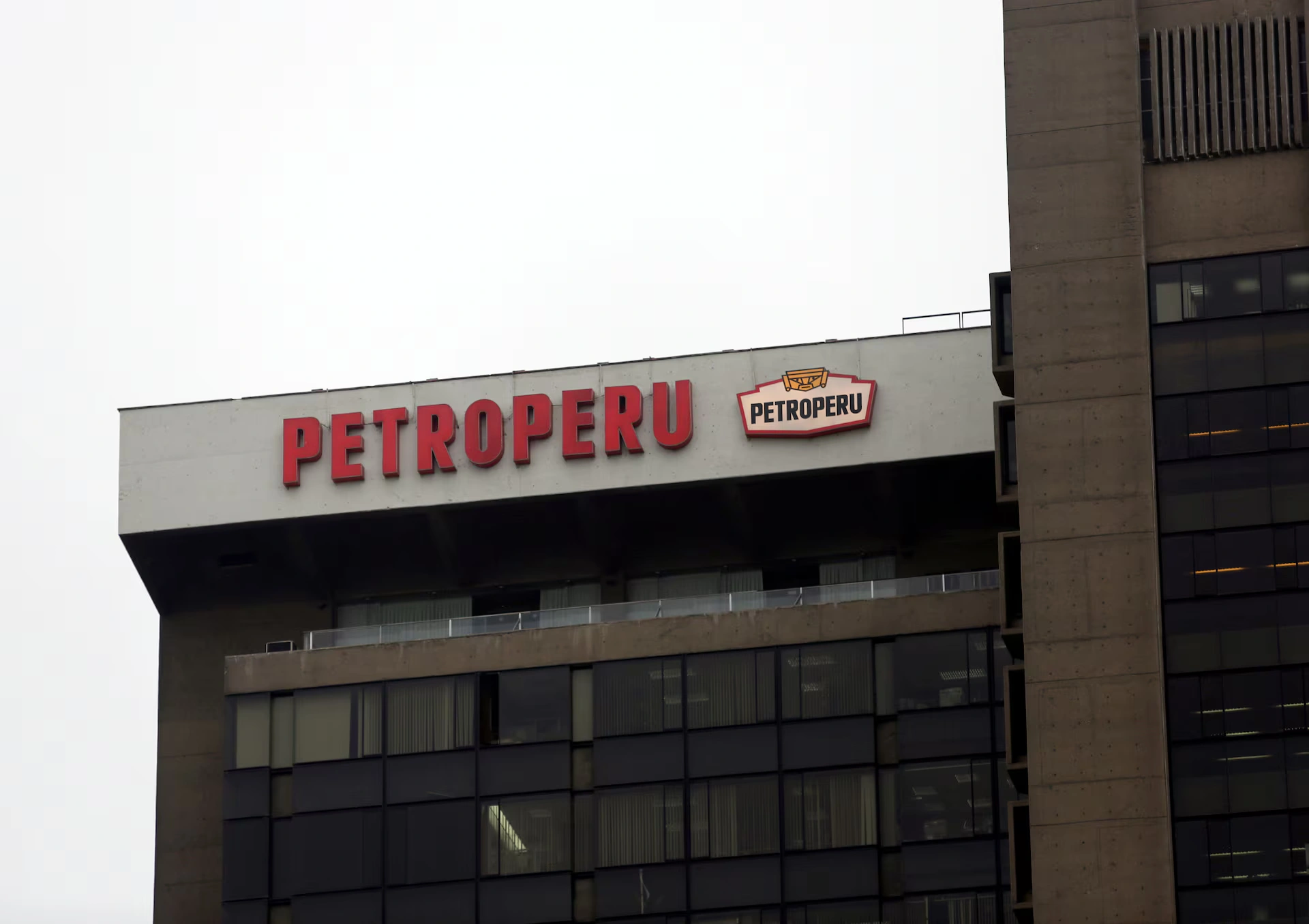
The company’s landmark headquarters in the San Isidro district of Lima is handled separately. It will be offered to private investors inside what officials call an equity block rather than sold as surplus property.
Del Carpio calls it a different kind of asset for its location, its architecture and what it symbolises. Those blocks were due to be presented this month, though he conceded the timing depends on handover talks with the incoming administration.
The money that matters more
Property sales are the visible part. The consequential part is a two billion dollar credit line from international private banks, authorised by emergency decree in May.
The stakes are not abstract. Petroperú supplies a large share of the national diesel and petrol market, and in Amazonian regions such as Loreto, Ucayali and Madre de Dios its share climbs far higher, because private competitors barely operate there.
A cash crisis at the company is therefore a fuel-supply question for parts of the country that have no alternative supplier. The decree that created the credit line said as much, invoking national energy security.
To reach it, Petroperú must first create a special-purpose vehicle, a subsidiary built for one job. It is that entity, not the oil company and not the treasury, that borrows directly from the banks.
Del Carpio told Gestión the vehicle will be formally constituted next week, once Petroperú’s board signs off. In the weeks after that the company gains access to the first five hundred million dollars.
The rest is conditional. Only once that first tranche has been released and utilized for its exclusive purpose does the remaining one and a half billion follow.
The two billion, Del Carpio noted, simply restores the working-capital line Petroperú once had and lost entirely. Repayment is not due until the seventh year.
Is this a bailout, and who pays if it fails?
The government insists it is not, because no treasury money is used and the lenders are private. The energy ministry provides a non-financial guarantee, and the state carries a contingent commitment of up to five hundred million dollars while the main scheme is built.
Critics answer that a state guarantee is a state liability by another name. If the vehicle cannot repay, the obligation returns to the public balance sheet, which is what a contingent commitment means.
What does the $200m rescue line reveal?
More than the headline package does. Del Carpio disclosed that his agency separately arranged, without any guarantee at all, for Petroperú to recover a lost financing line of about two hundred million dollars.
Its purpose was to meet a pending instalment on an existing bank loan the company could not otherwise pay. A firm awaiting a two billion dollar facility had, in the meantime, run out of cash for a single repayment.
More: Latin America news in English, every day from The Rio Times.
Frequently Asked Questions
How many properties is Petroperú planning to sell, and how did that number change?
Petroperú's official register of non-strategic real estate grew from an initial 59 properties to 514 after the company handed over 455 additional assets it did not consider crucial. The first auction, originally scheduled for this week, has now been pushed back to between August and September.
How is Petroperú accessing the $2 billion credit line from international private banks?
A special-purpose company will be formally constituted next week, allowing Petroperú to draw a first $500 million tranche of the $2 billion credit line. The remaining $1.5 billion will only be released once that first tranche has been spent buying crude and the refineries are producing again.
Who is responsible for repaying the $2 billion credit, and when is repayment due?
The special-purpose vehicle, not the Peruvian state, is the borrowing entity for the credit line. No repayment is due until year seven of the arrangement.
Connected Coverage
Fujimori’s Plan Would Shrink Peru’s Troubled State Oil Firm
This article was produced by The Rio Times’ automated newsroom system. How we use AI · Report an error · Editorial responsibility: Matthias Camenzind, Editor-in-Chief