Focus Report: Brazil Faces Tough Choices as Inflation Stays High
Brazil’s economy shows signs of strength, but persistent inflation and high interest rates worry many businesses and families.
Official figures from the Central Bank place inflation at 5.1% for 2025, which breaks the government’s upper limit of 4.5% for the eighth month in a row.
Food prices have recently eased, but rising costs for electricity and services still push overall prices higher. To fight inflation, the Central Bank raised its main interest rate, the Selic, to 15%.
This marks the highest level in years, aiming to cool spending and slow price increases. However, this also means loans cost more. Many businesses now find it more expensive to borrow for investments, and families face higher monthly payments or get fewer approvals for credit.
The government expects Brazil’s economy to grow at a slower but steady rate, around 2.2% this year, after a stronger 3.4% increase in 2024.
Agriculture continues to support the economy, but the manufacturing and export sectors now feel pressure from higher financing costs and new trade hurdles in global markets.
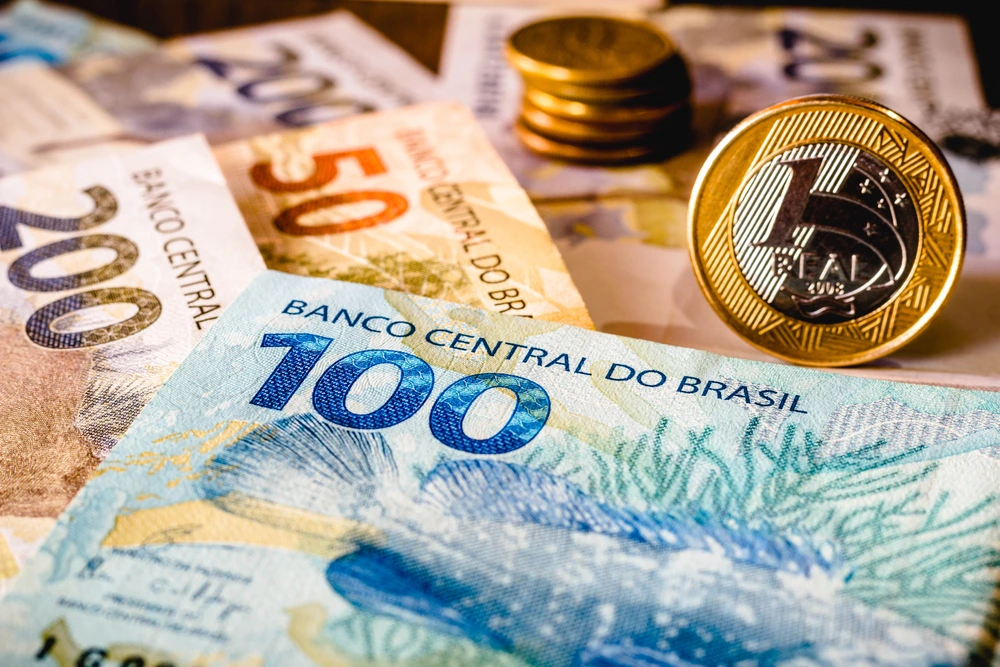
Meanwhile, Brazil’s currency, the real, lost value and now trades at about 5.65 per U.S. dollar. This drop makes imports—like machinery, fuel, and electronics—more costly, raising prices for local consumers and businesses.
While the weaker currency helps some exporters, it adds stress across the economy as basic goods become pricier. These official figures show Brazil’s government faces tough decisions.
Leaders must control inflation while protecting jobs and growth. For people and companies in Brazil, the choices made now will affect daily life and business chances for years to come.
Live Market IntelligenceBrazil — Live Market Board
Rio Times · Live Market Intelligence
Brazil — Live Market Board
-0.47%
205,526.47
-0.47%
66,790.35
-0.26%
10,912.39
-0.49%
2,857,176
+0.75%
2,591.39
+0.35%
59,543.73
+0.54%
| Instrument | Last | Change | YoY | Prev. | High | Low | Volume |
|---|---|---|---|---|---|---|---|
| IBOV | 205,526.47 | -0.47% | +21.85% | 206,505.98 | 168,310 | 167,142 | — |
| USD/BRL | 5.16 | +0.01% | -5.13% | 5.16 | 5.18 | 5.14 | — |
| SELIC | 14.00% | — | — | — | — | — | |
| PETR4 | 41.64 | -0.05% | +35.19% | 41.66 | 41.97 | 41.15 | 41,499,400 |
| VALE3 | 72.97 | +0.83% | +30.75% | 72.37 | 73.54 | 72.66 | 17,658,000 |
| ITUB4 | 38.60 | -1.03% | +4.57% | 39.00 | 39.34 | 38.39 | 29,487,800 |
| BBDC4 | 16.85 | +0.36% | +3.50% | 16.79 | 16.90 | 16.67 | 19,416,900 |
| BBAS3 | 19.37 | +0.47% | +0.73% | 19.28 | 19.44 | 19.16 | 11,069,200 |
| B3SA3 | 14.26 | -0.21% | +12.73% | 14.29 | 14.47 | 14.11 | 33,037,800 |
| ABEV3 | 14.89 | -0.80% | +21.91% | 15.01 | 15.07 | 14.81 | 16,453,100 |
| WEGE3 | 47.59 | +0.49% | +29.99% | 47.36 | 48.08 | 47.36 | 3,364,600 |
| PRIO3 | 59.14 | -0.19% | +50.67% | 59.25 | 59.81 | 58.74 | 3,325,600 |
| SUZB3 | 41.33 | +2.35% | -23.55% | 40.38 | 41.48 | 40.35 | 3,914,900 |
| RENT3 | 34.68 | -0.09% | +0.84% | 34.71 | 34.96 | 34.35 | 7,979,100 |
| AZZA3 | 15.89 | -2.63% | -53.76% | 16.32 | 16.42 | 15.82 | 1,330,300 |
| CSNA3 | 4.30 | +0.47% | -42.65% | 4.28 | 4.41 | 4.26 | 10,076,100 |
| GGBR4 | 24.69 | +2.19% | +51.38% | 24.16 | 24.85 | 24.18 | 7,047,600 |
| ENEV3 | 24.21 | -1.38% | +70.49% | 24.55 | 24.64 | 23.99 | 9,297,000 |
This article was produced by The Rio Times’ automated newsroom system. How we use AI · Report an error · Editorial responsibility: Matthias Camenzind, Editor-in-Chief
LatAm Markets: Live Signals → — real-time movers, turnover leaders and FX across Latin America.