Europe Intelligence Brief — Friday, September 18, 2026
Executive Summary
Europe Intelligence Brief for 18 September 2026: Ursula von der Leyen proposes an Emergency Security Protocol any member state could trigger, the Kosovo
Europe Intelligence Brief — Friday, September 18, 2026

Key Facts
Europe spent Thursday and Friday watching the price of energy make decisions that its institutions would not. The Bank of England left its rate alone and three of its nine members voted to raise it.
Eurostat published an August inflation figure on the same morning that showed energy doing almost as much work as services. The rest of the two days belonged to a Swedish count, a Polish warning, a payment to Kyiv and a Greek vote on one of its own.
Read across the Bank of England’s own monetary policy summary and minutes, Eurostat’s own releases, the Office for National Statistics, the European Central Bank’s own calendar and the Council of the European Union’s own forward look. Read also across Irish, Swedish, Polish, Greek, Romanian, Spanish and Qatari outlets, and our own Europe desk.
The Bank Of England Holds, And Three Members Vote To Raise
The Bank of England kept Bank Rate, its main interest rate, at 3.75 per cent on 17 September 2026. Its own monetary policy summary records a vote of six to three at a meeting that ended on 16 September.
The ordinary part of that decision is the hold, which leaves the rate where it has stood since 18 December 2025. The unusual part is the direction of the dissent, because the three members in the minority wanted the rate raised to 4.00 per cent.
The Bank names them. Megan Greene, Catherine Mann and Huw Pill voted for 4.00 per cent, against Andrew Bailey, Sarah Breeden, Swati Dhingra, Clare Lombardelli, Dave Ramsden and Alan Taylor.
The committee’s own explanation points outward rather than inward. Its summary says that “Protracted conflict in the Middle East has contributed to further increases in crude and refined energy prices since the previous meeting, which remain more volatile and higher than pre-conflict”.
The same document says the committee judges “the risks to the inflation outlook are tilted to the upside”. It sets policy, in its own words, “to ensure inflation comes down to 2% sustainably as the economy adjusts to the energy shock”.
On the Bank’s own page for the decision, Andrew Bailey is quoted saying that “the longer this volatility persists, the bigger the impact it will have on inflation”. A committee that will not move is still describing something that is moving underneath it.
The figure the committee was answering came from the Office for National Statistics on 16 September 2026. Consumer price inflation ran at 3.1 per cent in the year to August, up from 2.9 per cent in July.
The statistics office puts the same month’s wider measure, which includes housing costs, at 3.3 per cent. Core inflation, which strips out energy, food, alcohol and tobacco, was 2.6 per cent, and services inflation was 3.4 per cent.
Transport, and motor fuels within it, made the largest upward contribution to the monthly change in both measures, the statistics office says. Food and non-alcoholic drink inflation, by contrast, was 1.3 per cent.
The Bank expects the number to get worse before it improves. Its summary puts inflation at about 3.75 per cent in the final quarter of 2026 and “slightly above 4%” in early 2027, against a target of 2 per cent.
Britain’s government lives with that arithmetic rather than setting it. Its prime minister, Andy Burnham, spent 16 September at Everton’s Hill Dickinson Stadium in Liverpool with Canada’s Mark Carney, in the Associated Press’s account of their first meeting.
Across the Channel the same pressure showed up in a different set of books. Eurostat put annual inflation in the euro area at 3.2 per cent in August 2026 on 17 September, up from 2.9 per cent in July.
The statistical office gives the same 3.2 per cent for the European Union as a whole, up from 3.0 per cent. Prices rose 0.4 per cent over the single month.
The interesting line is the breakdown. Services added 1.43 percentage points to the euro area figure and energy added 1.29, with industrial goods at 0.30 and food, alcohol and tobacco at 0.22.
Energy sitting second, fourteen hundredths of a point behind services, is the figure worth carrying forward from the release. The spread between member states is also wide, with Sweden at 0.3 per cent and Estonia at 1.3 against Romania at 6.3 per cent and Lithuania at 5.6.
Eurostat had published a first estimate of 3.3 per cent for the same month on 1 September, which the final reading revised down by a tenth. The European Central Bank does not meet on rates again until 28 and 29 October 2026, on its own published calendar.
Dublin Discusses A Bill That Dublin Does Not Set
The European Union’s finance ministers and central bank governors met in Dublin on 18 September 2026, under Ireland’s presidency of the Council. The Eurogroup sat on 18 September and the wider informal meeting of economic and financial affairs ministers runs on 18 and 19 September, on the Council’s own forward look published on 11 September.
Officials from Canada, the United Kingdom, Ukraine and Switzerland attended, as did Kristalina Georgieva, the managing director of the International Monetary Fund. Energy costs, and what they are doing to European competitiveness, took the agenda.
Ireland’s finance minister, Simon Harris, put the blame in one place. He said that “The reason there’s a major energy crisis in the world right now is because the Strait of Hormuz is closed”, in Euronews’s record of the meeting.
The word closed is Mr Harris’s own, and the precise status of the strait is his characterisation rather than a measured fact. Euronews’s explainer on the Saudi pipeline does describe a blockade of the Strait of Hormuz since the United States and Israel attacked Iran on 28 February, and calls the strait the transit route for 20 per cent of the world’s oil and gas supplies.
He was blunter about who is profiting from it. His words were “Energy companies are making extraordinarily large profits on the back of this energy crisis. And they’re not making those profits on the basis of being more enterprising or being innovative”.
The market underneath the meeting was calmer than the language. November Brent settled at US$104.82 a barrel on Thursday 17 September, down US$1.01 and 0.95 per cent, after settling at US$105.83 on 16 September.
West Texas Intermediate for October settled at US$101.91 on the same Thursday, down 52 cents. Both are completed sessions rather than readings taken during trading, and both are below where the week started.
The reason prices eased is a repair timetable. Saudi Arabia said on 16 September that it expected to restore about half the capacity of its East-West pipeline within days, and was selling more crude from outside the Strait of Hormuz.
The pipeline itself was hit by drones on 9 September 2026 and shut as a precaution on 10 September, Euronews reported. It runs 1,200 kilometres from the eastern oil fields to Yanbu on the Red Sea and normally carries four to five million barrels a day, about four to five per cent of world supply.
An analyst at the cargo-tracking firm Kpler told Euronews that restoring the damaged pumping stations and full operations “could take up to six weeks”. Poland’s Orlen has bought sixteen extra cargoes from Norway, Britain, Algeria, Kazakhstan, Azerbaijan and the Americas to cover October.
Governments are answering at the pump rather than at the source. Emmanuel Macron ordered what he called a mobilisation on fuel prices, in the same Euronews account.
Live Market IntelligenceCommodities — Live Market Board
Rio Times · Live Market Intelligence
Commodities — Live Market Board
-0.03%
| Instrument | Last | Change | YoY | Prev. | High | Low | Volume |
|---|---|---|---|---|---|---|---|
| GOLD | 4,461 | +1.78% | +33.20% | 4,383 | 4,503 | 4,421 | 139,824 |
| SILVER | 65.59 | +1.26% | +73.05% | 64.77 | 66.98 | 64.81 | 46,406 |
| BRENT | 88.88 | -0.03% | +34.42% | 88.91 | 90.07 | 88.12 | 29,713 |
| WTI | 83.11 | -0.11% | +31.57% | 83.20 | 84.35 | 82.40 | 166,848 |
| COPPER | 6.61 | +0.03% | +46.70% | 6.61 | 6.71 | 6.61 | 39,543 |
| LITHIUM | 75.20 | +1.47% | +62.95% | 74.11 | 75.80 | 75.08 | 89,275 |
| IRON ORE | 161.91 | — | +58.10% | 161.91 | 161.91 | 1 | |
| SOY | 1,184 | +3.20% | +17.05% | 1,148 | 1,199 | 1,168 | 163,179 |
| CORN | 480.50 | +10.02% | +29.34% | 436.75 | 480.75 | 459.50 | 341,248 |
| WHEAT | 655.00 | +3.93% | +29.70% | 630.25 | 657.75 | 631.50 | 128,793 |
| COFFEE | 317.25 | -5.51% | +0.67% | 335.75 | 321.20 | 313.55 | 21,747 |
| SUGAR | 16.43 | -1.79% | -3.01% | 16.73 | 17.11 | 16.22 | 171,992 |
| COCOA | 5,719 | +3.18% | -34.96% | 5,543 | 5,779 | 5,574 | 26,773 |
| ORANGE JUICE | 138.55 | -0.47% | -45.38% | 139.20 | 141.05 | 137.50 | 703 |
| COTTON | 85.03 | +2.33% | +26.78% | 83.09 | 82.90 | 81.96 | 16,546 |
| BEEF | 223.60 | -3.93% | -5.18% | 232.75 | 226.40 | 223.00 | 16,126 |
| CATTLE | 339.10 | -3.16% | -1.82% | 350.17 | 345.50 | 338.60 | 10,164 |
| USD/BRL | 5.16 | +0.01% | -5.13% | 5.16 | 5.18 | 5.14 | — |
Stockholm Finishes Counting And Loses A Government
Sweden’s count from the election of 13 September 2026 closed on Thursday 17 September. The left bloc took 176 of the 349 seats in the Riksdag against 173, a majority of three, Al Jazeera reported.
Ulf Kristersson resigned as prime minister the same day. “Now, it is the speaker who will lead the next stage of the way to a new government. I am henceforth requesting that I be relieved of the office of prime minister to allow that work to start immediately,” he wrote on X.
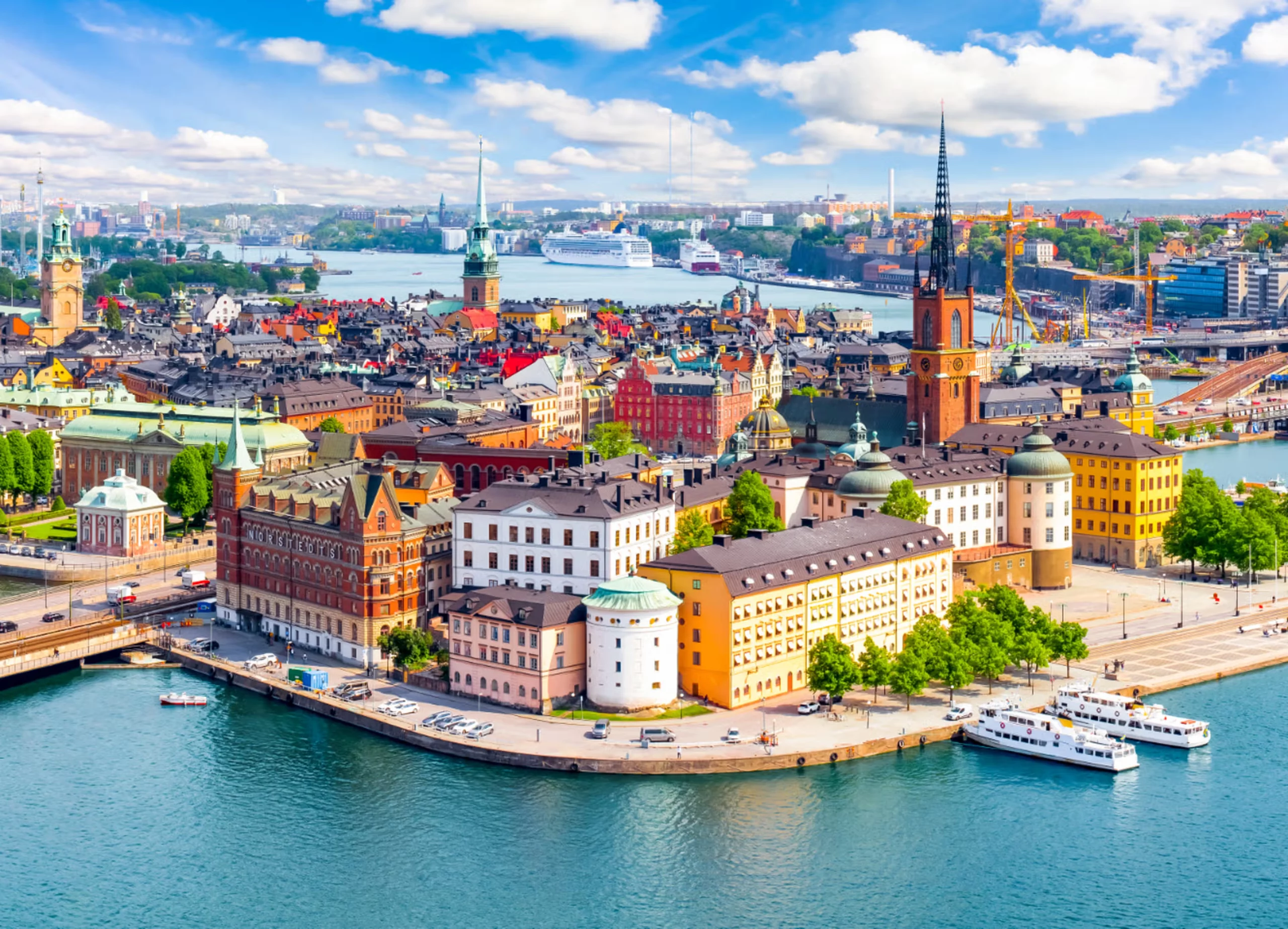
The margin moved while the count ran, which is why the numbers published during the week do not all agree. ABC News in Australia reported the blocs at 175 seats to 174 on Wednesday 16 September, with 26,169 votes between them.
Al Jazeera puts the final gap at roughly 50,000 votes in a country of 10.6 million people. The two figures are consecutive readings of the same count rather than rival claims about the same moment.
The Swedish Election Authority’s own results page still carried no seat numbers when this desk read it, having last been updated on 14 September with a note that the result was expected over the following weekend. The seat counts above are therefore press reporting of the count, not a certified declaration.
Magdalena Andersson has not returned to office, whatever the arithmetic suggests. Al Jazeera reports that she will try to build a coalition and that parliament cannot vote on a new prime minister before 29 September at the earliest.
Her difficulty sits inside her own bloc, between the socialist Left Party and the liberal Centre Party. A majority of three holds only while every member of it is in the chamber.
The Sweden Democrats lost support for the first time since they entered parliament in 2010, Euronews reported on 17 September. A party that had grown at every election since it arrived has now stopped growing.
Warsaw Hears A Warning And Closes Two Airports Twice
Donald Tusk told the Sejm, Poland’s lower house, on 17 September 2026 that intelligence points to a Russian plan. He said that “Russia’s plans also include hybrid strikes with drones and missiles on states supporting Ukraine, including Poland”, in Euronews’s report of the address.
He called it “the most probable scenario for the coming few months” and named “late autumn and winter” as the most critical phase. He did not, in that account, put a figure on the risk.
His technical worry is a newer weapon. He described “jet-powered drones that travel at much higher speeds and operate at high altitude”, and said “hardly anyone is effectively prepared to counter them”.
The prime minister also warned about attacks designed to look like accidents, using the word “accidental” in quotation marks, aimed at “weakening NATO members’ motivation”. He said more than 300 Ukrainian railway locomotives had been destroyed in recent weeks, and that he expects Russia to go on striking six Ukrainian cities.
The warning arrived in a week that had already interrupted Polish aviation twice. On 17 September at noon local time, residents of the Lublin and Podkarpackie provinces received a text message reading “ATTENTION! ATTENTION! ATTENTION! Threat of an air attack. Find a safe place”.
The alert was lifted at 12.50 p.m. local time with the statement that “There is no threat on Polish territory”. Lublin and Rzeszów airports suspended flights, which the Polish Air Navigation Services Agency explained as a step “to ensure the freedom of action of military aviation”.
The same two airports had suspended operations for about forty minutes at around seven in the morning on 16 September, the Kyiv Independent reported. Poland’s Operational Command said aircraft took off and ground-based air defence and radar reconnaissance were readied in response to Russian drone attacks on Ukraine.
Mr Tusk described the Russian attack of 17 September as “massive, extremely brutal” and placed it near the Yahodyn and Dorohusk crossing, where he said a petrol station appeared to have been hit again. The defence minister, Władysław Kosiniak-Kamysz, wrote that the attack came “just a few kilometres from the Polish border” and that “There was no violation of our airspace”.
Andrius Kubilius, the European Commissioner for Defence and Space, was asked the same day what the Union would do about attacks of this kind. He told Euronews that “We can find ways for how Russia will pay quite a painful price for their provocations”, adding that “The European Union is a solidarity union”.
Brussels Sends Kyiv Another 3.3 Billion Euros
The European Commission said on 18 September 2026 that it would disburse 3.3 billion euros, about US$3.8 billion, to Ukraine. The money is for drones and missiles, and it is the fourth defence payment under the instrument the Union calls the Ukraine Support Loan.
Ursula von der Leyen is quoted saying that “Today, we will disburse €3.3 billion to help procure drones and missiles under the Ukraine Support Loan”. The European Sting carries a second sentence, that “Europe will continue to deliver the support Ukraine needs to defend its people and its territory”.
The loan runs to 90 billion euros, about US$103 billion, across 2026 and 2027. It splits into 30 billion euros for budget support, about US$34 billion, and 60 billion euros for defence, about US$69 billion.
With this payment the Commission will have sent Ukraine close to 15 billion euros this year, about US$17 billion, counting both defence and wider support. That is the figure both of the outlets carrying the announcement give.
Those outlets are the qualification worth stating. This desk read the announcement in The European Sting and The Sofia Globe, both of which republish Commission material, and could not open the Commission’s own release to check the wording against the source.
The euro conversions above use the European Central Bank’s reference rate of US$1.1481 to the euro on 17 September 2026. That rate is a fixing taken at 2.15 p.m. Central European Time, not the closing price of a trading session.
Athens Lifts An Immunity By 264 Votes To Two
Greece’s parliament voted on 17 September 2026 to lift the parliamentary immunity of Dimitris Avramopoulos. Of the 266 members present, 264 voted to lift it and two recorded themselves as present without voting.
Mr Avramopoulos is 73, a former mayor of Athens and the European Commissioner for Migration from 2014 to 2019. He now sits as a member of parliament for the governing New Democracy party, and he asked for the immunity to be lifted himself.
The Belgian investigation behind the request concerns participation in a criminal organisation, public corruption and money laundering. It examines his links with Fight Impunity, the non-governmental organisation founded by the former Italian member of the European Parliament Antonio Panzeri.
Belgian authorities have seized about 1.5 million euros in cash, roughly US$1.7 million, across the wider investigation. That inquiry began in December 2022, when prosecutors alleged that foreign governments had sought to influence European Parliament decisions with money and gifts.
Qatar and Morocco have both been accused of attempting to sway those decisions, and both deny it. Mr Avramopoulos says “I have never participated, directly or indirectly, in any illegal activity” and that his involvement with Fight Impunity was “entirely lawful, vetted, approved, declared and taxed”.
A parliament that votes 264 to two is not expressing an opinion about guilt. It is removing the procedural reason a court cannot ask the question.
What This Means From Latin America
Two central banks moved in opposite directions on the same Thursday. Brazil cut the Selic rate, its benchmark interest rate, to 13.75 per cent with effect from 17 September, while three members of the Bank of England’s committee were voting to raise a rate of 3.75 per cent.
The gap between those two numbers is the cost of borrowing in reais against the cost of borrowing in pounds. It is also the reason a Brazilian exporter and a British household are reading the same oil price in opposite moods.
Brent settling at US$104.82 a barrel is revenue for Brazil, Colombia and Guyana and a bill for Chile and Peru. The same barrel arrives as good news in one capital and as an import cost in the next.
The more durable opening is in minerals rather than in oil. The European Commission told Euronews on 17 September that its trade deficit with China is widening at a rate of one billion euros a day, about US$1.15 billion.
Maroš Šefčovič, the Union’s trade commissioner, spoke to his Chinese counterpart Wang Wentao by video for an hour that day and travels to Beijing on 8 and 9 October. Among the instruments Brussels says it may use is a diversification tool intended to reduce its reliance on Chinese critical minerals.
Diversification is a word that has to mean somewhere, and Chile, Peru, Brazil and Argentina are among the places it can mean. A European deficit with one supplier is, read from Santiago or Lima, a European search for another.
Europe’s energy bill is also a Latin American export question. A continent buying sixteen extra cargoes of crude for one month, as Poland’s Orlen has done, is a continent shopping outside its usual suppliers.
What We Are Watching
- Whether Sweden elects a prime minister on 29 September — Al Jazeera reports that parliament cannot vote before that date, and that Magdalena Andersson must first bridge the Left Party and the Centre Party inside her own bloc.
- The General Affairs Council on 22 September 2026 — Ministers debate the Union’s next seven-year budget, the Multiannual Financial Framework for 2028 to 2034. They also review rule of law developments in member states and candidate countries, on the Council’s own forward look.
- The Competitiveness Council on 24 September 2026 — Internal market and industry ministers take up what the Council calls chips act 2.0 and the revision of merger control guidelines, alongside proposals on industrial competitiveness.
- Latvia’s parliamentary election on 3 October 2026 — The one national vote in the Union in the next fortnight, and the next test of whether the Swedish pattern of a stalled far-right vote travels along the Baltic.
- Whether the Saudi pipeline repair holds to its timetable — Riyadh said on 16 September it expected half the East-West line back within days, against an analyst estimate carried by Euronews of up to six weeks for full operations.
- Whether Romania forms a government — Siegfried Mureșan was appointed on 17 September to form a government for a three-party bloc without a majority. He will need the Social Democrats or the nationalist AUR, Radio Romania International reported.
- The European Central Bank’s meeting on 28 and 29 October 2026 — Its own calendar shows no rate decision before then, which leaves the euro area’s 3.2 per cent inflation unanswered by policy for six weeks.
- The Bank of England’s next decision on 5 November 2026 — Whether the three votes for 4.00 per cent become four, against the Bank’s own projection of inflation slightly above 4 per cent in early 2027.
The Bigger Picture
Europe has spent three years treating energy as a shock to be absorbed and is now treating it as a permanent line in the inflation arithmetic. Energy added 1.29 percentage points to euro area inflation in August, which is not the behaviour of a shock that has passed.
A central bank that holds while three of its members want a rise is describing a disagreement it has not resolved. The Bank of England expects inflation slightly above 4 per cent in early 2027 and has chosen to wait anyway.
Sweden took four days to turn a Sunday vote into a resignation letter and will take another twelve before it can elect a successor. The seat numbers this desk carries are press reporting of the count, because the Election Authority’s own page was still without them.
Poland closed the same two airports on two consecutive mornings and then heard its prime minister explain why. A country that rehearses an air raid at noon is a country treating a warning as a timetable.
Underneath all of it, the Union sent Kyiv 3.3 billion euros for drones and missiles on a Friday morning. Europe is paying for a war and a heating season out of the same weakened budget.
Frequently Asked Questions
What did the Bank of England decide on 17 September 2026?
It held Bank Rate at 3.75 per cent by six votes to three, at a meeting that ended on 16 September. The three members in the minority — Megan Greene, Catherine Mann and Huw Pill — voted to raise the rate to 4.00 per cent.
Why is euro area inflation rising again?
Eurostat put annual inflation at 3.2 per cent in August 2026, up from 2.9 per cent in July, with energy adding 1.29 percentage points of that total. Services added the most at 1.43 percentage points.
Who will govern Sweden after the election of 13 September 2026?
That is still open: the count closed on 17 September with 176 of 349 seats for the left bloc against 173, and Ulf Kristersson resigned as prime minister. Al Jazeera reports that parliament cannot vote on a successor before 29 September.
How much has the European Union paid Ukraine this year?
Close to 15 billion euros, about US$17 billion, counting defence and wider support, on the figure carried by the outlets reporting the 18 September payment. That payment was 3.3 billion euros for drones and missiles.
Sources in English: the Bank of England’s own monetary policy summary and minutes for September 2026 and its own Bank Rate page. Inflation from Eurostat for the euro area, and the Office for National Statistics for the United Kingdom. Meeting dates from the Council of the European Union’s forward look of 11 September and the European Central Bank’s own calendar. Sweden via Al Jazeera, ABC News in Australia and Euronews, with the Swedish Election Authority’s results page carrying no seat numbers when this desk read it. Poland via Euronews, Euronews on the air raid alert and the Kyiv Independent, with Andrius Kubilius quoted by Euronews. Ukraine funding via The European Sting and The Sofia Globe, both republishing Commission material, the Commission’s own release having stayed shut to this desk. Greece via Euronews. Energy and the Dublin meeting via Euronews and its pipeline explainer, with settlements from The Nation and Rigzone. China trade via Euronews, Romania via Radio Romania International, and the Carney–Burnham meeting via the Associated Press, carried by Local 10. Currency conversions use the European Central Bank’s euro reference rate of US$1.1481 on 17 September 2026, a 2.15 p.m. Central European Time fixing · 16–18 September 2026.
This article was produced by The Rio Times’ automated newsroom system. How we use AI · Report an error