EU Challenges China’s EV Dominance with New Import Tariffs up to 45%
The European Union has approved new tariffs on Chinese electric vehicles (EVs), igniting a major trade dispute. EU member states voted to impose tariffs of up to 45% on Chinese EV imports.
This decision comes despite opposition from some countries, including Germany, Europe’s largest auto producer. The new tariffs will last up to five years and vary by manufacturer.
Tesla faces a 7.8% tariff, while SAIC, owner of the MG brand, faces a 35.3% rate. These tariffs add to the existing 10% duty on all imported EVs.
The EU Commission launched an investigation into the Chinese EV market in October 2023. They found evidence of unfair subsidies benefiting Chinese automakers.
These included preferential loans, tax reductions, and other forms of state aid along the supply chain. European officials argue these subsidies allow Chinese EVs to be sold at artificially low prices.
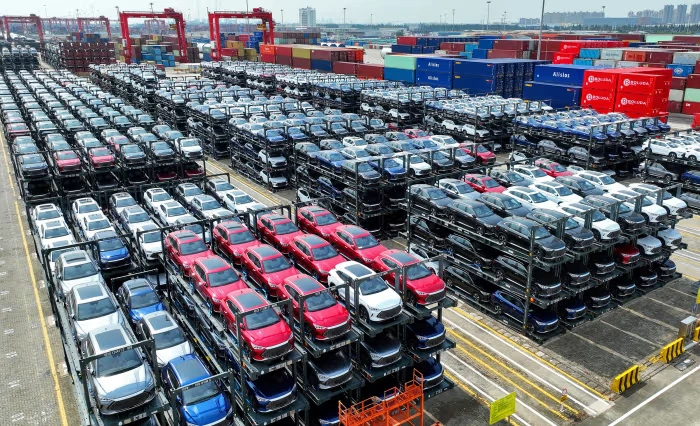
This threatens the competitiveness of European automakers in their home market. Chinese EV brands have rapidly gained market share in Europe since 2019.
The decision has exposed divisions within the EU. Germany opposed the tariffs, fearing retaliation against its manufacturers in China. France and Italy supported the measures to protect their domestic industries.
Implications for EV Adoption and EU-China Relations
Some countries worry the tariffs could slow down EV adoption and climate goals. China has already threatened retaliatory measures against EU imports.
These could include tariffs on cognac and investigations into pork and dairy products. The move also affects European automakers who produce EVs in China for export.
The EU auto industry employs 14.6 million workers, making it a key strategic sector. The tariffs are part of a broader EU strategy to reduce economic dependence on China.
Critics argue they could raise EV prices for European consumers and slow electric mobility. This action follows similar moves by the United States, which recently increased tariffs on Chinese EVs.
The growing trade tensions reflect increasing competition in the global EV market. China has gained a significant technological and production advantage in recent years.
In short, the tariff decision highlights the complex balance between protecting domestic industries and maintaining open trade.
It also underscores the challenges of transitioning to electric mobility while managing economic interests. The impact of these tariffs on the global EV market and EU-China relations remains to be seen.
This article was produced by The Rio Times’ automated newsroom system. How we use AI · Report an error · Editorial responsibility: Matthias Camenzind, Editor-in-Chief