Eight Million People Left Venezuela. Now Some Are Asking If It’s Time to Go Back
Key Points
- The U.S. captured Venezuelan president Nicolás Maduro on January 3, turning a country that lost 80% of its economy into the stage for one of the most complex political transitions in the Americas.
- The same administration that removed Maduro has stripped legal protections from over 700,000 Venezuelans in America, telling them it is now safe to go home — while the old regime’s officials still run the government.
- Only about 30% of the diaspora say they would even consider returning, and most set conditions not yet met: released prisoners, dismantled security apparatus, functioning rule of law.
Venezuela used to be one of the richest countries in Latin America, ranking among the world’s top twenty economies between the 1950s and 1980s.
Then two decades of socialist governance — first Hugo Chávez, then Nicolás Maduro — collapsed the economy by 80%, triggered hyperinflation above 130,000%, and drove oil production from 2.8 million barrels a day to under 900,000.
Over 80% of the population fell into poverty. Roughly 7.9 million people left, making it one of the largest displacement crises on the planet.
Most never expected to go back.
On January 3, 2026, U.S. forces captured Maduro in Caracas and flew him to New York on drug-trafficking charges. In Doral, Florida — a suburb so densely Venezuelan it’s nicknamed “Doralzuela” — crowds poured into the streets before dawn, waving flags and singing.
Celebrations erupted in Madrid, Lima, Santiago. Social media registered 806 million interactions in 72 hours.
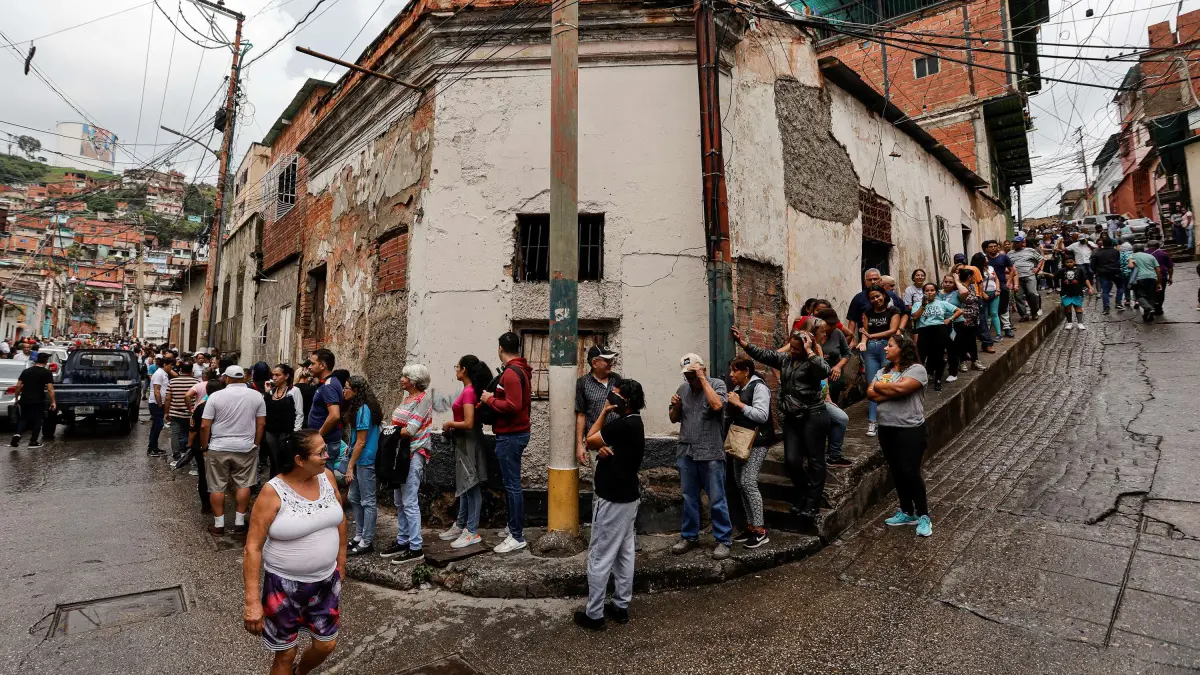
Inside Venezuela, the streets were silent. People queued at supermarkets, stockpiling food.
That contrast tells the story. Maduro is gone, but his political machine is not. Vice President Delcy Rodríguez took over with Washington’s approval, signed a landmark oil privatization law ending the state monopoly, and announced an amnesty for political prisoners — 711 of whom remain jailed according to Foro Penal.
But hardliners still control the defense ministry, the courts, and the legislature. Nobel laureate María Corina Machado, the opposition’s most popular figure at 72% approval, called the concessions involuntary, extracted solely by American pressure.
For Venezuelans in the U.S., the situation is uniquely cruel. The Trump administration revoked Temporary Protected Status for roughly 605,000 and ended humanitarian parole for 117,000 more — the largest mass loss of legal immigration status in recent American history.
Officials say Maduro’s removal means safe return. Democrats and advocates counter the country remains unstable. A federal appeals court ruled the revocation unlawful, but the legal battle continues.
Some are leaving not because Venezuela is ready, but because America no longer wants them. Others refuse to move until they see real institutional change.
A poll by The Economist found 91% of Venezuelans inside the country want a new government within a year. Whether that becomes a country worth returning to is the question 7.9 million people scattered across 90 nations are quietly trying to answer.
Related coverage: Brazil’s Morning Call | Chile Closes 2025 With a Surprise Growth Beat, but Mining Wo This is part of The Rio Times’ daily coverage of Venezuela affairs and Latin American financial news.
More: Latin America news in English, every day from The Rio Times.
This article was produced by The Rio Times’ automated newsroom system. How we use AI · Report an error · Editorial responsibility: Matthias Camenzind, Editor-in-Chief