Dollar Plummets to 14-Month Low Against Brazilian Real in Historic 12-Day Slide
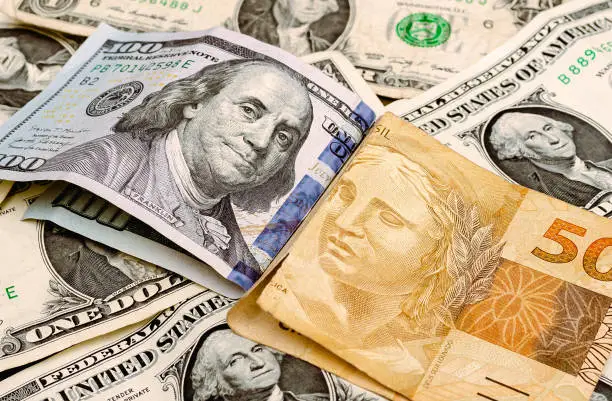
The U.S. dollar closed at R$5.7724 on Tuesday, February 4, marking its longest losing streak against Brazil’s real since the currency’s 1997 debut, after falling for 12 consecutive sessions.
Market reactions to hawkish central bank signals, escalating U.S.-China trade tensions, and softening U.S. labor data drove the dollar’s 6.6% monthly depreciation, its steepest decline in over two decades.
Brazil’s Central Bank fueled the slide by releasing minutes from its latest Monetary Policy Committee (Copom) meeting, which hinted at further interest rate hikes. Policymakers raised the benchmark Selic rate to 13.25% and signaled a potential increase in March.
Markets are now pricing a 16% rate by late 2025. Finance Minister Fernando Haddad praised the dollar’s drop from R$6.10 to R$5.80, calling it “critical for taming inflation” amid coordinated fiscal and monetary measures.
Meanwhile, global trade headwinds intensified as China retaliated against U.S. tariffs. China imposed 15% duties on American energy imports and 10% levies on crude oil, machinery, and vehicles.
The measures, effective February 10, followed the Trump administration’s 10% tariff hike on Chinese goods last week. Investors also digested weaker U.S. job openings data, which fell sharply in December.
This amplified bets on a 50-basis-point Fed rate cut by 2025’s end. The dollar index (DXY) mirrored the selloff, sliding 0.96% to 107.944 points—a four-month low. Traders now await Friday’s U.S. nonfarm payrolls report.
It could solidify expectations for prolonged Fed dovishness. With Brazil’s real showcasing rare resilience, analysts warn the rally hinges on sustained policy discipline and global risk appetite.
This article was produced by The Rio Times’ automated newsroom system. How we use AI · Report an error
LatAm Markets: Live Signals → — real-time movers, turnover leaders and FX across Latin America.
Read More from The Rio Times