Dollar Climbs to R$ 5.58 Amid Lula’s Remarks and Ptax Tensions
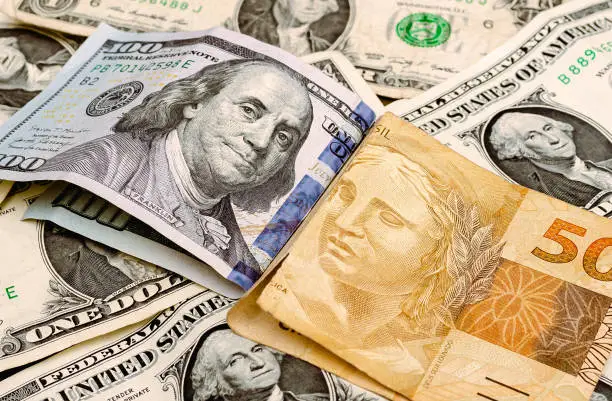
The Brazilian real depreciated significantly against the US dollar on Friday, June 28th.
Despite an initial slight decline and the US dollar’s broader weakness against other emerging market currencies, domestic factors drove this shift.
In Brazil, exchange rate movements were influenced by the end-of-month Ptax rate formation.
President Luiz Inácio Lula da Silva’s comments on exchange rates and the Central Bank also played a significant role.
Investors are also processing recent US inflation data. In May, the PCE index remained stable, consistent with expectations following a 0.3% increase in April.
Annually, the PCE saw a 2.6% rise in May, slightly below April’s 2.7%.
Dollar Rates Overview
By 1:52 PM, the spot dollar rose by 1.12%, reaching R$ 5.569 for purchase and R$ 5.570 for sale, hitting R$ 5.58 at its peak.
The future dollar contract for August on B3, now the most liquid, increased by 1.02% to R$5.559.
The Ptax rate, calculated by the Central Bank based on spot market quotes, serves as a reference for settling future contracts.
Financial agents attempt to influence it toward favorable levels for their positions, betting on the dollar’s rise or fall.
Commercial Dollar
- Purchase: R$ 5.571
- Sale: R$ 5.572
Tourism Dollar
- Purchase: R$ 5.551
- Sale: R$ 5.731
Market Context and Lula’s Statements
Investors focused on Ptax rate formation while digesting PCE data and reacting to new remarks from President Lula.
On Friday, Lula stated the current annual interest rate of 10.50% is unrealistic for 4% inflation, suggesting improvements once he appoints a new Central Bank president.
He attributed the dollar’s recent gains against the real to derivative speculation, asserting the Central Bank’s duty to investigate.
Lula noted that Campos Neto, appointed by Jair Bolsonaro’s administration, is not performing adequately.
Broader Implications
The exchange rate dynamics in Brazil, influenced by both domestic political discourse and international economic data, underscore the interconnectedness of global and local financial systems.
Lula’s remarks highlight the ongoing debate about monetary policy and its implications for Brazil’s economic stability.
As Brazil navigates these challenges, investors closely monitor both local political developments and broader economic trends.
This reflects the complexities of managing an emerging market economy in a global context.
This article was produced by The Rio Times’ automated newsroom system. How we use AI · Report an error
LatAm Markets: Live Signals → — real-time movers, turnover leaders and FX across Latin America.
Read More from The Rio Times