Mexico · BUSINESS
Key Facts
- —What happened A US appeals court on 20 August saved the Delta-Aeroméxico alliance, calling the government’s unwinding order arbitrary.
- —How big a jump The joint venture controls nearly 60% of operations at Mexico City, the fourth-largest US gateway.
- —The real story The ruling is an administrative-law defeat for the department, not proof the alliance helps passengers.
- —The catch The unwind order never took effect, so the court preserved a status quo, not a lost one.
- —Who it touches Travellers on routes between secondary Mexican and US cities face ambiguous effects from coordination.
- —What comes next The department may redo its analysis, making whether to pursue unwinding a political question.
The court did not say the alliance was good for competition. It said the government had not done the work to show otherwise.
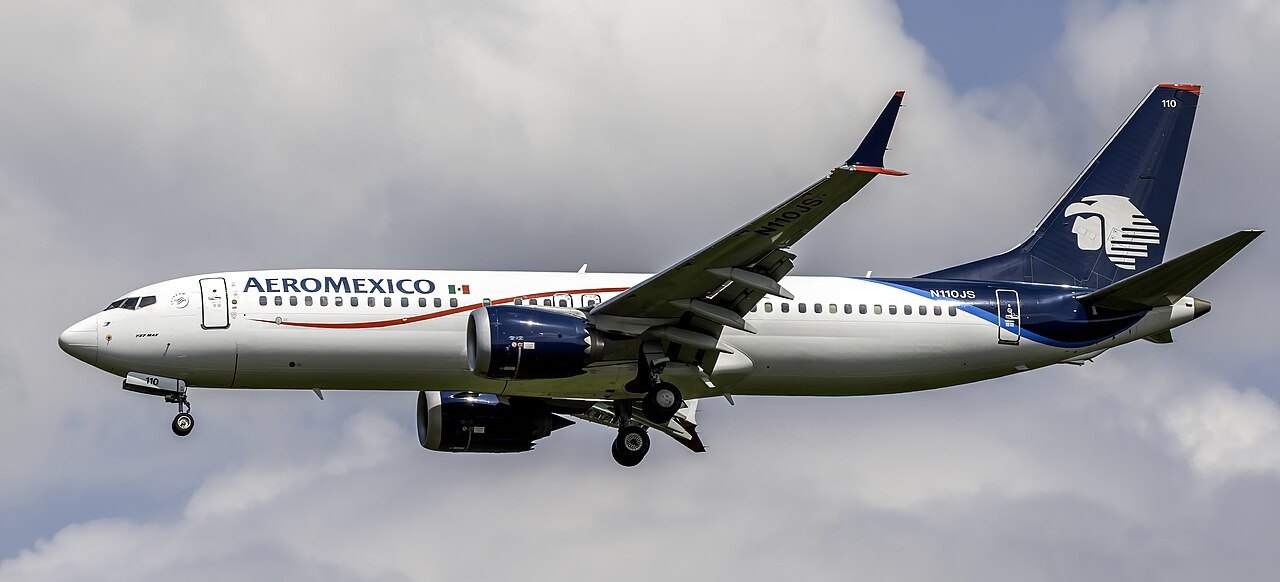
The Delta Aeroméxico joint venture will continue. On 20 August the US Court of Appeals for the Eleventh Circuit vacated the Department of Transportation order that would have unwound it, calling the department’s handling of the case arbitrary and capricious. The alliance keeps its antitrust immunity — and, as a practical matter, never lost it.
What the court actually found
The judges did not rule that the alliance is good for passengers. They ruled that the department had not done the analysis required to conclude otherwise.
Specifically, the court held that the department did not reasonably explain why it conducted a far more limited market analysis in this case than it has always done in the past, or why it imposed a requirement for approval that it did not require of similar joint ventures it had approved — the US–Japan alliance among them.
That is an administrative-law defeat rather than a competition-law victory. The department could in principle redo the work and reach the same conclusion properly, and it has said it will consider all available legal options. Whether it does is a political question rather than a legal one.
It is also worth knowing that nothing was ever actually taken apart. The DOT order was stayed in November 2025 and never took effect, so the ruling preserves a status quo rather than restoring a lost one.
Why the Delta Aeroméxico joint venture matters here
Mexico City is the fourth-largest international gateway to and from the United States, and the joint venture accounts for close to 60% of operations there. That is the concentration the department was concerned about, and it is real.
Antitrust immunity lets the two carriers behave as a single airline across the border: one schedule, coordinated pricing, shared revenue, reciprocal frequent-flyer benefits. Unwinding it would have meant separating all of that, with consequences for connectivity between secondary Mexican cities and secondary US ones — the routes that exist only because the alliance can fill them from both ends.
For travellers the effect is genuinely ambiguous. Coordination usually improves connections and usually raises fares. The court’s point is not that one of those dominates. It is that the government has to demonstrate which does before it acts, and it did not.
There is a second reason the case drew attention beyond aviation. The original order came at a moment of broader friction over Mexico City airport slots and over how Mexican aviation is regulated, and it was widely read in Mexico as leverage rather than as competition enforcement. A ruling that the department applied a standard here it had not applied to Japan does not settle that reading, but it does not help refute it either.
The manufacturing and content numbers
Pegatron, the Taiwanese contract manufacturer best known for assembling consumer electronics, announced on 20 August that it is expanding in Ciudad Juárez with US$330 million and around 1,000 jobs. That is a straightforward nearshoring investment in the border state that has captured most of them.
The energy ministry projects around US$18 billion of data-centre investment in Mexico by 2030, with much larger figures circulating for the longer term. The constraint on all of them is the same and it is well known: Mexico’s grid cannot currently supply that much new load, and electricity has been the binding limit on data-centre announcements rather than capital or demand.
And Amazon’s Prime Video plans to double Mexican and Latin American originals under a US$2 billion regional programme running from 2027 to 2030 — the streaming industry’s version of the same bet, that Spanish-language content produced in the region travels globally.
And the one that reaches households
Walmart froze prices on more than 4,000 products in Mexico for 90 days from 20 August, under a programme it calls Precios que no se tocan. Walmart is the largest private employer in the country and its pricing sets a reference point across grocery retail, so a freeze at that scale exerts real downward pressure on measured inflation — currently running at 3.12% on the headline annual measure for July.
A separate change is coming at the same company, and it is worth keeping apart from the freeze because the two get conflated. Mexico’s working week is being cut by statute from 48 hours to 46, phased two hours a year beginning on 1 January 2027, under the labour law reform. Walmart is preparing for it with digital price tags and automated restocking. That is a legal obligation that raises the company’s cost per hour, not a cost saving, and it has nothing to do with the price freeze.
For anyone tracking Mexican consumption, the thing to watch is whether competitors match the freeze, and what happens at the end of the ninety days. For anyone employing people in Mexico, the date that matters is 1 January, and then each January after it.
More: Mexico news in English, every day from The Rio Times.
Is the Delta Aeroméxico joint venture still in effect?
Yes. On 20 August 2026 the US Court of Appeals for the Eleventh Circuit vacated the Department of Transportation order that would have unwound it. The alliance and its antitrust immunity remain in effect, and the order had in any case been stayed since November 2025.
Why did the court rule against the Department of Transportation?
It held the department did not reasonably explain why it ran a far more limited market analysis than in past cases, or why it imposed a condition on this venture that it had not required of comparable ones such as the US–Japan alliance. The ruling was on process, not on whether the alliance harms competition.
Is Walmart cutting hours to pay for its price freeze?
No. The 90-day freeze on more than 4,000 products and the reduction in working hours are separate. The hours cut is a statutory change to Mexico’s labour law, from 48 to 46 hours phased from 1 January 2027, which raises employer costs rather than lowering them.
Connected Coverage
Sources: Aeroméxico; US Court of Appeals for the Eleventh Circuit; Reuters; El Universal; INEGI; Expansión; Secretaría de Energía; PRODU.
Frequently Asked Questions
This article was produced by The Rio Times’ automated newsroom system. How we use AI · Report an error · Editorial responsibility: Matthias Camenzind, Editor-in-Chief
In depth