South Africa’s Democratic Alliance Unveils a Quiet Manifesto Strategy
South Africa · POLITICS
Key Facts
—Manifesto launch: The Democratic Alliance launched its 2024 election manifesto on 17 February 2024, setting out seven apex priorities.
—Seven priorities: The party aims to create two million jobs, end load-shedding and water-shedding, halve violent crime, abolish cadre deployment, lift six million people out of poverty, triple Grade 4 reading literacy, and ensure quality healthcare for all.
—Coalition reality: The DA entered South Africa’s Government of National Unity after the African National Congress lost its parliamentary majority in the 2024 national election.
—Municipal money: The DA’s local-government platform promises to ring-fence water and electricity revenue, publish every contract price including any premium above the lowest qualifying bid, and bring in private operators where councils fail.
—Global standing: South Africa is Africa’s largest economy, one of two African members of the G20, alongside the African Union, and a member of BRICS. It held the G20 presidency from December 2024 through November 2025.
—Strategic framing: The manifesto doubles as an election platform and a governing blueprint, signalling seriousness to investors while remaining coalition-compatible.
The Democratic Alliance’s manifesto strategy is a coalition-era reform pitch disguised as an opposition programme, built around administrative competence rather than ideological confrontation.
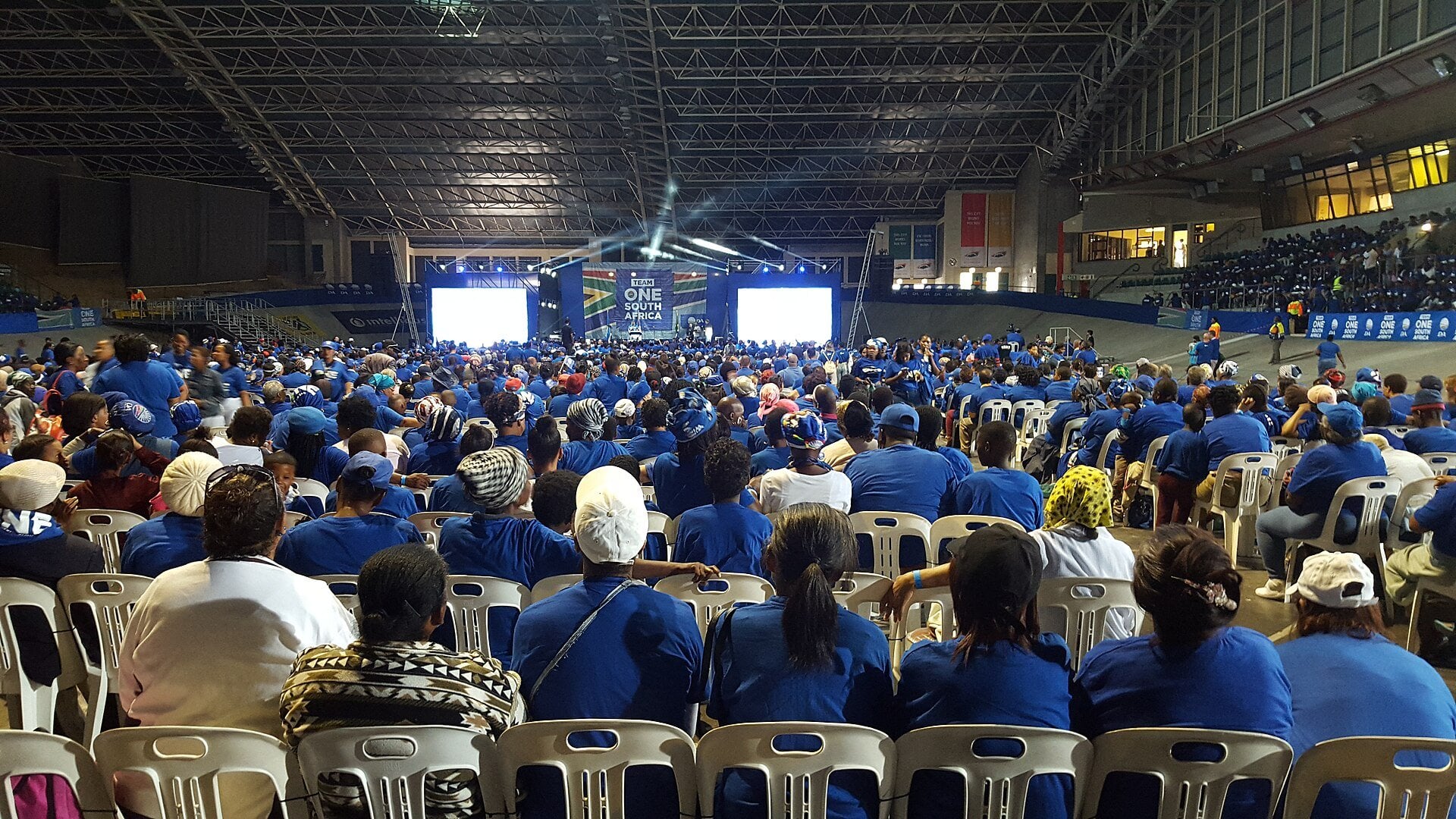
A two-track DA manifesto strategy for a hung parliament
South Africa’s Democratic Alliance (DA) is running a deliberately quiet, two-track manifesto strategy. Publicly, this DA manifesto strategy promises a hard-edged reform agenda aimed at reversing what it calls “state collapse.”
Politically, however, the party packages that agenda in a coalition-compatible way that can appeal beyond its traditional base. The language is built around deliverables and measurable outcomes rather than culture-war provocations.
This dual character matters because South Africa’s political landscape changed fundamentally in 2024. The African National Congress (ANC) fell below 50 percent of the national vote for the first time, forcing the creation of a Government of National Unity that includes the DA.
Seven apex priorities that sound like a governing blueprint
The DA launched its manifesto on 17 February 2024 with seven apex priorities that read more like a cabinet work plan than a protest document. The party promises to create two million jobs, end load-shedding and water-shedding, and halve violent crime.
It also pledges to abolish cadre deployment in favour of merit-based appointments, lift six million people out of poverty, triple the number of Grade 4 learners who can read for meaning, and ensure quality healthcare for all. Every priority is framed as a measurable rescue target.
The manifesto says the DA will “start fixing what is broken in government” by ending cadre deployment, firing corrupt officials, and appointing competent people. That technocratic tone makes the document saleable to business audiences, middle-class voters, and potential coalition partners alike.
Where the money meets the politics: municipal procurement
The DA’s local-government messaging reveals where its reform agenda bites hardest. In its 2026 municipal campaign, the party declares that “public money is never party money” and promises to ring-fence revenue collected for water and electricity exclusively for those services.
It also says municipal accounting officers may be forced to repay losses caused by their actions or inaction. The party further commits to publishing the price of every contract, including any premium above the lowest qualifying bid, and to bringing in private operators where councils cannot deliver.
These pledges are a direct challenge to patronage networks and procurement opacity. In South Africa’s political economy, control over municipal revenue, tenders, and state jobs is the main channel through which political power converts into financial power.
A governance-by-market model that courts investors
Running through the DA manifesto strategy is a clear governance-by-market thread. The party presents the private sector and civil society as partners in rescuing the state, not as adversaries to be regulated or sidelined.
Its older manifesto language tied job creation to growth, labour reform, and skills development. That suggests a pro-investment, pro-management model of state reform rather than a statist redistribution agenda.
For business audiences, the attraction is straightforward. The DA is essentially arguing that better administration can unlock growth, infrastructure maintenance, and service reliability without requiring a wholesale ideological revolution.
Why the DA manifesto strategy echoes beyond South Africa
South Africa is Africa’s largest economy and one of two African members of the G20, alongside the African Union. It assumed the G20 presidency in December 2024, running through November 2025, and remains a prominent BRICS member.
Pretoria uses BRICS and wider Global South diplomacy to push for a more multipolar world order and greater influence for developing countries. Any party in or near power in South Africa is therefore indirectly implicated in global economic governance.
The DA’s emphasis on competence and clean government is not merely domestic technocracy. It is also a bid to make South Africa look governable to international investors, trading partners, and multilateral forums at a moment when the country’s external credibility depends heavily on performance at home, as explored in Africa: The New Scramble.
What to watch as the coalition era deepens
The DA manifesto strategy is deliberately less ideological than older party messaging, more managerial, and more compatible with government participation. In a South Africa where the battle is increasingly over state capacity, procurement, and public-service delivery, that approach is politically smarter than maximalist rhetoric.
The real test will be whether the party can deliver measurable improvements in the municipalities it controls while maintaining its reformist edge inside a Government of National Unity that has been repeatedly strained by disputes over VAT, the Expropriation Act, and cabinet dismissals. Investors and diplomats will watch local-government procurement reforms closely for signals about the wider investment climate.
The next municipal elections will show whether voters reward a party that promises to publish contract prices and ring-fence service revenue. If they do, the DA’s quiet, clever manifesto strategy may become the template for opposition politics across the region.
Frequently Asked Questions
What are the Democratic Alliance’s seven apex priorities?
The DA’s 2024 manifesto targets two million jobs, an end to load-shedding and water-shedding, halving violent crime, abolishing cadre deployment, lifting six million people out of poverty, tripling Grade 4 reading literacy, and ensuring quality healthcare for all.
How does the DA’s manifesto strategy fit coalition politics?
The manifesto uses technocratic, measurable language rather than ideological confrontation, making it saleable to coalition partners and business audiences after the ANC lost its majority in 2024.
What does the DA promise on municipal procurement?
The party pledges to ring-fence water and electricity revenue, publish every contract price including premiums above the lowest qualifying bid, and bring in private operators where councils fail to deliver services.
Connected Coverage
For deeper context on how domestic reform agendas intersect with great-power competition and investment flows across the continent, read Africa: The New Scramble.
Sources
This article was produced by The Rio Times’ automated newsroom system. How we use AI · Report an error
Read More from The Rio Times
- MOGA Festival 2026 Last-Minute Guide: Essaouira, Morocco, Opens 30 September With Saturday Day Passes Sold Out
- ULTRA South Africa 2027: Cape Town on 30 April, Johannesburg on 1 May as First Tickets Sell Out
- Oskido Big Day Out 2026: Two Stages at Johannesburg’s Huddle Park, South Africa, on 28 November