Crypto Markets: Bitcoin & the Majors — July 20, 2026
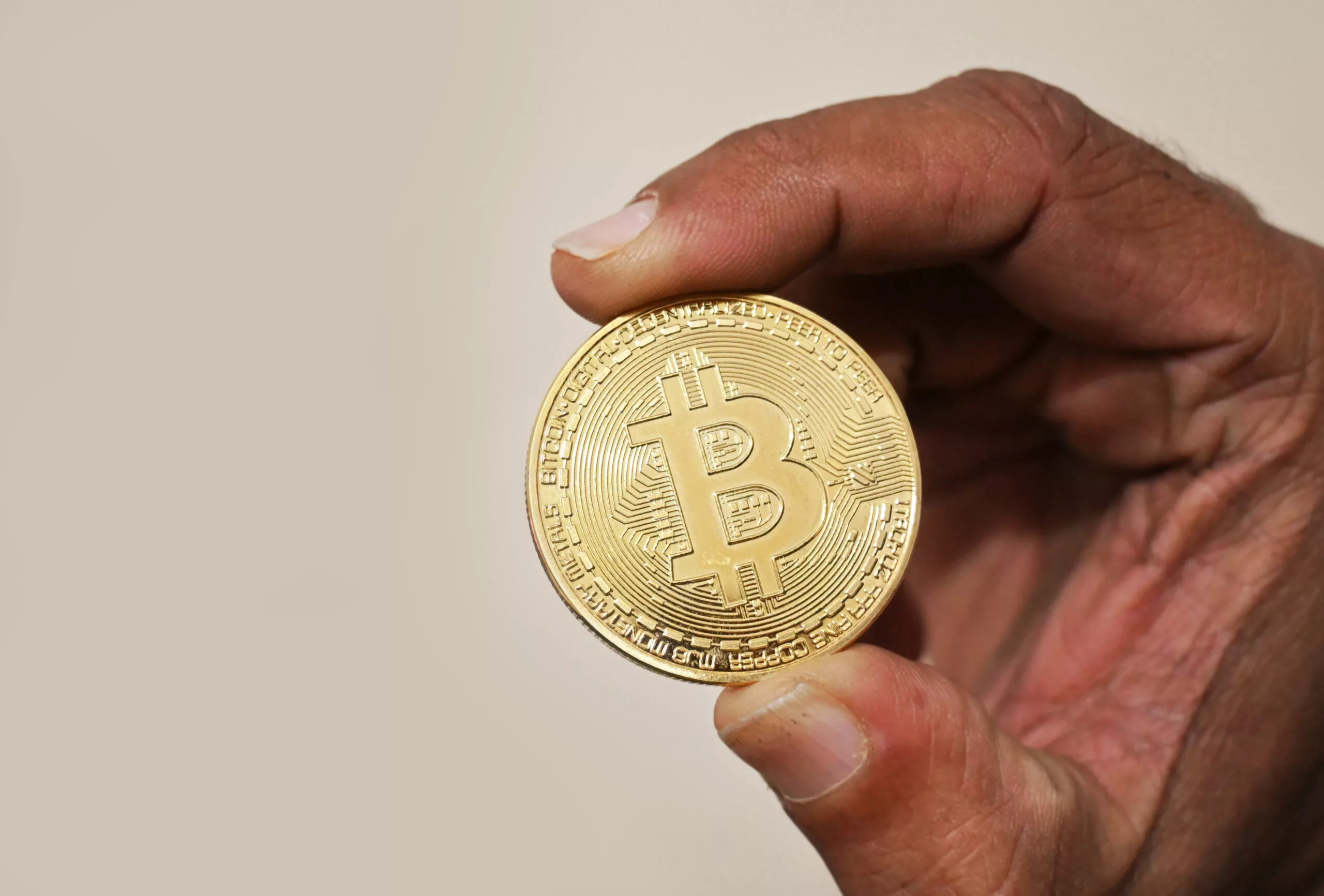
Key Facts
- Bitcoin holds near 64,740 dollars with a modest daily gain of +0.08%, signalling a calm but resilient market tone for the flagship cryptocurrency.
- Ethereum trades around 1,876 dollars up +0.23% day-on-day, reflecting similarly muted, range-bound trading in the second-largest crypto asset.
- Solana shows the strongest recent momentum closing at 76.36 dollars with a +1.19% daily rise, extending a run of outperformance among major altcoins.
- XRP is broadly stable near 1.0959 dollars with a +0.34% daily move, after a 2025 rally that saw it briefly touch 3.65 dollars following a key US regulatory settlement.
- Latin America processed around 1.5 trillion dollars in crypto transactions in 2025 with stablecoins making up between 40% and 48% of regional activity, underscoring the shift towards digital dollars for everyday use.
- Stablecoin volumes in Latin America surged to 324 billion dollars in 2025 an 89% year-on-year jump driven by inflation, capital controls and a remittance market that reached 174 billion dollars.
Today’s Focus
The crypto market is in a holding pattern, with Bitcoin at 64,740 dollars and Ethereum at 1,876 dollars posting only fractional daily gains, while Solana and XRP nudge higher and keep risk appetite alive at the margins.
Major coins are trading sideways as traders weigh geopolitical tensions, profit-taking in institutional Bitcoin holdings and speculation over new state-level Bitcoin reserve schemes, leaving prices becalmed but not broken.
For Latin America, the real action is under the surface: stablecoins, which are cryptocurrencies designed to track the value of a traditional currency such as the US dollar, now anchor most regional crypto activity and are increasingly used for savings, payments and cross-border remittances.
Brazil, Argentina and El Salvador sit at the centre of this shift, with high adoption rates, heavy use of dollar-linked tokens and policy experiments that make the region a live laboratory for how digital assets can mesh with volatile local economies.
What matters today. The key story is not today’s small price moves but Latin America’s rapid migration towards stablecoin-based savings and remittances, which is quietly rewiring how money crosses borders and survives inflation in Brazil, Argentina and beyond.
01 The session in one read
Bitcoin’s latest settled session closed at 64,740 dollars, up just +0.08% day-on-day, a picture of a market that is neither capitulating nor breaking out as it digests earlier volatility and a flurry of news around institutional holdings.
Ethereum, the second-largest cryptocurrency by market value, ended at 1,876 dollars with a +0.23% daily rise, while Solana at 76.36 dollars (+1.19%) and XRP at 1.0959 dollars (+0.34%) added a touch more green but still within tight ranges that suggest traders are waiting for a clearer macro or policy catalyst.
Price action across Bitcoin and the major cryptocurrencies is modest and directionless, but the structural data on Latin America point to a region where crypto – especially stablecoins – is moving from speculative asset to everyday financial tool. For investors and policymakers, the variable to watch is stablecoin share of regional transaction volume.
02 The board
A quick glance at the live price board shows what matters for a foreign reader: Bitcoin at 64,740 dollars is barely changed on the day, and Ethereum at 1,876 dollars is similarly subdued, pointing to a market that has stabilised after earlier swings rather than one in full bull or bear mode.
The same board highlights Solana at 76.36 dollars and XRP at 1.0959 dollars, both nudging higher on the day but far from their previous cycle peaks, a reminder that even with these modest gains the broader market remains below its early-2026 levels and still sensitive to macro shocks and regulatory headlines.
| Asset | Level | Change |
|---|---|---|
| Bitcoin | 64,740 $ | +0.08% |
| Ethereum | 1,876 $ | +0.23% |
| Solana | 76.36 $ | +1.19% |
| XRP | 1.0959 $ | +0.34% |
Source: RT close, 2026-07-20. Where a commodity has no spot feed, an exchange-traded tracker or leading producer is shown as a labelled proxy.
Live Market IntelligenceCrypto — Live Market Board
Rio Times · Live Market Intelligence
Crypto — Live Market Board
-0.26%
| Instrument | Last | Change | YoY | Prev. | High | Low | Volume |
|---|---|---|---|---|---|---|---|
| BTC | 63,384 | -0.26% | -47.24% | 63,552 | 64,346 | 63,305 | 22,774,743,040 |
| ETH | 1,886 | +0.26% | -58.90% | 1,881 | 1,920 | 1,879 | 7,916,475,392 |
| SOL | 75.89 | -0.40% | -60.44% | 76.20 | 76.99 | 75.39 | 1,473,821,056 |
| XRP | 1.01 | -1.15% | -69.07% | 1.02 | 1.02 | 1.01 | 1,144,044,416 |
| BNB | 609.60 | -1.12% | -26.81% | 616.50 | 619.30 | 609.23 | 1,266,706,432 |
| ADA | 0.18 | -1.98% | -78.22% | 0.19 | 0.19 | 0.18 | 238,085,632 |
| DOGE | 0.07 | -1.56% | -70.00% | 0.07 | 0.07 | 0.07 | 553,256,192 |
| AVAX | 6.38 | +1.04% | -74.11% | 6.32 | 6.42 | 6.21 | 248,470,560 |
| LINK | 8.77 | -0.06% | -62.73% | 8.77 | 8.87 | 8.68 | 317,054,880 |
| DOT | 0.78 | -0.75% | -81.11% | 0.79 | 0.80 | 0.78 | 43,490,492 |
| LTC | 45.08 | -0.85% | -65.45% | 45.47 | 45.59 | 44.98 | 143,727,712 |
| BCH | 213.85 | +0.10% | -65.44% | 213.64 | 215.69 | 212.54 | 137,956,688 |
| TRX | 0.34 | +0.28% | -4.73% | 0.33 | 0.34 | 0.33 | 436,576,064 |
| XLM | 0.16 | -1.33% | -64.46% | 0.16 | 0.16 | 0.16 | 89,559,864 |
| HBAR | 0.07 | -0.53% | -74.67% | 0.07 | 0.07 | 0.07 | 22,546,186 |
| NEAR | 1.65 | +2.42% | -40.55% | 1.62 | 1.68 | 1.61 | 187,591,264 |
| ATOM | 1.40 | -2.36% | -70.15% | 1.44 | 1.44 | 1.40 | 18,626,964 |
| AAVE | 89.06 | +0.93% | -72.33% | 88.24 | 90.20 | 88.19 | 129,099,704 |
03 What moved it
Analysts tracking intraday flows describe the majors as ‘sideways’ as geopolitical tensions and mixed institutional flows offset each other: increased trading volumes and short liquidations have added some energy, but not enough to move Bitcoin decisively beyond the mid-60,000 dollar range.
One drag has been profit-taking and sales by large listed holders – such as Strategy Inc. selling thousands of Bitcoin – while on the support side, talk of a formalised ‘Strategic Bitcoin Reserve’ and continuing accumulation by long-term investors has kept the market from rolling over.
04 The Latin American read
For Latin America, the price action is only half the story: between July 2022 and June 2025, the region processed nearly 1.5 trillion dollars in crypto transactions, and in 2025 alone around 324 billion dollars of that volume came from stablecoins, which are tokens engineered to hold a steady value against the dollar or another fiat currency.
Surveys and analytics show that crypto ownership and usage are highest in countries such as Argentina, Brazil and El Salvador, where economic instability, inflation and capital controls have pushed households and businesses to use digital assets – especially dollar-linked stablecoins – as de facto savings accounts and payment rails.
05 The names to watch
Argentina stands out with crypto adoption rates in the high-teens to mid-20% of the population and on-chain volumes around 91 billion dollars, driven by inflation running north of 100% and widespread use of stablecoins as a refuge from peso volatility.
Brazil is the region’s volume heavyweight, with about 318.8 billion dollars in crypto transactions and over 90% of its crypto flows now tied to stablecoins, while El Salvador remains the headline-grabbing experimenter with Bitcoin as legal tender, even if everyday usage there is far lower and more focused on remittances and niche payments through services like the Chivo wallet.
06 The outlook
Remittances to Latin America and the Caribbean reached 142 billion dollars in 2025, and a growing share of that flow is now routed through stablecoins, which offer near-instant settlement and fees that can fall below 1–2% compared with traditional costs closer to 5–7%, making them attractive for families moving money from the United States to Mexico, Central America and the wider region.
With stablecoin transaction volumes up 89% year-on-year, around 75% of institutions in the region using them for cross-border payments, and mainstream exchanges such as Bitso processing billions of dollars in crypto-powered remittances, the outlook is for Latin America’s digital dollar rails to keep expanding even if Bitcoin and the majors spend more time drifting than trending.
07 What to watch
- Stablecoin share of crypto volume: This indicates how far Latin America has shifted from speculative coins to digital dollars for savings and payments, and whether that trend is still accelerating.
- Remittance flows via crypto: Tracking what portion of the region’s 174 billion-dollar remittance market is moving onto stablecoin rails reveals the depth of crypto’s role in everyday cross-border finance.
- Regulation in Brazil, Argentina and El Salvador: New rules or legal-tender experiments in these core markets can either legitimise stablecoin and Bitcoin use or choke off some of the current momentum.
- Institutional adoption of stablecoins: With around 75% of Latin American institutions already using stablecoins, any change up or down in this figure will signal whether the digital dollar infrastructure is entrenching or facing pushback.
Frequently Asked Questions
How did Bitcoin and Ethereum move in the latest session?
Bitcoin closed at 64,740 dollars with a small +0.08% daily gain, while Ethereum settled at 1,876 dollars, up +0.23% day-on-day, reflecting a broadly flat, range-bound market for the two largest cryptocurrencies.
Why is Latin America so important for crypto right now?
Latin America has seen rapid crypto adoption, processing about 1.5 trillion dollars in transactions between 2022 and 2025, with millions of new users and particularly strong take-up in countries facing inflation and currency instability such as Argentina and Brazil.
What exactly are stablecoins and why do Latin Americans use them?
Stablecoins are cryptocurrencies designed to maintain a stable value, usually pegged one-to-one to the US dollar, and Latin American users favour them because they combine fast, low-cost transfers with protection against local currency swings and restrictive capital controls.
How big is the remittance and stablecoin market for the region?
Remittances to Latin America and the Caribbean reached around 142 billion dollars in 2025, while stablecoin transaction volumes climbed to roughly 324 billion dollars in the same year, highlighting how digital dollars are becoming central to how money is saved and sent across borders.
This article was produced by The Rio Times’ automated newsroom system. How we use AI · Report an error · Editorial responsibility: Matthias Camenzind, Editor-in-Chief
LatAm Markets: Live Signals → — real-time movers, turnover leaders and FX across Latin America.