El Salvador Budget Shift Moves US$97 Million It Can Still Borrow

EL SALVADOR · ECONOMY
Key Facts
What happened: The Finance Ministry asked Congress on September 3 to add US$97 million to the 2026 budget.
How big it is: The amount is under 1% of El Salvador’s US$10.56 billion budget for 2026.
What it means: The funds come from unused bond authorizations, not new debt or surplus.
The catch: This is not new money; it’s leftover permission to borrow that was already approved.
Who it hits: Eleven state institutions, including security, agriculture, and tourism agencies.
What comes next: The finance committee takes up the request first, then the full Assembly votes.
The government says it needs the money for prisons, farms and ID cards. The request also shows how El Salvador handles debt under its IMF programme.
What the government is asking for
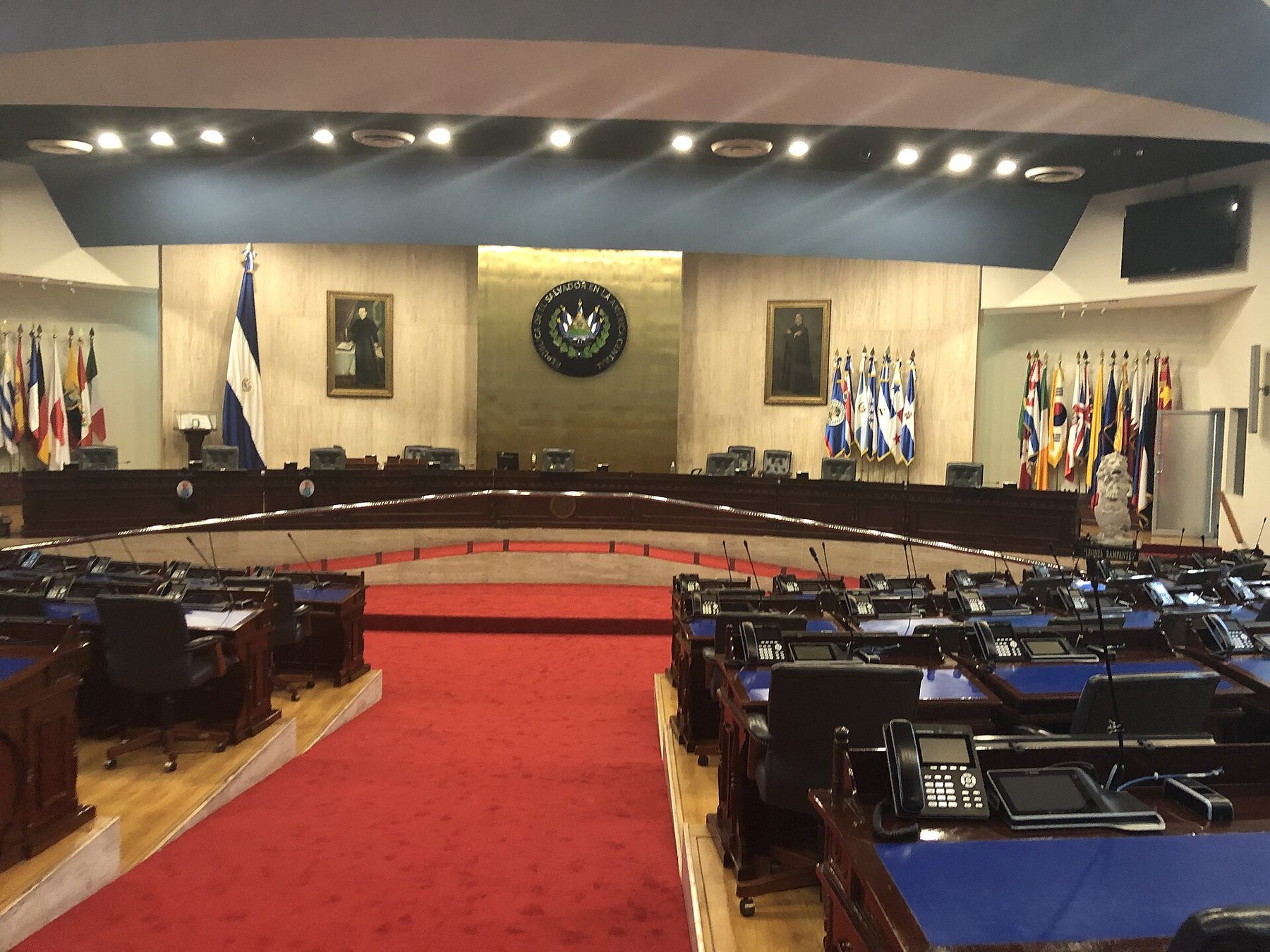
On September 3, the Finance Ministry sent a request to the Legislative Assembly, which is El Salvador’s Congress. The request asks to reform the national budget and add US$97 million for the second half of 2026.
The Finance Ministry calls the costs ‘priority and unavoidable obligations’ for 11 state institutions. The full list is not public, but the largest items are known.
Where the money comes from
The US$97 million is not new borrowing. It comes from two domestic bond issues that Congress approved earlier but were not fully used.
The first issue was approved in November 2025 for US$344 million. The government used US$267 million, leaving US$77 million.
The second issue was approved in April 2026 for US$100 million. It left US$20 million unused.
Together, those leftovers make up the US$97 million. This is an important distinction.
The funds are pending authorizations, not surplus from bonds that were already sold. The government is asking for permission to use the remaining borrowing capacity it already has.
How the money would be spent
The largest single item, US$37 million, goes to the Ministry of Agriculture and Livestock. Reports differ on the exact use, from farm markets to running costs.
The next largest, US$30 million, is for prisoner rehabilitation. About US$19 million goes to the interior and territorial development ministry, split between running the ministry and social programmes.
Smaller sums go to the Attorney General’s office, the economy ministry and public works. The National Registry of Natural Persons gets US$1.19 million to issue free national ID cards for first-time applicants.
Other recipients include the environment ministry, tourism ministry, and CORSATUR, the state tourism promotion corporation. The decree does not say how long the bonds would run or what interest they would pay.
Why Congress must approve it
In El Salvador, changes to the national budget require approval by the Legislative Assembly. This includes using existing bond authorizations.
The request reached the Assembly as a formal letter from the Finance Ministry. The Assembly’s finance committee has been called to take up the request early next week.
A plenary vote would follow if the committee backs it. The Assembly could still change the request or reject it.
The IMF program behind the budget
El Salvador is under a 40-month Extended Fund Facility (EFF) with the International Monetary Fund, approved in February 2025. The program provides about US$1.4 billion in loans.
In exchange, the government agreed to cut spending and raise revenue. The goal is to reduce public debt to about 83% of GDP by 2028.
That means running a primary surplus, which is revenue minus spending before interest payments. The IMF program also limits new debt.
Under the deal, the government cannot issue Bitcoin-linked bonds or other crypto-related guarantees.
El Salvador’s approved 2026 national budget is US$10,555.6 million. The request would move money inside that total.
How this request fits the IMF deal
Using leftover bond authorizations is a way to get cash without going to international markets. Fitch Ratings, a credit rating agency, said in May 2026 that it does not expect new Eurobond sales before 2027.
Instead, El Salvador relies on domestic borrowing and multilateral lenders like the IMF and World Bank. This request fits that pattern.
The IMF’s 3 September statement on the second and third reviews does not mention this request. The two are separate steps.
The bigger picture: fiscal consolidation
The IMF program requires deep spending cuts. El Faro, an independent Salvadoran outlet, reported that the IMF-backed plan implied social spending cuts of about US$623 million in 2025.
It put the cuts at over US$1 billion in 2026 and US$1.4 billion in 2027. The government says it is committed to fiscal consolidation.
In December 2025, an IMF staff statement praised the government’s ‘strong’ commitment. It said the 2025 primary balance target was on track.
But some targets have been missed. Fitch notes that the 2025 domestic debt reduction goal was not met.
A Q1 2026 indicative target was also missed. The end-2025 primary balance target, however, was achieved.
What this means for foreigners
For investors and expats, this request shows how El Salvador manages its public finances under the IMF program. It is a mix of domestic borrowing, multilateral support, and strict spending controls.
The US$97 million is under 1% of the 2026 budget. It is a small sum, but the government still needs permission to spend it.
The request also signals that the government is avoiding new international debt for now. It also means less new debt sold abroad this year.
It also means the IMF programme sets the limits.
What to watch next
The key date is when the finance committee meets, likely early next week. If approved, the money will be distributed to the 11 institutions.
Also watch for the IMF’s final approval of the second and third reviews. That would release the next tranche of loan funds.
The government has not said when it will issue the remaining bonds. The interest rate and the term of the bonds have not been published.
How El Salvador’s budget process works
El Salvador’s national budget is a law passed by Congress each year. The Finance Ministry proposes it, and lawmakers approve it.
If the government needs more money mid-year, it must ask Congress to amend the budget. This request is a formal step in that process.
The Legislative Assembly has 60 seats. The ruling party, Nuevas Ideas, holds 54 of them, so approval is likely.
Mid-year top-ups are routine. In June the Assembly approved a separate US$118 million reinforcement funded by higher tax collection.
What the numbers do and do not prove
The US$97 million is under 1% of the 2026 budget. It is a small sum, but the government still needs permission to spend it.
The request is significant because it shows the government’s cash flow challenges. It needs to use leftover borrowing authority to pay for basic services.
The numbers do not prove that the government is in crisis. They show that it is managing within the limits set by the IMF program.
However, the missed targets on domestic debt reduction suggest some strain. The government is walking a tightrope between spending needs and fiscal discipline.
Who is affected and how
The US$97 million would reach several groups. Farmers would benefit from the agricultural market programs.
Prisoners would get rehabilitation services, which the government lists as a priority cost. First-time applicants would get their national ID card, the DUI, free of charge.
Tourism agencies would organize international events to attract visitors. The money is still borrowed, and it is borrowed at home.
Local banks and pension funds are the usual buyers.
The role of domestic bonds in El Salvador
Domestic bonds are debt securities sold to local investors, such as banks and pension funds. They are a key source of funding for the government.
In 2025 and 2026, Congress authorized two domestic bond issues. The government did not sell all the bonds, leaving US$97 million in unused authorization.
Now it wants to use that leftover permission to borrow. This is a common practice in many countries, but it requires legislative approval.
Domestic bonds are different from Eurobonds, which are sold on international markets. Eurobonds are more expensive and subject to foreign investor sentiment.
What is still missing
The specific terms of the bonds, such as interest rates and maturity dates, are not public. The government has not released that information.
It is also not clear whether the IMF has explicitly approved this budget reform. The staff-level agreement does not mention it.
Only the largest recipients among the 11 institutions have been named so far. The Assembly could still change the request or reject it.
More: Latin America news in English, every day from The Rio Times.
Frequently Asked Questions
Is the US$97 million a surplus from an existing bond?
No. It comes from unused balances of two domestic bond issues approved in 2025 and 2026. The government is asking for permission to use that remaining borrowing capacity.
What will the money be used for?
The largest amounts go to agriculture (US$37 million) and prison rehabilitation (US$30 million). Smaller sums go to ID card issuance, environment programs, and tourism events.
Why does Congress need to approve this?
In El Salvador, any change to the national budget requires approval by the Legislative Assembly. This includes using existing bond authorizations.
How does this relate to the IMF program?
The IMF program requires fiscal consolidation and limits new debt. Using leftover bond authorizations helps the government avoid new international borrowing, which fits the program’s goals.
When will Congress vote on this?
The finance committee was due to take it up in the week of 7 September. A plenary vote would come after that.
Connected Coverage
We have also reported on Ex-Minister’s Prodeina Wins US$4.65 Million in School Food Contracts.
This article was produced by The Rio Times’ automated newsroom system. How we use AI · Report an error · Editorial responsibility: Matthias Camenzind, Editor-in-Chief