Colpensiones Pension Shortfall Greets New Chief as Petro Turns on Comptroller
Colombia · Pensions
Key Facts
- —What happened Carlos René Montoya Muñoz was sworn in as president of Colpensiones, the state pension fund, on Monday 21 September 2026.
- —The warning The Colpensiones pension shortfall for 2026 exceeds COP 4.2 trillion (about US$1.3 billion), the Comptroller General’s office says.
- —Who is paid More than 1.9 million pensioners draw monthly payments from Colpensiones, according to the Comptroller’s office.
- —The political fight Former president Gustavo Petro said the office lies by blaming his minimum-wage rise, and pointed at private pension money instead.
- —The catch The money Petro says private funds owe is frozen by a court order issued in May 2026.
- —What comes next The 2024 pension reform takes effect on 1 April 2027, moving millions of contributors to Colpensiones.
Colombia’s state pension fund has a new boss, sworn in by President Abelardo de la Espriella. On the same day, auditors said it lacks money for this year’s last pension payments.
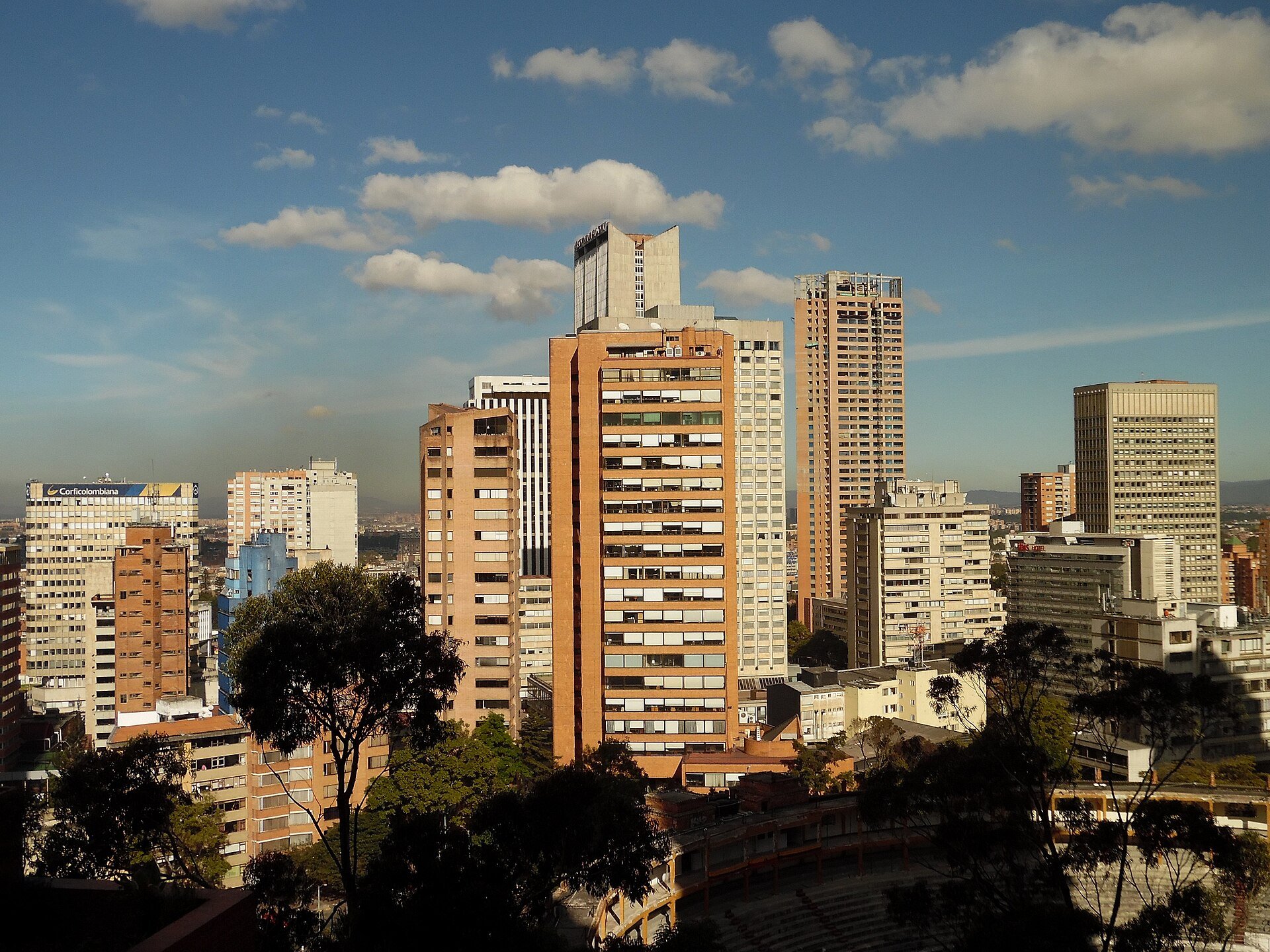
Colombia’s state pension fund got a new president on Monday 21 September 2026, and a bill it cannot yet pay. The Colpensiones pension shortfall now tops COP 4.2 trillion (about US$1.3 billion), according to the national audit office.
That warning set off a public row with former president Gustavo Petro. He accused the auditors of lying about why the money is missing.
A new chief for Colombia’s biggest pension payer
Colpensiones is the state-owned administrator of Colombia’s public pay-as-you-go pension scheme. It took over from the old Social Security Institute in 2012 and is attached to the Labor Ministry.
Carlos René Montoya Muñoz took the oath before President Abelardo de la Espriella and Labor Minister Natalia López Fuentes. The fund’s board had chosen him on Thursday 17 September 2026.
He replaces Diego Alejandro Urrego Escobar, who had been running the fund on an acting basis, according to La República. Montoya is a lawyer from the northern department of Córdoba.
He spent about two decades handling labor relations at Cerro Matoso, a nickel mining company. He also worked at the Ombudsman’s office and the Auditor General’s office, Portafolio reported.
“Colpensiones represents life stories, years of work and the future of thousands of families,” López said at the board meeting. Some Colombian outlets described the handover as a change of direction, meaning new leadership rather than a new pension policy.
What the auditors found
The warning came from the Comptroller General’s office, the independent body that audits how Colombian public money is spent. Its delegate for the labor sector published the analysis on 21 September 2026.
Colpensiones started 2026 with a budget of COP 75.58 trillion (about US$23.7 billion). Of that, COP 72.80 trillion (about US$22.8 billion) was set aside for pension payments.
The national government funds 44.6 percent of those payments, and it has already transferred COP 33.7 trillion (about US$10.6 billion). The office says even that full transfer leaves a gap.
The cause, in the auditors’ account, is the minimum wage. Pensions paid at the minimum level must rise with it, and it went up about 23 percent in 2026.
“The imbalance lies in the gap between the effective 23% minimum-wage increase and a growth assumption close to 7.5%,” the office said. The squeeze falls on the November and December payments, the office warned.
Dollar figures here use Banco de la República’s official rate of 3,192.53 to the US dollar for 22 September 2026. The office is now led by Comptroller General Jorge Eliécer Laverde, sworn in on 25 August 2026.
Petro hits back
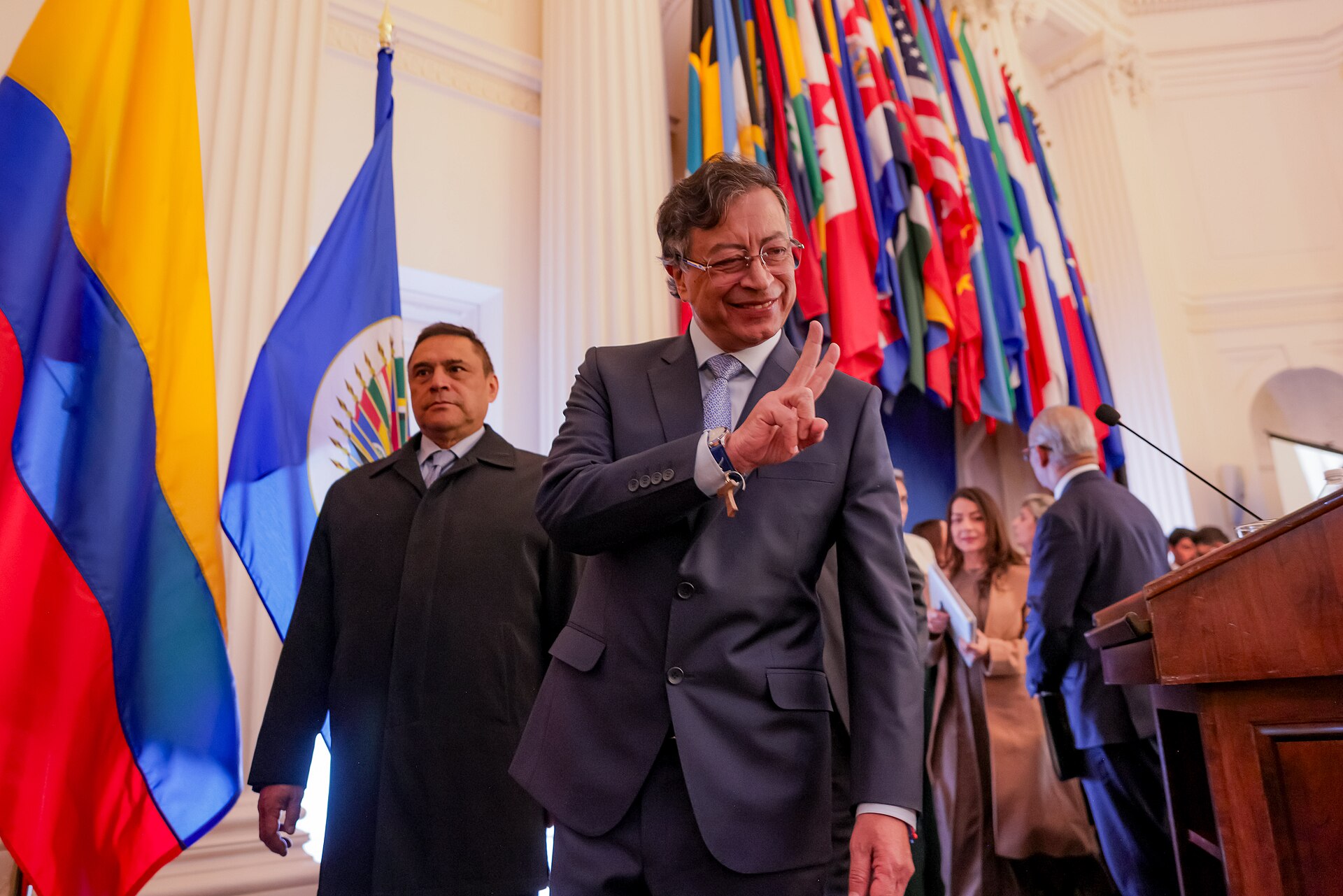
Petro, De la Espriella’s predecessor, decreed the large minimum-wage rise for 2026. He answered the auditors on his X account on Monday evening.
“The National Comptroller’s Office lies when it blames the minimum wage for the Colpensiones shortfall,” he wrote, according to Infobae. He said Grupo Aval and Bancolombia owe the fund 25 trillion pesos (about US$7.8 billion).
That claim refers to savings of workers who moved from private pension funds to Colpensiones under his reform. His government ordered the transfer in Decree 415 of 2026.
The Council of State, Colombia’s top administrative court, provisionally suspended the whole decree on 11 May 2026. The money stays with the private funds while the court hears the case, and no wrongdoing has been found.
Petro also made a forecast aimed at his successor. “By not raising the real minimum wage, which is what Abelardo intends, the Colombian economy will collapse in 2027,” he wrote.
The pension reform behind the fight
The fight sits on top of Law 2381 of 2024, Petro’s pension reform. It builds the system around pillars, with Colpensiones at the centre.
Under the law, contributions on earnings up to 2.3 monthly minimum wages go to Colpensiones. Anything above that goes to a private fund chosen by the worker.
The Constitutional Court upheld most of the law in late August 2026, by seven votes to one. It takes effect on 1 April 2027, while several articles return to the lower house of Congress.
López told Congress this month that Colpensiones will grow from about 3 million contributors to about 10.2 million in 2027. She warned of a 2027 gap of COP 4.84 trillion (about US$1.5 billion), El País of Cali reported.
Before he took office, Semana reported that De la Espriella wanted workers to keep choosing between private funds and Colpensiones. His government has not announced a formal change to the reform.
How the gap could be closed
The government has not said how it will cover the 2026 shortfall. Javier Almanza, a labor-law specialist at Universidad del Rosario, told La Opinión it could shift money from other ministries.
Another route is an addition to the budget approved by Congress. Henry Amorocho, a public-finance professor at the same university, called that difficult under De la Espriella’s spending-cut goals.
For the 1.9 million pensioners, the practical question is whether the year-end payments arrive on time. The Colpensiones pension shortfall makes that the first test for Montoya.
More: Colombia coverage, every day from The Rio Times.
Frequently Asked Questions
What is Colpensiones?
Colpensiones is Colombia’s state-owned pension administrator, attached to the Labor Ministry. It runs the public pay-as-you-go scheme, known in Spanish as the Régimen de Prima Media, which pays defined pensions. It replaced the old Social Security Institute in 2012 and pays more than 1.9 million pensioners.
Who is the new president of Colpensiones?
Carlos René Montoya Muñoz, a lawyer from Córdoba, was chosen by the fund’s board on 17 September 2026. President Abelardo de la Espriella swore him in on 21 September 2026. His background is in labor relations, including about two decades at the mining company Cerro Matoso.
Why do the auditors say money is missing?
The Comptroller General’s office says the 2026 budget assumed pensions would rise about 7.5 percent. The minimum wage, which sets the lowest pensions, rose about 23 percent instead. It puts the Colpensiones pension shortfall for 2026 above COP 4.2 trillion (about US$1.3 billion).
What does the 2024 pension reform change?
Law 2381 of 2024 sends contributions on earnings up to 2.3 minimum wages to Colpensiones, with higher earnings going to private funds. The Constitutional Court upheld most of it in late August 2026. It takes effect on 1 April 2027.
Sources: La República on the swearing-in, Infobae on the ceremony, Portafolio on the board vote, Vanguardia on the Comptroller’s alert, Infobae on Petro’s reply, Infobae on the new Comptroller General, Actualícese on the suspension of Decree 415, Forbes Colombia on the court ruling, El País Cali on the 2027 budget, La Opinión on the options, Vanguardia on the exchange rate
This article was produced by The Rio Times’ automated newsroom system. How we use AI · Report an error
In depth
Read More from The Rio Times