New Investor Revives Colombia Wind Farms a Rival Firm Abandoned
Colombia · Markets
Key Facts
—The revival. A new owner is restarting two big wind farms, Alpha and Beta, in northern Colombia.
—The size. Together they add up to about 492 megawatts, the largest wind capacity planned in the country.
—The backstory. Europe’s EDP Renewables walked away from both projects in late 2024.
—Who stepped in. Greenwood Energy, part of the US-linked Libra Group, has taken over the parks.
—The catch. Talks with 108 Indigenous communities must still be completed before building can start.
—Why it matters. It tests whether Colombia can finally turn its windiest region into reliable power.
In a rare piece of good news for Colombia wind farms, a new investor has taken over two large projects that a European energy giant abandoned, betting it can succeed where others gave up and turn the country’s windiest corner into a pillar of its power supply.
The Colombia wind farms being brought back to life
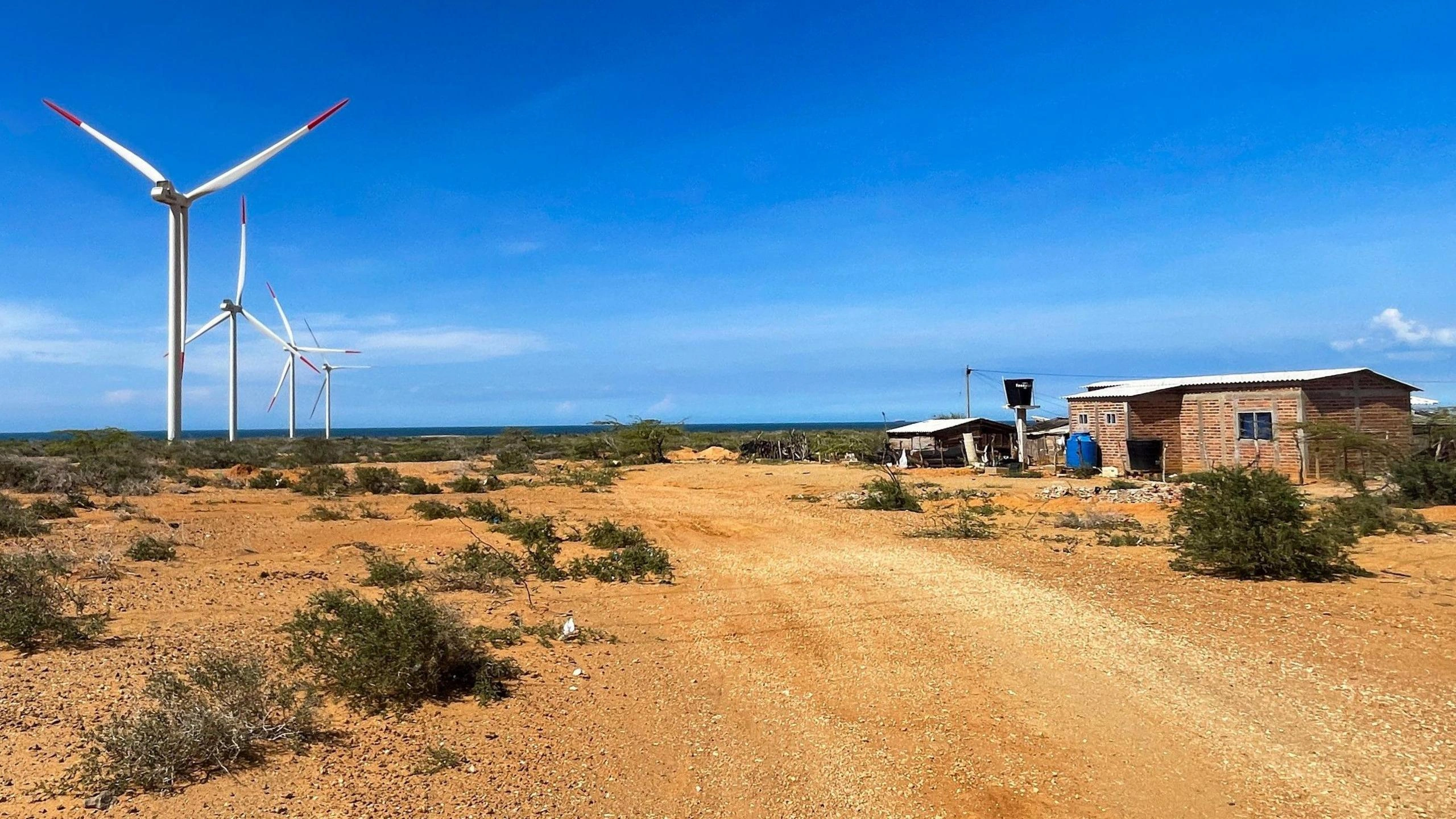
Greenwood Energy, a renewable-power company that is part of the globally active, US-linked Libra Group, has formally taken over and restarted two wind projects in La Guajira, the arid, wind-swept peninsula at Colombia’s northern tip. The two parks, named Alpha and Beta, have a combined capacity of about 492 megawatts, which would make them the largest wind installation in the country.
The handover was confirmed at a high-level meeting led by Energy Minister Edwin Palma, alongside the environmental, regulatory and interior authorities. Greenwood says it has had the projects’ environmental licences formally transferred to it, giving it the green light to lead this next phase.
Why a European giant walked away
The story matters because of who left. Alpha and Beta were originally developed by EDP Renewables, the green arm of a major Portuguese utility, which abandoned both in December 2024 and became a symbol of how hard it is to build energy projects in Colombia.
EDP blamed a mix of problems: delays in building the transmission line needed to carry the power to the rest of the country, a heavier tax burden, rising construction costs and a weakening local currency. The exit was bitter enough that the company later considered taking Colombia to the World Bank’s international investment-dispute body, seeking compensation for the failed venture.
EDP was not alone. Italy’s Enel and Norway’s Statkraft have also pulled back from wind and solar work in the same region in recent years, and most of the capacity awarded in a 2019 auction never got built.
For a country that wants renewables to anchor its future grid, that pattern of high-profile exits has been a serious embarrassment. It has also fed a wider worry among investors that good projects on paper keep dying on contact with Colombian reality.
The hard part: winning local consent
The biggest obstacle in La Guajira is not the wind or the engineering, but people. The region is the homeland of the Wayúu, an Indigenous people, and Colombian law requires companies to carry out a formal “prior consultation” to reach agreements with communities before building on ancestral land.
Those processes have repeatedly stalled or collapsed amid disputes over benefits, culture and trust, and several earlier projects faced blockades. For the revived parks, the consultation involves around 108 communities and some 130 formal agreements, with close to 195 community meetings still planned before construction can begin.
Greenwood’s operations chief, Marcos Páez, struck a deliberately humble note, saying the company had learned from past mistakes and was building a new phase based on respect for communities and transparency. Whether that holds up against the realities that defeated its predecessors is the open question.
What it means for Colombia and investors
For a foreign reader, the significance is twofold. First, it is a test of confidence: a fresh investor willingly picking up the exact assets a European major fled is a small but real vote of faith in Colombia’s clean-energy future.
Second, it speaks to energy security. Colombia leans on rain-fed dams for most of its electricity and faces projected shortfalls later this decade, so adding nearly 500 megawatts of wind would meaningfully strengthen a system exposed to drought.
The caution is that this is a restart, not a ribbon-cutting. The same transmission gap that frustrated EDP, chiefly the long-delayed line meant to evacuate La Guajira’s power, has not been resolved, and the social agreements are unfinished.
The promise is large and the symbolism is strong, but in Colombian wind power the distance between a signed commitment and a turning turbine has proven long. For now, the most honest verdict is that Colombia has won back a believer, and must still prove the doubters wrong.
More: Colombia news in English, every day from The Rio Times.
Frequently Asked Questions
What are the Alpha and Beta wind farms?
They are two wind projects in La Guajira with a combined capacity of about 492 megawatts, which would make them the largest wind installation in Colombia once built.
Why did EDP Renewables abandon them?
EDP cited delays to the transmission line, a higher tax burden, rising costs and a weaker peso, and later sought compensation from Colombia at the World Bank’s investment-dispute body.
What still has to happen before building?
Greenwood must complete prior-consultation agreements with around 108 Indigenous communities, and the region’s long-delayed transmission line is still needed to carry the power to market.
Connected Coverage
Colombia’s Firm-Energy Deficit Widens Through 2030
Colombia Economy 2026: Petro Reforms, Coffee, Oil and Growth
This article was produced by The Rio Times’ automated newsroom system. How we use AI · Report an error · Editorial responsibility: Matthias Camenzind, Editor-in-Chief