Colombia’s Electricity Cushion Disappears Before El Niño
Key Facts
— — Acolgen president Natalia Gutiérrez, citing data from grid operator XM, said Colombia’s firm-energy-versus-demand balance is now negative at -2.3% for 2026 and projected to widen to -4.4% in 2027, -3.2% in 2028, -5.2% in 2029 and -6.8% in 2030.
— — Only 0.6% of expected new generation capacity has entered the grid year-to-date in 2026; 16% of existing solar plants were removed in 2025 due to technical failures, and projects from the most recent auction will not begin commercial operations until 2028.
— — The deficit coincides with a likely El Niño event in the second half of 2026, which would reduce hydroelectric generation — Colombia’s dominant source — and push the system toward the thermal-dispatch framework that the country’s natural-gas supply constraints cannot fully support.
— Deep Dive
— For the complete picture, see our guide: Colombia Economy 2026.
The Colombia energy deficit projections released by Acolgen Monday formalize what the sector has warned about for 18 months: the country has exhausted its operational reserve margin and is now structurally short of firm generation capacity relative to demand. Gutiérrez, who assumed the presidency of the Consejo Gremial Nacional on January 1, 2026, used the Acolgen platform to escalate the warning from technical to political.
The Rio Times, the Latin American financial news outlet, reports that the underlying driver is a sustained demand-supply imbalance that has compounded over 25 years. Demand has grown at 4.1% annually, while the generation park has expanded at only 2.6% per year. That gap has now closed the reserve cushion that historically insulated the system from adverse weather and project-delay shocks.
“Colombia enfrenta un riesgo real en el suministro de energía eléctrica. Ya no hay margen de espera o maniobra,” Gutiérrez said. The framing is significant because Acolgen represents the thermal and hydro generators whose output defines firm capacity, making the warning one from the industry that has the most to lose from blackouts and the most to gain from a tight supply balance.
Inside the Colombia Energy Deficit Projections
The XM projections describe a system where the gap between firm-energy supply and annual demand expands year after year without an inflection point through 2030. The -2.3% figure for 2026 means the system is running approximately 330 GWh per year short of reliable supply at current demand levels.
The 2027 -4.4% widening reflects the inflection point where cumulative project delays and demand growth outpace the capacity additions that are actually entering service. The 2029 and 2030 projections carry additional risk because they depend on large La Guajira wind projects that have been stalled since 2022 due to consultation-process disputes, regulatory uncertainty, and community-resistance dynamics.
The 0.6% of expected 2026 capacity that has entered the grid year-to-date is the operational tell. The full-year expected figure would translate into approximately 2.5 GW of new capacity across solar, wind, hydro and thermal; actual commissioning to date is closer to 15 MW. The ratio of projected-to-actual additions has been deteriorating annually since 2021.
The Transmission Bottleneck
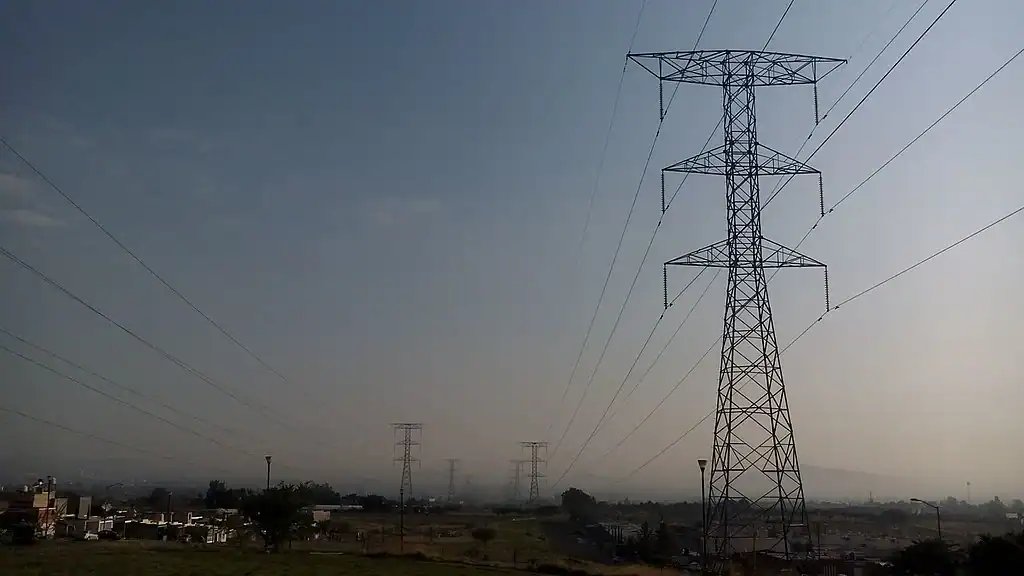
The capacity story is only half the problem. Transmission project delays average 55 months — almost five years — according to the XM figures Gutiérrez cited in her late-2025 interviews. That means even new generation capacity cannot be effectively dispatched from La Guajira or Córdoba to the demand centers in Bogotá, Medellín and the Caribbean coast.
The stalled Colectora transmission project remains the most visible symptom. The 470-kilometer line connecting La Guajira wind capacity to the national grid has faced repeated consultation-process extensions, regulatory-approval delays, and community-process interventions that have kept it out of commercial operation through 2026 despite originally targeting 2022 completion.
Without Colectora, the wind resource in La Guajira — which could support 5-8 GW of installed capacity — remains functionally inaccessible to the national system. Several developers have formally abandoned La Guajira investments over the past three years, citing the unresolved transmission and consultation framework.
The El Niño Overlay
Climate forecasters expect an El Niño event in the second half of 2026, which would reduce rainfall in the Andean region that feeds Colombia’s primary hydroelectric catchments. Hydro provides approximately 70% of Colombian electricity generation in normal rainfall years.
An El Niño shock would force the system to rely more heavily on thermal generation, which in turn depends on domestic natural gas or imported fuels. Colombian gas production has been declining since 2024, and natural gas import infrastructure at Cartagena is not currently sized for the thermal-dispatch volumes a prolonged dry event would require.
The Ballena regasification project, with a targeted 2027 operational start and 300 million cubic feet per day capacity, would partially address the gas-import bottleneck. But that project begins operation after the El Niño window, leaving the 2026 system exposed without new gas supply capability.
The Fiscal Transmission
The fiscal transmission of a blackout scenario is significant. Fedesarrollo estimated that a 1990s-style rationing event would reduce GDP growth by 1.5 percentage points, destroy 230,000 jobs, and push the poverty rate higher. Colombia’s 2024 rationing was narrowly avoided through dispatch-management; the 2026-2027 window faces a structurally worse supply-demand balance.
Industrial users are already adapting. Approximately 16% of large Colombian corporations have substituted away from natural gas for operational processes, either through electricity replacement or alternative fuels. That substitution reduces peak gas demand but indirectly increases the load on the electricity grid.
As Rio Times comparative Latin American investment analysis has documented, reliable electricity supply is now a top-five factor in industrial site-selection decisions for nearshoring and export manufacturing. Colombia’s deteriorating reliability profile is an additional headwind to attracting investment currently going to Mexico and Brazil.
The Political Overhang
The Petro administration’s energy-transition framework has prioritized renewable project auctions but struggled to deliver physical infrastructure outputs. The 2022-2026 stretch has coincided with the slowest rate of new-capacity commissioning in the country since the post-1992-blackout reconstruction period.
The May 31 first-round presidential election will define the policy response window. Opposition candidates Paloma Valencia and Abelardo de la Espriella have both emphasized regulatory streamlining for infrastructure approvals; Pacto Histórico candidate Iván Cepeda has signaled continuation of the current energy-transition framework.
As Rio Times coverage of regional policy dynamics has noted, Colombian infrastructure investment has been particularly sensitive to regulatory uncertainty across the current cycle. A rationing event in the second half of 2026 would transform the election dynamic and likely make energy security the defining campaign issue for the runoff.
What to Watch
Three variables will determine whether the 2026 projection materializes as a managed shortfall or a full rationing event. First, the timing and intensity of El Niño. A moderate event could be absorbed through demand management; a severe event lasting more than six months would exceed the system’s adaptive capacity.
Second, the pace of Colectora transmission restart. Any material progress on the La Guajira connection would signal that the structural supply-side problem has a path to resolution. Continued stasis would lock in the 2027-2030 deficit projections.
Third, the post-election policy reset. Whichever candidate wins in June will have a narrow window — the first six months of 2027 — to implement substantive regulatory and permitting reforms before the system faces its most exposed period. Policy paralysis through the transition would leave the 2027 deficit at or above the -4.4% projection.
More: Colombia news in English, every day from The Rio Times.
This article was produced by The Rio Times’ automated newsroom system. How we use AI · Report an error · Editorial responsibility: Matthias Camenzind, Editor-in-Chief