
Colombia · Economy & Politics
Key Facts
- —What happened Colombia’s new tax-cutting president faces a 30 billion-peso bill after a 7.4 quake hit Chocó.
- —How big a jump Damage is about US$9.8 billion, with fiscal adjustment needed at US$19.7 billion (at 3,048 pesos/dollar).
- —The real story José Antonio Ocampo urges keeping the wealth tax as the most progressive levy, though reconstruction costs are financeable.
- —The catch The 4×1,000 bank tax, permanent since 1999, may fund reconstruction until 2029, surviving again.
- —Who it touches Watch reconstruction package size and financial levy impacts on businesses, not donation totals.
- —What comes next The wealth tax’s fate will shape fiscal policy for four years, as a phase-out bill sits in the lower house.
Two weeks after a magnitude 7.4 earthquake, the reconstruction bill is colliding with a president elected to cut taxes.
The bill lands on a tax-cutting president
Abelardo De la Espriella took office on 7 August 2026 having campaigned on scrapping Colombia’s wealth tax. Three days later a magnitude 7.4 earthquake hit Chocó, and the arithmetic changed.
José Antonio Ocampo, who ran the finance ministry under the previous government and now teaches at Columbia University, used his column in El Tiempo at the weekend to tell him not to. The wealth tax, he wrote, “is the most progressive of all and helps compensate for the underestimation of capital income”. His numbers are the reason: damage of about 30 billones de pesos, and a fiscal adjustment he puts nearer 60 billones — roughly US$9.8 billion and US$19.7 billion at the official rate of 3,048.12 pesos to the dollar.
A word of warning for readers converting these figures themselves. In Spanish a billón is a million million. Thirty billones is thirty trillion pesos, not thirty billion.
Ocampo is not alone. Jorge Iván González, who ran the national planning department, called abolishing the wealth tax “a colossal mistake”. Not everyone agrees the sums are frightening: Juan Camilo Restrepo, a former mines minister, puts reconstruction at 8.5 billones a year to 2030, about 1.5% of the national budget, and calls that “perfectly financeable”.
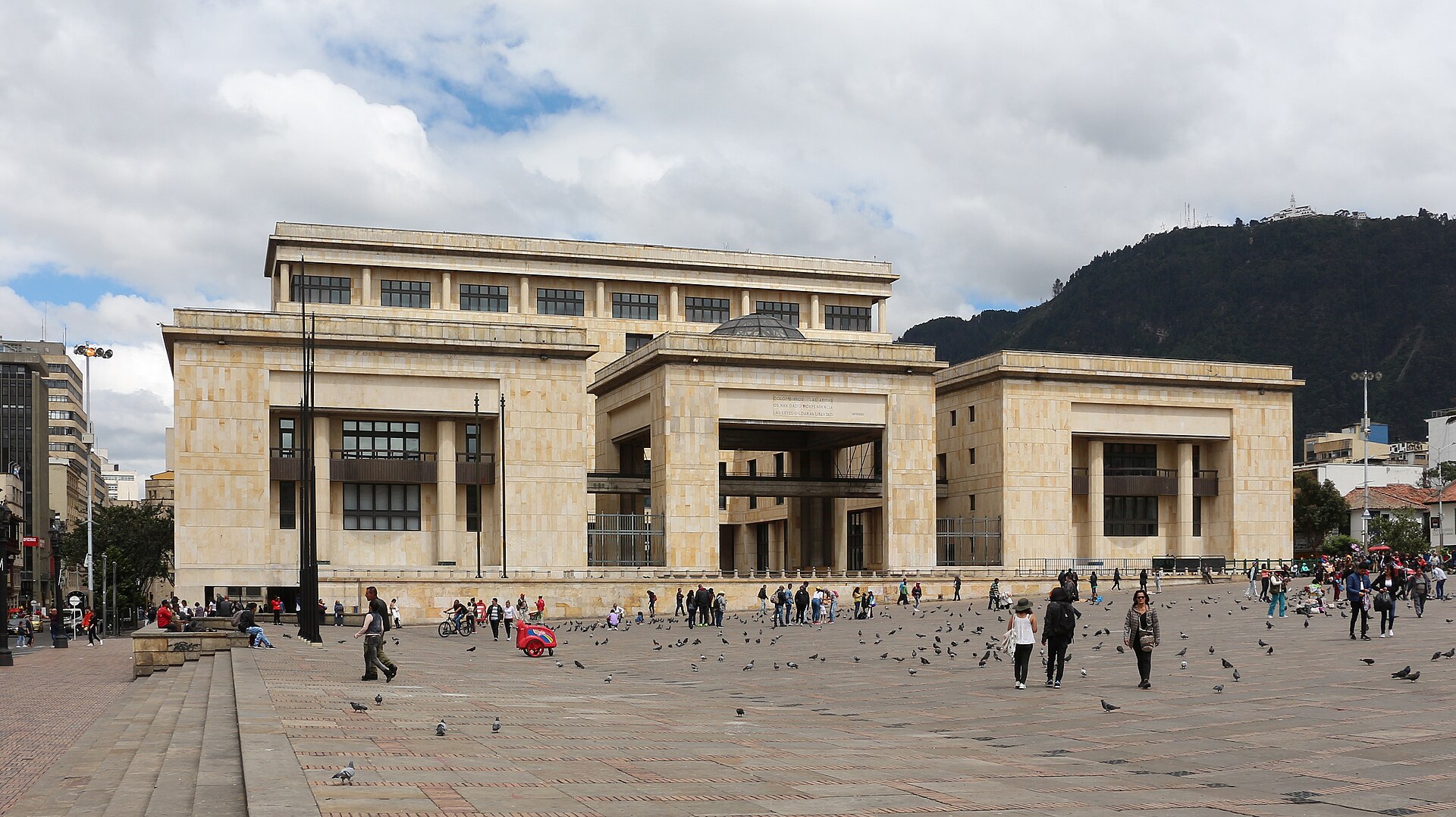
The tax everyone hates is being kept alive again
The other tax in play is the 4×1,000, a levy of four pesos on every thousand you move out of a Colombian bank account. It began as a temporary emergency measure in 1998. It was made permanent by law in 2000, after the 1999 Eje Cafetero earthquake — also magnitude 7.4.
A bill to phase it out over six years is before the lower house. Since the quake, Senator Gustavo Moreno has proposed something else: earmark the money for reconstruction until 2029, then taper it away by the mid-2030s. Colombia has run this play before, and the levy raises about 16 billones a year, close to US$5.3 billion. History suggests it survives.
Coal and gold pulled the mining numbers back into the black
The statistics office published second-quarter GDP on 18 August, and the mining line turned positive for the first time in more than two years. Mining and quarrying grew 4.2% year on year against overall growth of 3.5%.
The mix matters more than the headline. Coal grew 16.2% and metal ores — overwhelmingly gold — grew 15.4%. Crude oil and natural gas, still the bigger export earner, went the other way, contracting 2.6%. The sector is being carried by the commodities Colombia has been trying to move away from.
The trade numbers are less encouraging. Exports from Colombia’s free-trade zones fell 0.9% in June, to US$235.3 million. That small number hides a larger one: imports into those zones rose 21.4%, and the half-year surplus has collapsed from US$185.2 million to US$39.1 million. A single line — machinery and electrical apparatus, up 87.1% — is holding the export figure up.
The river is falling as the country rebuilds
IDEAM, the state hydrology institute, warned in mid-August that flows in the middle and lower Magdalena will fall between 20% and 60% this month. Gauges at Barrancabermeja, Puerto Wilches and Sitio Nuevo are already running below their historical behaviour.
The practical risk is salt. Below roughly 4,000 cubic metres a second, the saline wedge from the Caribbean threatens the Puerto Colombia intake; near 2,000, it could reach Barranquilla. IDEAM does not expect September rains to reverse it quickly. A country financing reconstruction while its main artery drops is running two problems at once.
A prosecutor, a president’s son, and a denial
Separately, the Fiscalía General — Colombia’s constitutionally independent prosecution service — spent Sunday denying that it leaned on the prosecutor handling the case against Nicolás Petro, son of former president Gustavo Petro.
Lucy Laborde, who carried the case until July, told Semana that Fiscal General Luz Adriana Camargo had asked her in September 2024 to drop the money-laundering charge and keep only illicit enrichment. The Fiscalía replied that the meeting “did not occur in the terms the former official has described”, that no instruction was given to remove charges, and that there was no coercion. It said the discussion concerned a defence request to reclassify the charge for a plea deal, which was refused.
On her departure, the office said she had met the legal requirements to retire on a pension, during a merit competition in which she did not take part. She was exempt from it. Both charges still stand, and an appeal court in Barranquilla is deciding an evidentiary question before trial can open.
And a concert
On Sunday night more than thirty artists played “Colombia: Voces por la Vida” at the Vive Claro venue in Bogotá, broadcast by Canal RCN. The preliminary total was 11,193 million pesos, about US$3.7 million.
Karol G donated US$1.2 million through her foundation for rebuilding homes and schools — correcting the hosts live on air, who had announced a million. The Antioquia state distillery, which is owned by the departmental government and funds a good deal of its budget, said it was sending 55,000 hydration drinks to shelters and rescue crews; that donation was reported by the Medellín outlet Análisis Urbano and we have not seen it confirmed on the company’s own channels.
Why this matters if you are invested here
Colombia is about to have the argument every country has after a disaster, and it is having it three weeks into a new administration that was elected to cut taxes. Whether the wealth tax survives, and whether the 4×1,000 is once again kept alive “temporarily”, will tell you more about Colombian fiscal policy for the next four years than any campaign promise did.
For anyone holding Colombian paper, the numbers to watch are not the donation totals. They are the size of the reconstruction package, whether it arrives inside a tax reform or outside one, and how much of it lands on the financial-transactions levy that businesses actually pay.
More: Colombia news in English, every day from The Rio Times.
Frequently Asked Questions
How big was the earthquake, and how bad is it?
Magnitude 7.4, at a depth of 103 km, on 10 August. The national disaster agency UNGRD counted 329 dead, 234 missing and 4,600 injured at its 6.30 a.m. balance on 23 August, with about 31,450 homes destroyed and 175,397 damaged across 16 departments. UNGRD publishes more than one balance a day and has revised the toll down as well as up, so always check the hour on any figure.
What is the 4×1,000, and is it going away?
It is a tax of four pesos per thousand — 0.4% — on most withdrawals and transfers from a Colombian bank account. It was introduced as a temporary crisis measure in 1998 and made permanent after the 1999 Eje Cafetero earthquake. A bill to phase it out over six years sits in the lower house, but a senator has since proposed earmarking the revenue for reconstruction until 2029 first. It raises about 16 billones de pesos a year, roughly US$5.3 billion.
Is Colombia’s mining sector recovering?
On the second-quarter numbers, yes, but narrowly. Mining and quarrying grew 4.2% year on year, ending more than two years of contraction. The growth came from coal and from metal ores, mostly gold. Oil and gas, still the larger export earner, contracted 2.6%.
Why does the Magdalena river matter to business?
It is Colombia’s main river, running about 1,500 km from the Andes to the Caribbean at Barranquilla. It carries barge traffic and supplies drinking water to riverside cities. When flow drops far enough, seawater pushes upstream into municipal water intakes — the salt intrusion IDEAM is warning about.
Sources
- Servicio Geológico Colombiano — magnitude, depth and epicentre
- DANE — second-quarter GDP bulletin
- DANE — free-trade-zone trade, June 2026
- IDEAM — Comunicado Especial 089 on Magdalena river levels
- José Antonio Ocampo, “Un inicio complejo del Gobierno”, El Tiempo
- El Tiempo — Fiscalía statement on the Laborde allegations
- El Tiempo — concert total raised
This article was produced by The Rio Times’ automated newsroom system. How we use AI · Report an error · Editorial responsibility: Matthias Camenzind, Editor-in-Chief
In depth