Colombia to Buy Brazilian Transport Planes After Crash
Colombia · Defense
Key Facts
—The order. Colombia’s president has ordered the purchase of at least two Embraer C-390 transport aircraft.
—The maker. The C-390 is built by Brazil’s Embraer, the largest military cargo plane made in the southern hemisphere.
—The trigger. A C-130 crash that killed 70 people sharply accelerated the decision.
—The need. Colombia’s transport fleet still leans on aging Lockheed C-130 Hercules planes.
—The pattern. It follows Colombia’s recent choice of Swedish Gripen fighters, both tied to Brazil’s air force.
—The bonus. Officials hope local firms can share in building and maintaining the aircraft.
Colombia is moving to buy Brazilian transport planes to replace its ageing military fleet, a decision driven home by a catastrophic crash that killed 70 people and exposed how worn the country’s air-lift force has become.
A decision pushed by tragedy
Colombia’s president, Gustavo Petro, has ordered the armed forces to begin buying new military transport aircraft, starting with at least two Embraer C-390 Millennium planes from neighbouring Brazil. The push to modernize had been building for years, but it was a disaster that forced the issue.
In March, a Lockheed C-130 Hercules crashed shortly after take-off, killing 70 of the 126 people on board and laying bare just how old and stretched Colombia’s air-transport fleet had become. President Petro went further, publicly dismissing the country’s donated Hercules as little better than scrap.
For decades, the C-130 has been the backbone of Colombian military air transport, the workhorse that moves troops, equipment and aid across rugged terrain. But the fleet is decades old, and questions about its safety and reliability have grown louder.
The order for the C-390 is, in part, an answer to those doubts.
What the Brazilian transport planes offer
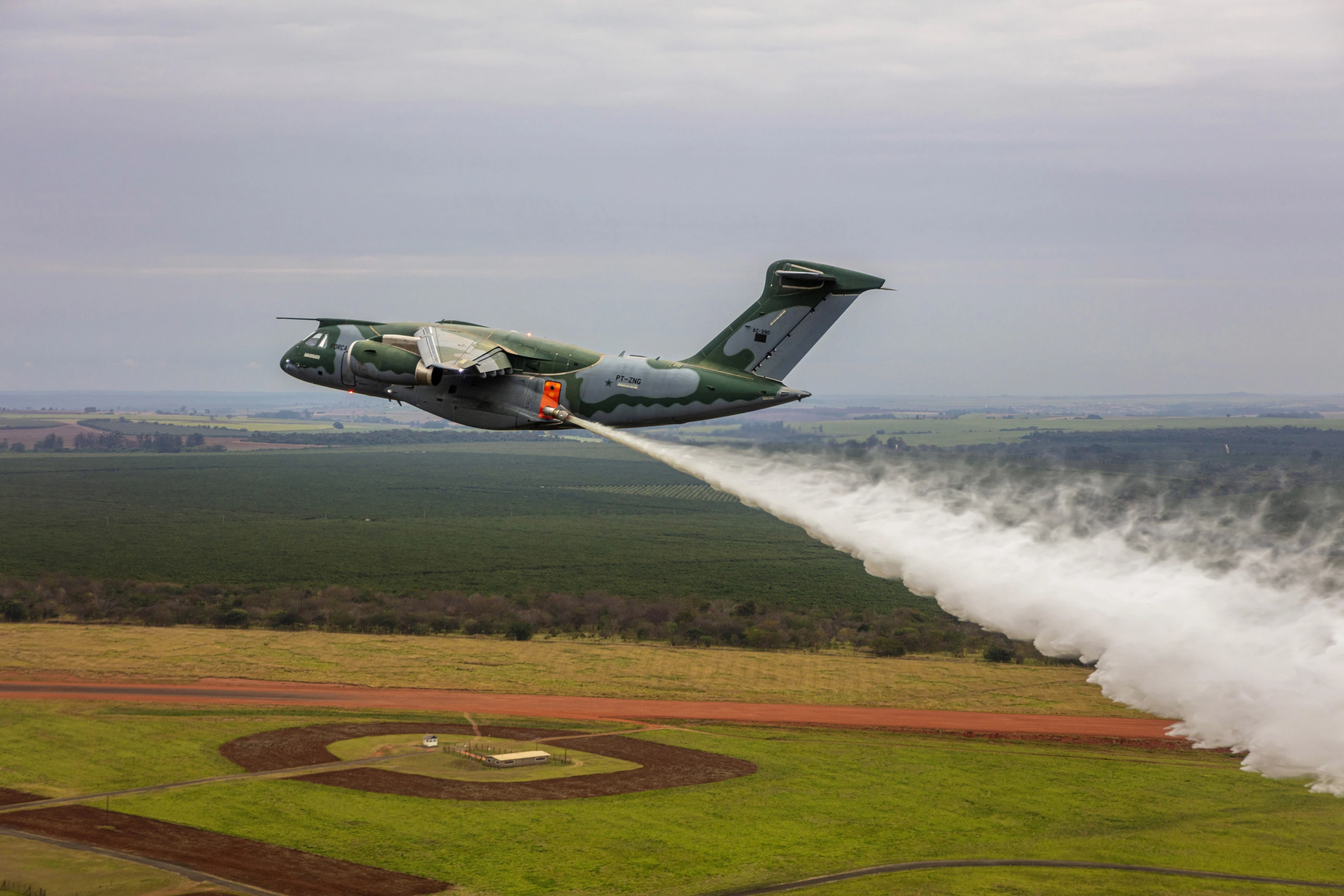
The C-390 Millennium, made by Brazil’s Embraer, is the largest military cargo aircraft produced in the southern hemisphere, and it is precisely the class of plane meant to replace the Hercules. It is a modern jet-powered transport, faster than the propeller-driven C-130, and built to do many jobs at once.
Those jobs include carrying troops and cargo, dropping supplies and paratroopers, evacuating the wounded, running search-and-rescue, fighting wildfires and supporting disaster relief. It can even be fitted to refuel other aircraft in mid-air.
For a country like Colombia, that versatility is the appeal. The same aircraft that moves soldiers one week can deliver relief to a flooded region the next.
Brazil’s own air force already flies the type, and it has begun winning export orders elsewhere. That gives buyers confidence that spare parts and support will be available for years to come.
Live Company IntelligenceEmbraer SA ADR — the full investor dossier
Wall Street view
Valuation & profitability
Price & risk
$56.8452-wk high
$66.87
Revenue trend · 6y
Ownership
Dividend
A Brazilian pattern emerges
The C-390 order is the second time recently that Colombia has turned to equipment flown by Brazil’s air force. Last year it selected the Swedish-designed Gripen fighter, the same combat aircraft Brazil now assembles at home, to renew its fast-jet fleet.
Choosing the C-390 deepens a quiet alignment between the two South American neighbours. It points to a broader trend in the region: countries increasingly buying from one another and from non-traditional suppliers, rather than relying solely on the United States.
There is an industrial angle too. Colombian officials have signalled hope that local companies could take part in building or maintaining the aircraft, turning a straightforward purchase into a chance to develop the country’s own aerospace know-how.
That kind of technology-sharing echoes the arrangements that helped Brazil build up its own defense industry over the past two decades.
Why it matters beyond Colombia
For an outside observer, the deal is a small but telling marker of how Latin America’s defense map is being redrawn. Brazil is emerging as the region’s arms supplier of choice for several neighbours, exporting not just hardware but the industrial model behind it.
The United States remains a major player, but its dominance is no longer automatic, as countries weigh price, delivery speed and the chance to build something at home.
For Colombia, the immediate stakes are simpler and more human. The country needs aircraft it can trust to carry its people safely, after a crash that made the cost of an ageing fleet painfully clear.
The order is a first step, with talk of expanding it over time, and it still has to move from a presidential instruction to signed contracts and delivered planes. But the direction is set: Colombia wants newer wings, and for now it is looking to Brazil to provide them.
More: Colombia news in English, every day from The Rio Times.
Frequently Asked Questions
What is Colombia buying?
President Petro has ordered the purchase of at least two Embraer C-390 Millennium military transport aircraft from Brazil, with the possibility of more later. They are intended to start replacing Colombia’s ageing Lockheed C-130 Hercules fleet.
Why now?
The push to modernize had been building for years, but a C-130 crash that killed 70 people sharply accelerated the decision. It exposed how old and overstretched Colombia’s transport fleet had become.
Why a Brazilian aircraft?
The C-390 is a modern, versatile transport already flown by Brazil’s air force, which eases support and spare parts. It also follows Colombia’s recent choice of the Brazil-linked Gripen fighter, and opens the door for Colombian firms to join in building and maintaining the planes.
Connected Coverage
Brazil Turns Fighter Deal Into an Aerospace Industry
Colombia Economy 2026: Reforms, Coffee, Oil and Growth
This article was produced by The Rio Times’ automated newsroom system. How we use AI · Report an error · Editorial responsibility: Matthias Camenzind, Editor-in-Chief
Read More from The Rio Times