Europe Intelligence Brief — Tuesday, September 22, 2026
Executive Summary
Europe Intelligence Brief for 22 September 2026: Brussels renews its Russia sanctions at the price of two names, Berlin's coalition turns on itself, France stays angry at the pump, and a Romanian court holds the middle
Europe Intelligence Brief — Tuesday, 22 September 2026

In Brussels, Berlin and Stockholm, Tuesday’s arguments ran inside each camp rather than between rivals. European Union governments squabbled to the brink over two businessmen’s names, then struck a bargain: a longer renewal of sanctions on backers of Russia’s war, paid for by removing them.
In Berlin, Chancellor Friedrich Merz’s coalition turned on itself two days after voters humbled his party in two state elections. France stayed angry at the pump, and in Romania a court kept a defiant pro-Russian politician free under conditions.
Sweden is stuck in limbo. Its centre-left bloc won 176 seats to 173, and a fraud inquiry in one county could now reopen part of the count, Reuters reported.
What steadies the week is that institutions still work. A Bucharest court turned down a 30-day arrest request, and Germany’s cabinet approved a fuel-tax cut. In New York, a security pact for Greenland, the Arctic island under Danish sovereignty that Trump had threatened to take, was scheduled for signature.
Each of those can still turn. Prosecutors have challenged the Bucharest ruling, Mediafax, a Romanian news agency, reported, and the German parliament must still pass the tax cut.
Read this afternoon in English and in the original German, Romanian and French, with translations from those languages the desk’s own. Open items were last checked at 15.38 UTC. Every euro amount carries its US dollar value at the European Central Bank’s reference rate of 22 September, US$1.1463, and the Czech koruna uses the desk’s own cross of the same day’s ECB rates, 21.237 koruna to the dollar.
Brussels Bargains At The Brink Over Two Names
The European Union tested its unity against a clock and paid a price to pass. Its asset freezes and travel bans on people and entities tied to Russia’s war needed every member government’s agreement to survive midnight Brussels time, 22.00 UTC, on Tuesday.
Ambassadors sealed the compromise on Tuesday, and the EU has extended its individual sanctions on Russia for 36 months instead of six, Euronews, the pan-European broadcaster, reported. It removes two Russian businessmen: Alisher Usmanov at France’s request, and Mikhail Fridman after Slovakia vetoed his continued listing, several diplomats told Euronews.
The list holds more than 2,600 people, organisations and entities, by Euronews’s count, while the Kyiv Independent, a Ukrainian news site, put the renewal at about 3,000. Luxembourg, against which Fridman has filed a US$16 billion claim over his frozen assets, had argued that if Usmanov was removed, Fridman should be too, Euronews reported.
Latvia said no on Monday night and relented on Tuesday afternoon with a constructive abstention, standing aside without a veto so that the decision had the unanimity it needed, Euronews reported. “Extending sanctions for 36 months would be the right step,” its prime minister, Andris Kulbergs, had written on X on Monday, Reuters reported. “However, the price for it must not be simply striking both individuals from the sanctions list. Latvia cannot accept such an offer.”
France linked Usmanov’s delisting to a prisoner release with Azerbaijan, Euronews reported. A French diplomatic source told Reuters on 14 September that France faces “a specific national security issue” and wishes to respond to “international partners who have approached us regarding Mr. Usmanov”. The foreign ministry’s spokesperson declined to comment.
Kyiv read the bargain as weakness. “What has changed? Nothing. Delisting is unacceptable and would send the wrong signal,” Ukraine’s foreign minister, Andrii Sybiha, said on 21 September, before the deal, in the Kyiv Independent’s wording. President Volodymyr Zelenskyy asked on Tuesday for a “timely and unconditional rollover”, Euronews reported. His message thanked Latvia for its opposition.
Moscow wanted more. “We believe that these sanctions should be lifted for Usmanov, for Fridman, for all Russian businesspeople,” the Kremlin’s spokesman, Dmitry Peskov, said, Euronews reported.
Relief in the room was grudging. “No one is happy about this,” one diplomat told Euronews, and a spokesperson for the Irish presidency of the EU Council admitted the resolution was “difficult”.
“Today’s decision to renew on a 36-month basis enhances the durability and predictability of the EU sanctions framework,” the presidency’s spokesperson said, Euronews reported. The Council’s own press page carried no release on the decision when the desk checked at 15.32 UTC.
The quarrel with Kyiv runs wider than one list. Hungary’s prime minister, Péter Magyar, who succeeded Viktor Orbán, refused to join a Kyiv-led regional group, the Carpathian Eight, saying “Hungary is not taking part in this”, EUalive, a Brussels news site, reported. Ukraine’s foreign minister accused Budapest of continuing “Orbanism”.
Berlin’s Coalition Turns On Itself
Germany’s governing coalition spent Tuesday arguing in public. Merz’s Christian Democrats, the CDU, lost every seat in the parliament of Mecklenburg-Vorpommern, a north-eastern state, on Sunday, and came second in Berlin behind the Left Party.
Merz answered with resolve. “It is the historic task of the (governing) coalition here in Berlin and the political center as a whole to make our country fit for the coming years,” he said, the Associated Press reported.
His partner is asking for a different tone. “We need reforms, but these reforms must be fair and they need support in the population,” said Lars Klingbeil, co-leader of the Social Democrats with Bärbel Bas, vice-chancellor and finance minister, the Associated Press reported.
Klingbeil went further in German. “Wir stehen zu dieser Koalition, aber so, wie es die letzten Monate gelaufen ist, kann es nicht weitergehen” (“We stand by this coalition, but it cannot go on the way it has gone in recent months”), news.de, a German news site, quoted him as saying.
The quarrel is over pensions, including the end of retirement at 63, and over health and care, news.de reported. Manuel Hagel of the CDU in Baden-Württemberg, a south-western state, warned that without a turnaround “wird von der CDU nicht viel übrig bleiben” (“not much will be left of the CDU”).
What steadies Berlin is that both leaders still speak of the coalition as the vehicle for reform. What could reverse it is a reform fight settled in public rather than in cabinet.
The fuel-tax cut shows how far relief has travelled. The cabinet has approved it by written procedure, ZDFheute, the news service of the public broadcaster ZDF, reported. The Bundestag and the Bundesrat, the two chambers of parliament, must still pass it, and both are meant to decide this week. The Bundesrat’s own calendar lists its next plenary session for Friday 25 September at 09.30 Berlin time.
The cut would take up to 17 cents a litre (about US$0.19) off petrol and diesel from 1 October to 31 December, ZDFheute and t-online reported. It is 14 cents (about US$0.16) of energy tax plus 3 cents (about US$0.03) of value-added tax. It would cost about €2.5 billion (about US$2.87 billion), split equally between the federal government and the states.
Whether it reaches drivers is the next question. “Wir reden über 80, 90 Prozent, was weitergegeben wurde” (“We are talking about 80, 90 per cent being passed on”), said the Social Democrat Armand Zorn of the last such cut, t-online, a German news portal, reported.
Key Facts
France Stays Angry At The Pump, And Its Neighbours Reach For Caps
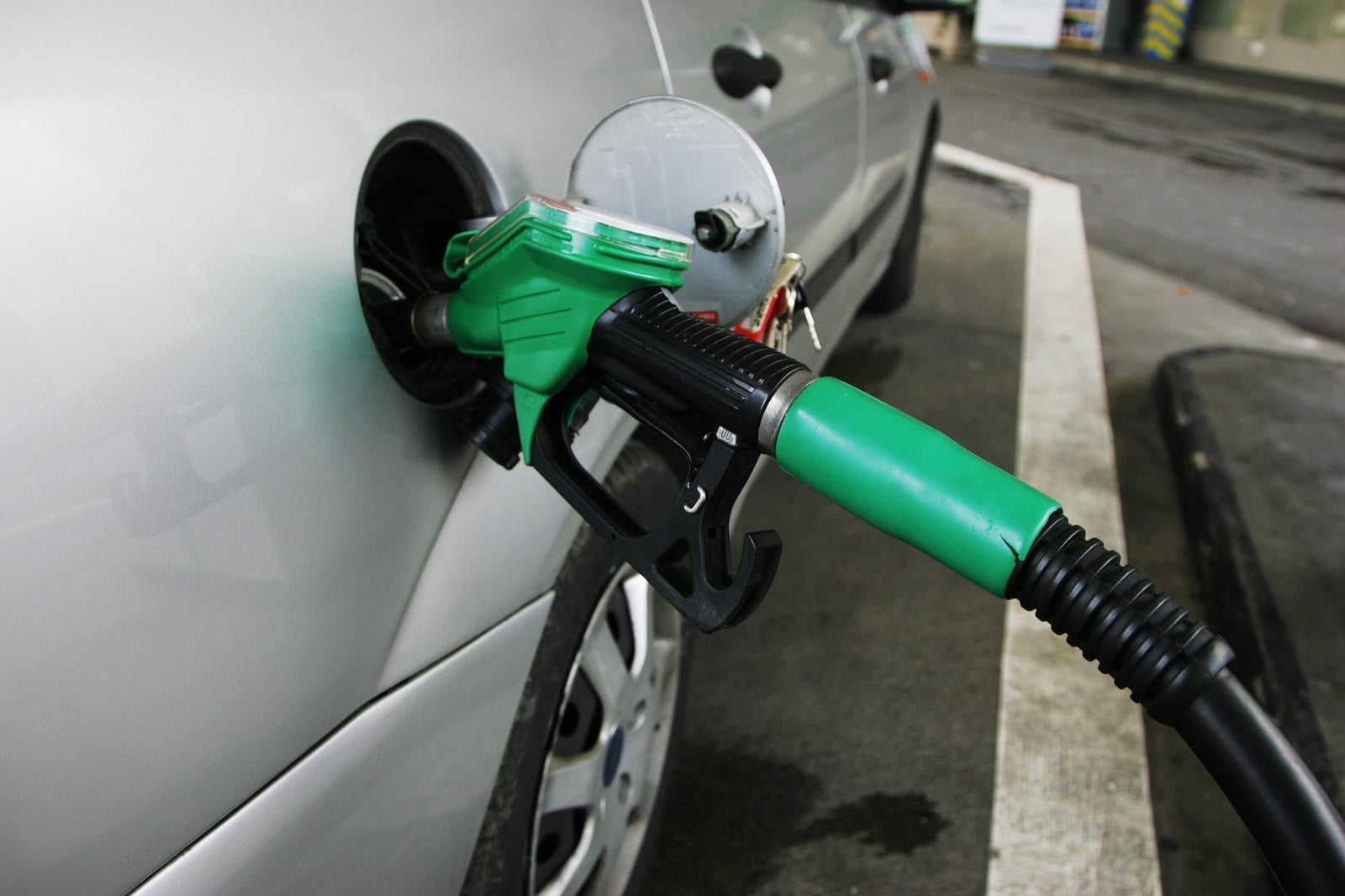
France is angry at the pump and waiting for Paris to act. Diesel was averaging €2.39 a litre (about US$2.74), down from a record of €2.40 (about US$2.75) set over the weekend, The Connexion, an English-language site for France, reported on Tuesday.
AFP’s analysis put Monday’s average at €2.41 a litre (about US$2.76), RFI, the French international broadcaster, reported. At 09.00 Paris time on Tuesday, 14 per cent of stations lacked at least one fuel, The Connexion reported.
The government of Prime Minister Sébastien Lecornu refuses to cut fuel tax. Maud Bregeon, the government spokeswoman and energy minister, spoke on France Inter on 18 September. She denounced the €15 billion cost (about US$17.19 billion) of a plan by Marine Le Pen, of the far-right National Rally, to cut VAT on fuel to 5.5 per cent from 20 per cent, Investir Mag, a French finance site, reported. The prime minister’s office said the state had not profited from the surge, RFI reported.
What has been decided is small. Summer-grade diesel may be sold until 15 November, and new emergency aid measures are due to be outlined on Tuesday evening, The Connexion reported. About 200 farmers rallied in Rodez, in southern France, on Monday evening against rising fuel costs, and a regional union leader, Eloi Nespoulous, also criticised delays in subsidies for farm diesel, RFI reported.
Slovakia is losing patience with Brussels. Slovakia’s prime minister, Robert Fico, demanded an extraordinary EU summit on fuel prices, and called the bloc’s response a display of the EU’s “incompetence” and “cynicism”, Reuters reported via Devdiscourse, an Indian news site.
Czechia acted alone. On Monday its government approved a cap on station margins of 2.5 koruna a litre (about US$0.12) from 1 October, Euronews and Expats.cz, a Prague news site, reported. Diesel duty falls from 9.95 koruna (about US$0.47) to about 8 koruna (about US$0.38) for October.
“We are cutting the excise duty on diesel to the minimum permitted under European Union rules,” said the Czech finance minister, Alena Schillerová, Euronews reported. What steadies the region is that governments are still acting; what could reverse it is a war in the Middle East that outlasts their budgets.
Romania’s Fringe Defies, And A Court Holds The Middle
Romania’s pro-Russian fringe is defiant, and its courts are holding the middle. Călin Georgescu won the first round of the 2024 presidential election before the Constitutional Court annulled it over alleged Russian-backed interference.
Prosecutors of DIICOT, Romania’s agency for organised crime and terrorism, detained him on Monday on suspicion of fraud and of forming a criminal group. One victim lost more than €1.1 million (about US$1.26 million) after being promised a €6 million loan (about US$6.88 million), the Kyiv Post, a Ukrainian newspaper, reported.
On Tuesday the Bucharest Tribunal refused the prosecutors’ request to hold him for 30 days and placed him under judicial control for 60 days, Mediafax reported. Judicial control lets him be investigated in freedom under restrictions set by the court. “Procurorii DIICOT au contestat decizia judecătorilor încă din sala de judecată” (DIICOT prosecutors contested the judges’ decision while still in the courtroom), Mediafax reported.
Georgescu answered with defiance. “These are politically motivated cases,” he said, and “Chess is played until the king falls”, Informat.ro, a Romanian news site, reported.
George Simion, leader of the nationalist AUR party, called Romania “a dictatorship”, EUalive reported. What steadies the country is that the case runs through the courts, where the prosecutors’ challenge will be heard. His separate trial on charges against the constitutional order resumes on 28 September, the Kyiv Post reported.
Sweden Waits In Limbo, Now With A Shadow Over The Count
Sweden is stuck in limbo after a narrow win. The centre-left bloc won 176 seats to the right’s 173 on 13 September, Reuters reported. But the Centre Party and the Left Party remain deadlocked over ministerial posts, The Local Sweden, an English-language news site, reported.
This week prosecutors reopened a fraud inquiry in Borlänge, in Dalarna county, over ballots allegedly pre-marked for a Left Party candidate. The candidate is not a suspect and told SVT, the public broadcaster: “It is utterly, utterly wrong. I have not done it,” The Local reported.
“New information came in that gave reason to look at this further,” said the prosecutor, Oskar Edvardsson, Reuters reported. If Dalarna’s result is voided, 11 seats would be contested, and a re-run would have to take place within three months of the original election.
Sweden has never re-run a parliamentary vote, said Niklas Bolin, professor of political science at Mid Sweden University, Reuters reported. A re-run would be “a blank slate”, he said. “But there is the potential for a different result.”
What steadies Stockholm is procedure. The speaker has four attempts to propose a prime minister before a new election is required, The Local reported. The new Riksdag, Sweden’s parliament, convenes on Monday 28 September, its own website says.
Moscow Performs Unity, And Its Critics Call It A Veneer
Moscow is performing unity for an unconvinced audience. United Russia stands to take around 355 of 450 seats in the State Duma, the lower house, beating its record of 343 in 2016, The Moscow Times, an independent Russian news outlet, reported.
The count is still preliminary. With 95 per cent of ballots counted, the commission’s head, Ella Pamfilova, gave United Russia 57.83 per cent of the party-list vote. Final results will be announced no later than 5 October, the commission said, The Moscow Times reported.
Turnout differs by count. RFE/RL, the US-funded broadcaster, reported turnout of 59.32 per cent. Al Jazeera, at an earlier count, had it just below 57 per cent, and A Just Russia, a smaller party, at 4.95 per cent, below the 5 per cent threshold.
“The veneer of democracy is all that remains in Russia,” said Kaja Kallas, the EU’s foreign policy chief, RFE/RL reported. The exiled opposition politician Dmitry Gudkov said “they kicked out election observers, there was clearly widespread ballot stuffing”.
What steadies the Kremlin is its grip on the result. What could unsettle it is quieter: a Berlin think tank, NEST, said in a note that “accumulated anxiety and frustration may translate into votes for the systemic opposition parties”, Al Jazeera reported.
Copenhagen, London And Warsaw Reach For Calm
Denmark and Greenland want calm with their sovereignty intact. A security pact with the United States was scheduled for signature at the UN in New York at 10.30 local time, 14.30 UTC, The Copenhagen Post, an English-language Danish news site, reported. The signatories are Trump, Prime Minister Mette Frederiksen and Greenland’s premier, Jens-Frederik Nielsen. The desk had found no confirmation of the signing from a major news organisation when it last checked at 15.38 UTC.
The United States would reopen a base at Narsarsuaq, in southern Greenland, and set up at Mestersvig on the east coast, Reuters reported. Trump says the deal grants “permanent control over security”, while Frederiksen said: “We are not ceding sovereignty, and I can give a guarantee that I never will as Danish prime minister,” The Copenhagen Post reported.
Britain’s prime minister is courting a president he once shunned. Andy Burnham, who replaced Keir Starmer in July, said he always tries to find “common ground”, and Trump has called him “a nice guy”, the Associated Press reported. The outcome of their first meeting, in the margins of the UN General Assembly, was not yet known when the desk last checked at 15.38 UTC.
Poland answers a downgrade with composure. Moody’s cut its rating to A3 from A2 on 18 September, two grades that both remain investment grade on the agency’s scale. The finance minister, Andrzej Domański, said: “We treat this decision seriously, but calmly,” Brussels Signal, a conservative EU news site, reported.
What This Means From Latin America
Read from São Paulo or Bogotá, Tuesday’s Europe is a place where allies bargain with each other before they bargain with rivals. The sanctions fight ended with two names traded for a three-year renewal, a trade-off every partner of the bloc can study.
Europe’s pump anger is Latin America’s oil price. Brent crude for November delivery settled at US$100.34 a barrel on Monday 21 September and was trading near US$99.09 at 13.49 UTC on Tuesday, in the house markets check.
The same barrel is income for the region’s crude exporters and a bill for its importers. Governments from Paris to Prague are choosing between tax cuts and price caps, a choice that fuel-importing governments everywhere now weigh.
Brazil knows the cost of governing through high prices, with its Selic rate (its benchmark interest rate) at 13.75 per cent. Berlin, Paris and Prague are each answering that cost differently this week.
What We Are Watching
- France’s emergency fuel aid — Tuesday evening, 22 September, when the government is due to announce its package, The Connexion reported.
- Slovakia’s fuel price controls — Wednesday 23 September, when the government decides its measures, Reuters reported.
- Germany’s parliament votes on the fuel-tax cut — This week in both chambers, ZDFheute reported; RTL, a German broadcaster, reported the Bundestag vote for Thursday 24 September, and the Bundesrat sits on Friday 25 September.
- Sweden’s new parliament, the Riksdag, convenes — Monday 28 September, when it elects its speaker, the Riksdag’s website says.
- The prosecutors’ challenge in the Georgescu case — DIICOT prosecutors contested the judicial-control ruling in the courtroom, Mediafax reported.
- Georgescu’s separate constitutional-order trial resumes — Monday 28 September, the Kyiv Post reported.
- German and Czech fuel relief begins — Thursday 1 October, if the German parliament passes its cut; the Czech margin cap applies from that day.
- Russia’s final Duma results — No later than 5 October, the election commission said, The Moscow Times reported.
The Bigger Picture
In Brussels, Berlin and Stockholm, the hardest arguments on Tuesday ran inside each camp. Latvia against France until it abstained, the Social Democrats against the CDU, the Centre Party against the Left.
The anger elsewhere is at the pump, and it is specific. France refuses a tax cut, Czechia caps margins and Slovakia demands a summit, each answering the same diesel bill differently.
What steadies the picture is that institutions still decide. A Bucharest court refused an arrest request, a German cabinet approved relief and a Swedish prosecutor reopened a fraud file.
Each of those can still change within the week. The German vote, the French package and the prosecutors’ challenge in Bucharest all lie ahead, and Kyiv opposed the price Brussels paid, Euronews reported.
Sources: EU sanctions from the Kyiv Independent, Euronews on Zelenskyy and Peskov and on the negotiations, Euronews on the renewal, AFP via Hürriyet Daily News, Reuters via Global Banking & Finance Review on Latvia and on the 14 September extension, and EUalive on Hungary. Germany from the Associated Press via PBS NewsHour, news.de, ZDFheute, onvista and t-online, with the Bundesrat’s dates from its own calendar; the Bundestag’s own agenda page returned an empty table to this desk. France from The Connexion, Investir Mag and AFP via RFI; Czechia from Euronews and Expats.cz; Slovakia from Reuters via Devdiscourse. Romania from Informat.ro, Mediafax on judicial control and on the prosecutors’ challenge, Jurnalul, EUalive and the Kyiv Post. Sweden from Reuters via ThePrint, The Local Sweden and the Riksdag. Russia from The Moscow Times, RFE/RL and Al Jazeera. Greenland from The Copenhagen Post and Reuters via the Kathmandu Post; Britain from the Associated Press via PBS NewsHour and ClickOnDetroit; Poland from Brussels Signal. Oil and the Selic rate from the house markets check. Open items last checked at 15.38 UTC. Currency conversions use the European Central Bank’s reference rate of 22 September 2026, US$1.1463 to the euro. The koruna is not in the house conversion table, so the Czech figures use the desk’s own cross of the ECB’s 22 September rates, 24.344 koruna to the euro divided by US$1.1463, or 21.237 koruna to the dollar · 21–22 September 2026.
Frequently Asked Questions
Did the EU renew its sanctions on Russian people and companies on 22 September?
Yes. The EU has extended its individual sanctions on Russia for 36 months and removed Usmanov and Fridman, Euronews reported, and the Irish presidency of the EU Council called it “today’s decision”. Latvia, which had blocked the deal on Monday night, opted for a constructive abstention.
Has Germany cut its fuel tax?
Not yet. The cabinet has approved a cut of up to 17 cents a litre (about US$0.19) from 1 October, and the Bundestag and Bundesrat must still pass it this week, ZDFheute reported.
Why was Călin Georgescu released after his detention?
The Bucharest Tribunal refused prosecutors’ request for 30 days’ arrest and placed him under judicial control for 60 days on 22 September, Mediafax reported. DIICOT prosecutors contested the decision while still in the courtroom, Mediafax reported.
Could Sweden’s election result be re-run?
Prosecutors reopened this week an inquiry into allegedly pre-marked ballots in Dalarna county, and voiding its result would put 11 seats in contest, Reuters reported. A re-run would have to take place within three months of the election, and Sweden has never held one for its parliament, the political scientist Niklas Bolin said.
This article was produced by The Rio Times’ automated newsroom system. How we use AI · Report an error