China Secures a Decade-High Number of Raw Material Mines in 2024
China snatched up more raw material mines in 2024 than in any year in the past decade, according to data from S&P Global, Mergermarket, and official Ministry of Commerce statistics.
Ten overseas mining acquisitions, each valued at over $100 million, closed during the year, matching or surpassing totals last seen in 2013. These recent deals sum to $22.1 billion, breaking records for Chinese outbound investment in the mining sector.
Brazil and Kazakhstan hosted two of the year’s largest transactions. Baiyin Nonferrous Group paid $420 million for Mineração Vale Verde, a copper and gold mine in Brazil.
Zijin Mining announced a $1.2 billion agreement to take over the Raygorodok gold mine in Kazakhstan. These transactions highlight China’s ongoing efforts to secure critical minerals for its industry and technology expansion.
Chinese investment in mining has not slowed, with the sector representing 17.6% of the country’s Belt and Road Initiative spending in 2024. Mining ranked second after energy, which accounted for 32.5% of total overseas construction and investment deals.
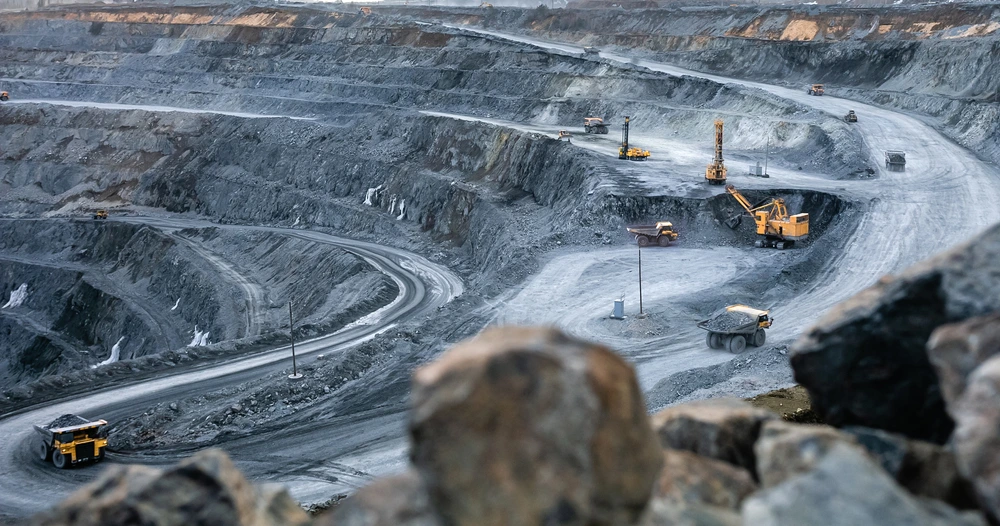
China’s overall outbound foreign direct investment rose to $144 billion, with about $22 billion allocated to global mining and metals projects. China’s leaders and company executives see growing urgency to close these acquisitions.
Western nations, particularly the United States, Canada, and Australia, have become increasingly cautious or restrictive toward Chinese investors in mining.
This has pushed Chinese companies to seek projects in countries that offer less resistance, often accepting higher costs or more challenging terms. Central Asia, Africa, and Latin America have benefited most from this investment surge.
In South America’s so-called “lithium triangle”—Argentina, Chile, and Bolivia—Chinese firms have invested over $16 billion in lithium projects since 2018.
In Africa, China continues to dominate cobalt mining, especially in the Democratic Republic of Congo. Chinese interests often extend beyond mining into port and energy infrastructure, as shown by multi-billion dollar engagements in Peru and Brazil.
China’s dominance does not stop at extraction. The country controls over 90% of refining capacity for graphite and rare earth elements, and processes about 60% of global lithium and cobalt.
This integrated approach lets China exert influence across both raw commodity and manufacturing supply chains. By 2024, along with Indonesia, China contributed 90% of new global nickel refining capacity.
Chinese companies face rising risks as more countries tighten regulations or seek higher royalties, especially in politically unstable areas.
Yet China continues to accept these risks to guarantee access to minerals regarded as strategic for its renewable energy ambitions and manufacturing dominance.
What matters for global business is that whoever secures steady access to these raw materials shapes the future of technology, mobility, and energy.
As competition escalates and Western nations attempt to build alternative supply chains, Chinese firms leverage state support and rapid execution to stay ahead.
The 2024 investment data illustrates China’s determination to control the critical assets that will power the next generation of industry.
China Buys More Foreign Mines Than Any Year in a Decade
China bought more foreign mines in 2024 than it has in ten years, official data from S&P Global and China’s Ministry of Commerce shows. Chinese companies made ten big overseas mining deals, each over $100 million, adding up to a record $22.1 billion for the year.
This buying spree is not random. China needs to secure minerals like lithium, cobalt, copper, and gold to keep its factories running and its electric car and technology industries growing.
Two of the largest 2024 deals include Baiyin Nonferrous paying $420 million for a mine in Brazil and Zijin Mining planning to spend $1.2 billion on a gold project in Kazakhstan.
Global competition for resources is heating up. The US, Canada, and Australia have made it harder for Chinese companies to invest in their mines.
As a result, China now looks to places like South America, Africa, and Central Asia, where governments welcome investment. For example, Chinese companies have invested more than $16 billion in lithium projects across Argentina, Chile, and Bolivia since 2018.
In Africa, China continues to dominate cobalt mining in the Democratic Republic of Congo. China does more than just buy mines. It refines about 60% of the world’s lithium and cobalt, controls 90% of rare earth processing, and leads in new nickel refining.
Having this control over both mining and processing lets China shape the market for important modern technologies. Chinese companies face risks, including stricter rules and unstable politics in some countries.
Still, they accept these challenges to secure the raw materials crucial for China’s growth. Companies often move fast, backed by strong support from the government and state-owned banks.
China’s push to buy mines and process minerals matters to everyone who uses electronics, electric cars, or renewable energy. As the country locks in more resources, it can influence prices and supply chains worldwide.
This trend means the world’s access to minerals—and the products made from them—now depends more than ever on decisions made in Beijing.
This article was produced by The Rio Times’ automated newsroom system. How we use AI · Report an error · Editorial responsibility: Matthias Camenzind, Editor-in-Chief