China Approves 74 GM Crop Varieties: Threat to LatAm Exporters
LATIN AMERICA · AGRIBUSINESS
Key Facts
—The headline: The China GM crop approval has cleared 74 new genetically modified corn and soy varieties in preliminary review by China’s CNCVRC, signaling continued expansion of domestic GM cultivation.
—The trajectory: China has now approved more than 200 GM corn and soy varieties in preliminary review since the program began in October 2023, with the agriculture ministry expanding pilot acreage each season.
—The export exposure: Brazil supplied 71 percent of China’s soy imports in 2024, and Argentina has scaled corn and soybean exports sharply, with both countries vulnerable to declining Chinese import demand if domestic GM yields rise.
—The market read: Soy and corn futures have shown muted reaction so far, with traders treating the approval as part of a multi-year domestic policy track rather than an immediate supply shock.
—Latin American impact: Brazilian and Argentine exporters face a multi-year structural risk if Chinese domestic production gradually displaces imported grain volumes.
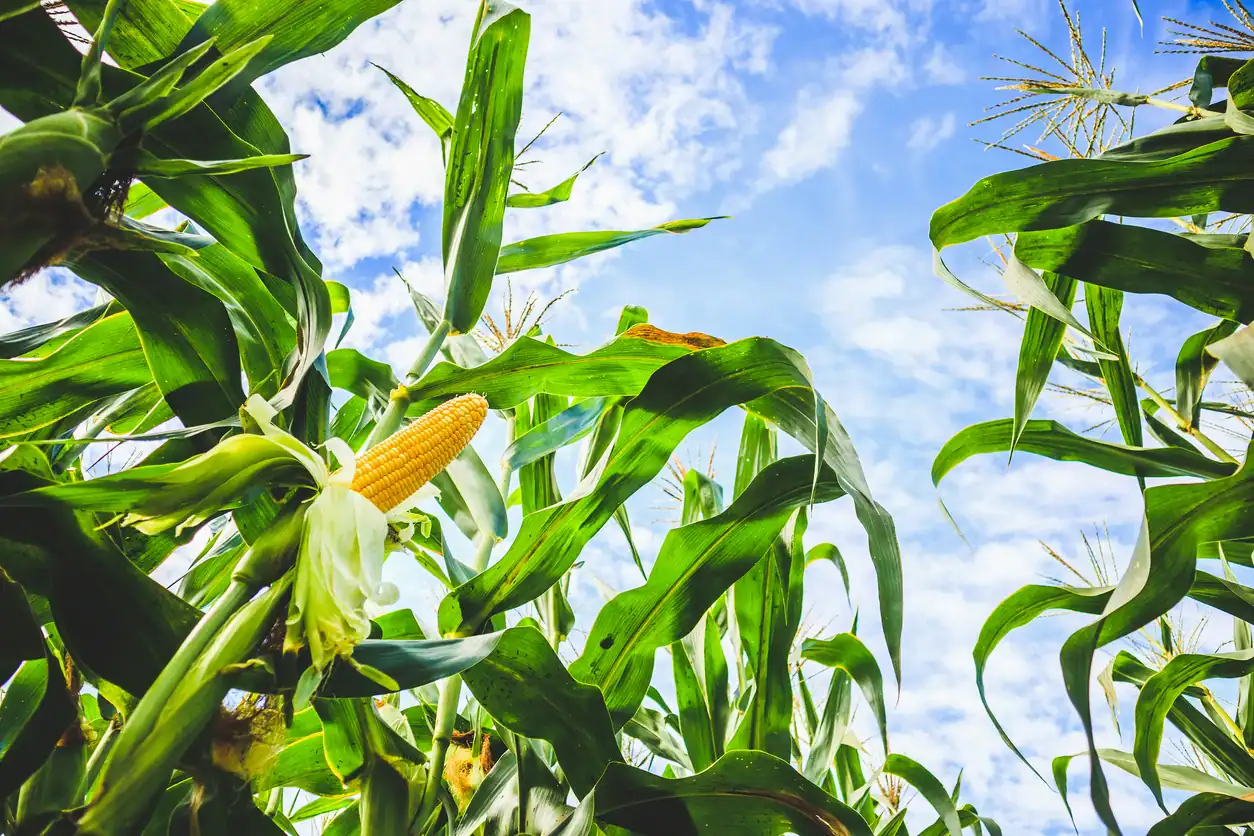
The China GM crop approval announced this week clears 74 new genetically modified corn and soybean varieties in preliminary review by China’s National Crop Variety Registration Committee. The move continues an expansion that began in late 2023 and signals China’s strategy of reducing import dependence on Brazilian, Argentine and US grain. For Latin American agribusiness exporters, the approval is a medium-term structural risk that has so far drawn limited market response.
What the China GM crop approval covers
China’s CNCVRC (China National Crop Variety Registration Committee) released the latest preliminary-review list this week, covering 74 GM corn and soybean varieties. The varieties enter a public-comment period before final approval and gradual rollout to commercial cultivation. The approval mechanism is the same one that delivered 51 varieties in October 2023, 30 varieties in early 2024 and another 99 in April 2025.
The approved varieties include traits for herbicide tolerance and insect resistance (lepidopteran pests including fall armyworm). The principal Chinese seed developers behind the program are Beijing Dabeinong Technology Group (DBN), China National Seed Group (a Syngenta Group subsidiary), Hangzhou Ruifeng Biosciences, Beijing Liangyuan Biotechnology and several agricultural-science institutes. International firms including Bayer, BASF and Corteva have separately had GM products approved for import.
Chinese acreage planted with GM corn was around 670,000 hectares in the 2024-25 season per industry estimates, more than double the 2023 figure, with the agriculture ministry signaling continued trial expansion in 2026. China’s total corn cultivation reaches 44 million hectares with annual output above 288 million tonnes. The agriculture ministry estimates GM varieties can boost yields by up to 12 percent versus conventional alternatives.
The Latin American export exposure
Brazil supplied 71 percent of China’s soybean imports in 2024 and roughly 80 percent during the first 10 months of 2025 according to Trade Data Monitor figures cited in USDA Foreign Agricultural Service reporting. Between January and October 2025, Brazil exported a record 79 million tonnes of soy to China. Annual Brazilian soybean output for the 2025-26 crop season is projected at expanded planted area, with USDA forecasting a moderation toward 72 to 75 million tonnes in 2026.
Argentina has scaled corn and soy exports to China sharply since the bilateral biotech-cooperation agreement in 2022. The country obtained Chinese authorization for two domestic corn-event varieties (MON-87411 and DAS-59122-7) in 2024 and has expanded shipments since. USDA raised its Argentine soybean export forecast for the 2025-26 marketing year to 6.5 million tonnes, with 1.75 million tonnes already registered as historic high for the early-season period.
The structural exposure is therefore asymmetric. Brazil’s soybean economy is more dependent on Chinese demand in absolute terms, while Argentina’s exposure is increasing rapidly from a smaller base. Both countries also face heightened competition from US suppliers, which have regained partial Chinese market share following the November 2025 US-China trade agreement that included a Chinese commitment to purchase 12 million tonnes of US soybeans annually.
Market response to the China GM crop approval
Soy and corn futures have shown limited movement in response to the preliminary approval. Soybean futures recently traded near $11 per bushel on the CBOT (a one-year high) on the back of US-China trade-normalization headlines, while corn futures have been range-bound through the spring planting season. Traders generally interpret the GM variety-approval pipeline as a multi-year structural development rather than an immediate supply-shock catalyst.
Argentine spot prices have moved more reactively to Chinese demand than to GM-policy headlines. Soybean spot prices in Argentina recently jumped 15 percent to ARS 505,000 per tonne (about $352 at the official rate) during the brief late-September window when export taxes were suspended, with May 2026 futures at $323.5 per tonne (up 9 percent). The price action reflects China’s near-term demand strength rather than concerns about future Chinese GM-driven import reductions.
Brazilian futures have been steadier, with the Brazilian real holding in a 5.00 to 5.10 range against the dollar that supports export competitiveness. Brazil exported a record 79 million tonnes of soy to China between January and October 2025 (roughly 80 percent of total soy exports during that period), with total 2025 Brazilian soy exports approaching 100 million tonnes. Industry projections suggest the export volume will moderate in 2026 even before any Chinese GM impact materializes.
The strategic context of the China GM crop approval
Beijing’s policy logic is straightforward: as the world’s largest importer of soybeans and a major corn buyer, China has identified food security as a top strategic priority under President Xi Jinping, with reducing import dependence as the principal channel for advancing that priority. The GM-variety pipeline complements ongoing investments in domestic seed-research capacity and breeding infrastructure.
The bilateral cooperation between Argentina and Brazil on biotech has been a meaningful counterweight. The two countries signed a Biosafety of Modern Biotechnology Products cooperation agreement in October 2022, with Paraguay and Uruguay joining the framework in 2023. The framework allows for fast-track event approval across the Mercosur bloc, which improves regional competitiveness against US suppliers but also creates room for Chinese-developed varieties to enter regional markets eventually.
USDA analyst commentary cited in reporting has noted that Chinese GM rollout could shift the global trade map in 5 to 10 years, particularly if planted-area expansion continues and domestic yields rise toward US benchmarks. The interim period sees Chinese demand for imported grain remaining strong, with Brazil and Argentina collectively serving roughly 90 percent of Chinese soybean import demand and an increasing share of corn imports.
What the China GM crop approval means going forward
For Brazilian and Argentine exporters, the message is to track the rate of Chinese GM acreage expansion and the rate of yield-improvement realization. Both variables are slow-moving and provide multi-year warning before they begin to displace imported supply. The current 670,000-hectare GM corn acreage in China represents roughly 1.5 percent of total Chinese corn area, far below the levels needed to materially affect import flows.
For Brazilian producers, the recommended response is to invest in Chinese-tailored varieties (matched to MRL standards) and in logistics infrastructure that reduces port-to-China shipping costs. The USDA Office of Agricultural Affairs in Brasília has flagged that a Brazil-specific soy variety tailored to Chinese quality standards could lift Brazil’s share of Chinese soy imports further. Argentina’s response has been to deepen the bilateral cooperation framework with China on biotech approvals.
For foreign investors in regional agribusiness, the long-term picture is that Chinese demand will continue but at decelerating growth rates. Brazilian and Argentine cattle, ethanol and biofuel sectors are also growing as alternative outlets for soybean and corn output. The Mercosur grain economy retains significant medium-term resilience, but the structural backdrop is gradually shifting toward more diversified end-market exposure.
Frequently Asked Questions
How many GM varieties has China approved?
China’s CNCVRC approved 74 new GM corn and soybean varieties in preliminary review this week. Combined with previous rounds (51 in October 2023, 30 in early 2024, 99 in April 2025), the country has now approved more than 200 GM varieties since the program began.
What is the export exposure for Brazil?
Brazil supplied 71 percent of China’s soy imports in 2024 and roughly 80 percent in January-October 2025. Brazil exported a record 79 million tonnes of soy to China during the first 10 months of 2025. USDA forecasts a moderation to 72 to 75 million tonnes total exports in 2026.
What is the export exposure for Argentina?
Argentina obtained Chinese authorization for two corn varieties (MON-87411 and DAS-59122-7) in 2024 and has expanded shipments since. USDA raised its Argentine soybean export forecast for 2025-26 to 6.5 million tonnes, with 1.75 million tonnes already registered as a historic high for the early-season period.
How big is China’s domestic GM acreage?
Chinese acreage planted with GM corn was around 670,000 hectares in the 2024-25 season, more than double the 2023 figure but still only about 1.5 percent of total Chinese corn area (44 million hectares). The agriculture ministry estimates GM varieties can boost yields by up to 12 percent versus conventional alternatives.
When will the impact be felt?
USDA analyst commentary suggests Chinese GM rollout could shift the global trade map in 5 to 10 years, particularly if planted-area expansion continues and domestic yields rise toward US benchmarks. The near-term Chinese demand for imported grain is expected to remain strong, with Brazil and Argentina collectively serving roughly 90 percent of Chinese soybean import demand.
Connected Coverage
For more on the Latin American agribusiness picture, see our piece on Brazilian rare-earths to Western buyers. Also read our coverage of the Brazil-Suriname Petrobras-Staatsolie cooperation and our piece on Brazil’s Q1 2026 GDP beat.
The Rio Times — Friday, May 29, 2026 — 20:00 BRT — By Sofia Gabriela Martinez
Read More from The Rio Times