Chile’s Next Government: Kast Picks Business Heavyweights And Orders Drug Tests
Key Points
- Chile’s president-elect José Antonio Kast picked a cabinet light on party loyalists and heavy on trusted technocrats and business figures.
- He is anchoring the agenda in public security and faster growth, with “permisología” regulation cuts as a core economic promise.
- The hair drug-test requirement and dictatorship-era legal ties are already defining the political fight before day one.
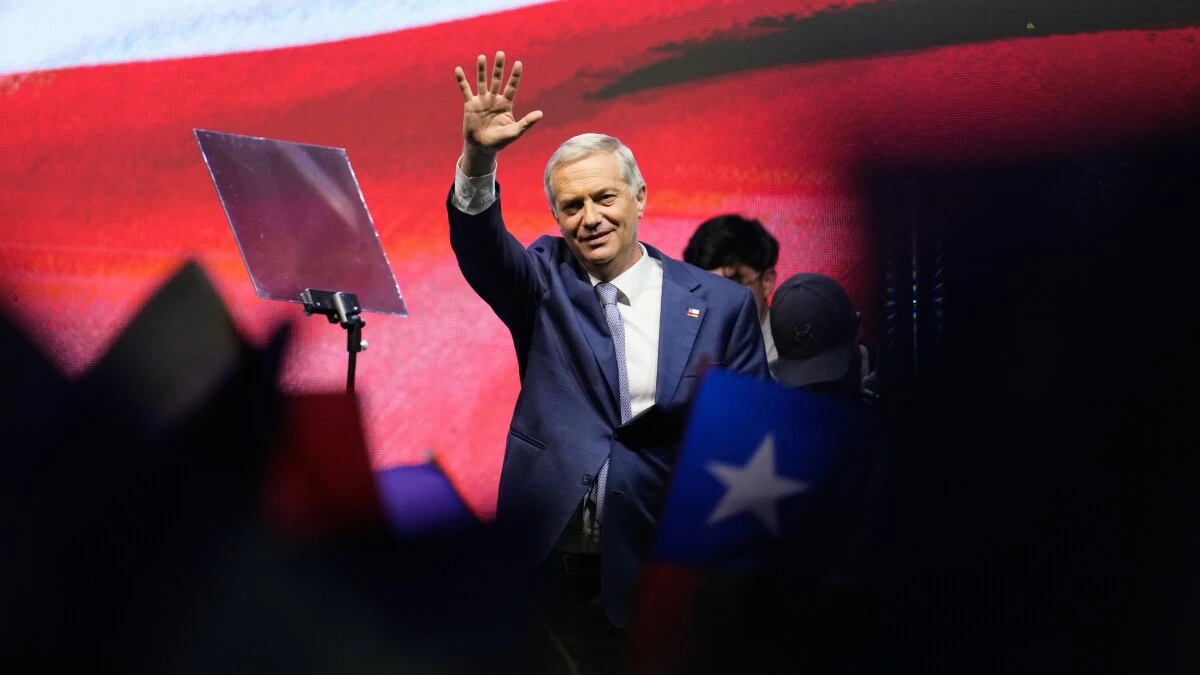
Chile’s president-elect José Antonio Kast has begun governing early, using his first major personnel move to set a blunt message: the state will move faster, police harder, and tolerate less internal ambiguity.
On Tuesday night he presented the 24 ministers who will take office on March 11, calling them a “government of emergency” meant to break what he described as official inertia.
The composition is the signal. Sixteen of the 24 are not formal party militants, and several senior names come from the corporate and technocratic world rather than traditional party ladders.
For Kast, that is a bet that competence and loyalty matter more than broad coalition arithmetic. For Chile’s center-left, it reads as a cabinet designed around private-sector instincts and a tight circle of confidence, not political pluralism.
The most provocative filter is personal: ministers were expected to submit to drug screening, including a hair test designed to detect use over a longer window than standard urine tests.
Supporters see it as a credibility play in a region where corruption scandals often begin with smaller ethical breaches. Critics call it political theater and an attempt to publicly shame opponents through insinuation.
Security was placed at the front of the launch. Kast named Trinidad Steinert, until this week a prosecutor in Tarapacá, as public security minister.
Enforcement drives Chile’s reform agenda
The north has been a focal point for organized-crime cases, including investigations linked to the Tren de Aragua network. The choice suggests a prosecutorial, enforcement-first approach rather than a social-policy framing of violence.
On the economy, Kast tapped economist Jorge Quiroz for finance and promised to attack “permisología,” Chile’s shorthand for permitting delays and heavy regulation that can stall investment.
The growth target being floated—returning toward 4%—is the political prize. But it also sets up a clash with the left, which argues faster approvals can weaken oversight and widen inequality.
The sharpest controversy is historical. Kast appointed two lawyers known for defending Augusto Pinochet to senior roles, drawing condemnation from victims’ groups.
The debate now is whether Chile is watching a technocratic reset—or an ideological restoration dressed as efficiency.
Related coverage: Brazil’s Morning Call | Chile’s Peso Firms As Metals Offset Trade Noise And Rate Jit This is part of The Rio Times’ daily coverage of Chile affairs and Latin American financial news.
This article was drafted with automated assistance and reviewed before publication. How we use AI · Report an error · Editorial responsibility: Matthias Camenzind, Editor-in-Chief
Read More from The Rio Times