Chilean Air Force Locates Debris Believed That of Missing Aircraft
RIO DE JANEIRO, BRAZIL – The Chilean Air Force announced on Wednesday, December 11th, that it had located debris believed to be the Chilean military Hercules C-130 cargo aircraft that crashed this week with 38 people on board over a remote stretch of frigid sea between South America and the Antarctic.
The debris was found 19 miles (ca. 31 km) south of where the plane last made contact, the Air Force said in a statement. The parts were recovered for analysis to determine if they belonged to the Hercules C-130 cargo plane.
The Brazilian Ministry of Defense said in a statement issued about the same time, that one of its support vessels had recovered personal items and debris compatible with the plane, some 311 miles (ca. 501 km) from the southern Argentinian city of Ushuaia in Patagonia.

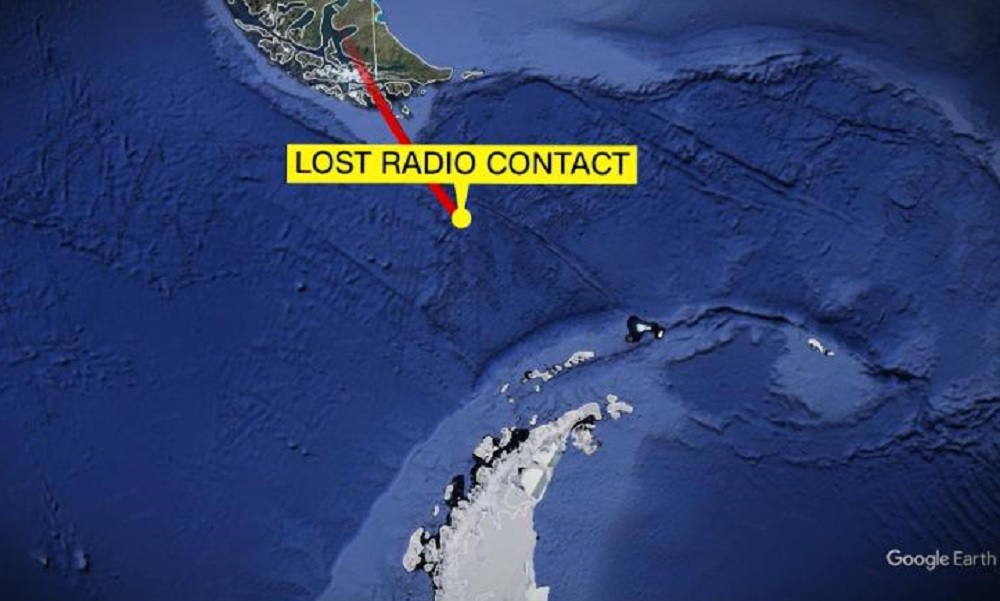
The aircraft, which was heading to a base in Antarctica, disappeared shortly after taking off late Monday from the city of Punta Arenas in Chile.
The cause of the crash was unknown and officials conceded there was a slim chance of finding any survivors.
The Chilean Navy was carrying out intense search and rescue operations, having dispatched several aircraft and ships to the region. Chile is receiving help from several countries, including Brazil.
The flight, with 38 people on board, left Puntas Arenas at 4:55 PM, having reported last at 5:44 PM and recorded its last location at 6:13 PM. After the aircraft’s autonomy period had elapsed, the Chilean authorities reported it missing.
“We have not yet been able to locate it. We are endeavoring every imaginable effort, human and material. To the families, who are struggling in this time of terrible pain, we are providing all our support and all the explanations they deserve”.
“We will search for the 38 passengers with no limitation of resources, day and night, doing everything that is human and technical within our reach,” said Defense Minister Alberto Espina.
The aircraft was carrying 17 crew and 21 passengers on a logistical support mission to the base in Antarctica to check a floating fuel supply pipeline and carry out an anti-corrosion coating at the national facilities on site.
The region where the aircraft disappeared is located in the Drake Passage, a stretch of sea of approximately 800 kilometers wide, which connects the Atlantic to the Pacific Ocean, between South America and Antarctica. It has an average depth of 3,400 meters.
It is considered one of the most stormy areas on the planet, with winds exceeding 70 km/h and waves over eight meters high.
A statement issued on Tuesday, December 10th, by the Chilean Air Force reported that two Chilean merchant ships, four foreign merchant ships, five Chilean Navy ships, and 12 Chilean aircraft have been dispatched to the region.
In addition, two C-130 aircraft – one from Uruguay and one from Argentina; and two P-3 aircraft – one from the Brazilian Air Force and one from the United Kingdom – were involved in the search.
The Brazilian aircraft took off from Galeão Airport, in Rio de Janeiro, at 7:45 AM this Wednesday, December 11th, with an estimated landing at Punta Arenas, in Chile, at 11:30 AM ( Brasília time).
Two US satellites were also sent to capture images and one day orbit by FASat Charlie satellite. The Brazilian Navy has also sent the polar vessel Almirante Maximiano to assist in the search for the plane.
The Brazilian Defense Ministry reported that the vessel had already reached the possible crash site of the Chilean aircraft and is already carrying out a visual, radar and echo sounder search (a device used to detect objects on the seabed).
Family members
Yesterday morning, Chilean Air Force spokesperson General Eduardo Mosqueira said the families of the crew and passengers boarded a Boeing 737 to Punta Arenas. According to the spokesperson, 103 people have traveled there.
In addition to family members, the Boeing carried sociologists, psychiatrists, officers, and personnel for aircraft maintenance.
Mosqueira said the searches should take six days and could last a further four days. “The weather is about to be in good condition for the search for the C-130,” said the spokesperson, highlighting the improvement in the region’s weather conditions yesterday.

“The Drake Passage is very complex. We are talking about low altitude weather conditions that affect our search operations. Today, the visibility and altitude conditions in the area have improved and we can have better prospects of searching to find something,” Mosqueira said.
More: Latin America news in English, every day from The Rio Times.
This article was produced by The Rio Times’ automated newsroom system. How we use AI · Report an error · Editorial responsibility: Matthias Camenzind, Editor-in-Chief