Chile to Cut Autopista Central Tolls by Up to 25%

CHILE · TRANSPORT
Key Facts
- —The country Chile, where the capital Santiago is crossed by privately run toll highways that charge drivers electronically.
- —What happened On Monday, 12 October, President José Antonio Kast announced lower electronic (TAG) tolls on Autopista Central, Santiago’s main north-south highway.
- —The discount 25% in peak and congested hours and 10% at off-peak times, Cooperativa, Meganoticias and Emol reported.
- —From when 1 January 2027, Kast said, once the agreement clears an administrative review in the coming weeks.
- —Who qualifies Drivers whose TAG account is paid up within the first 60 days after the cut takes effect.
- —What the operator gets A concession about 20 months longer, according to minister Louis de Grange as quoted by Cooperativa, and to La Tercera and Emol.
- —Who owns the road VíasChile, 80% owned by Spain’s Abertis and 20% by the Abu Dhabi Investment Authority, per its 2024 annual report.
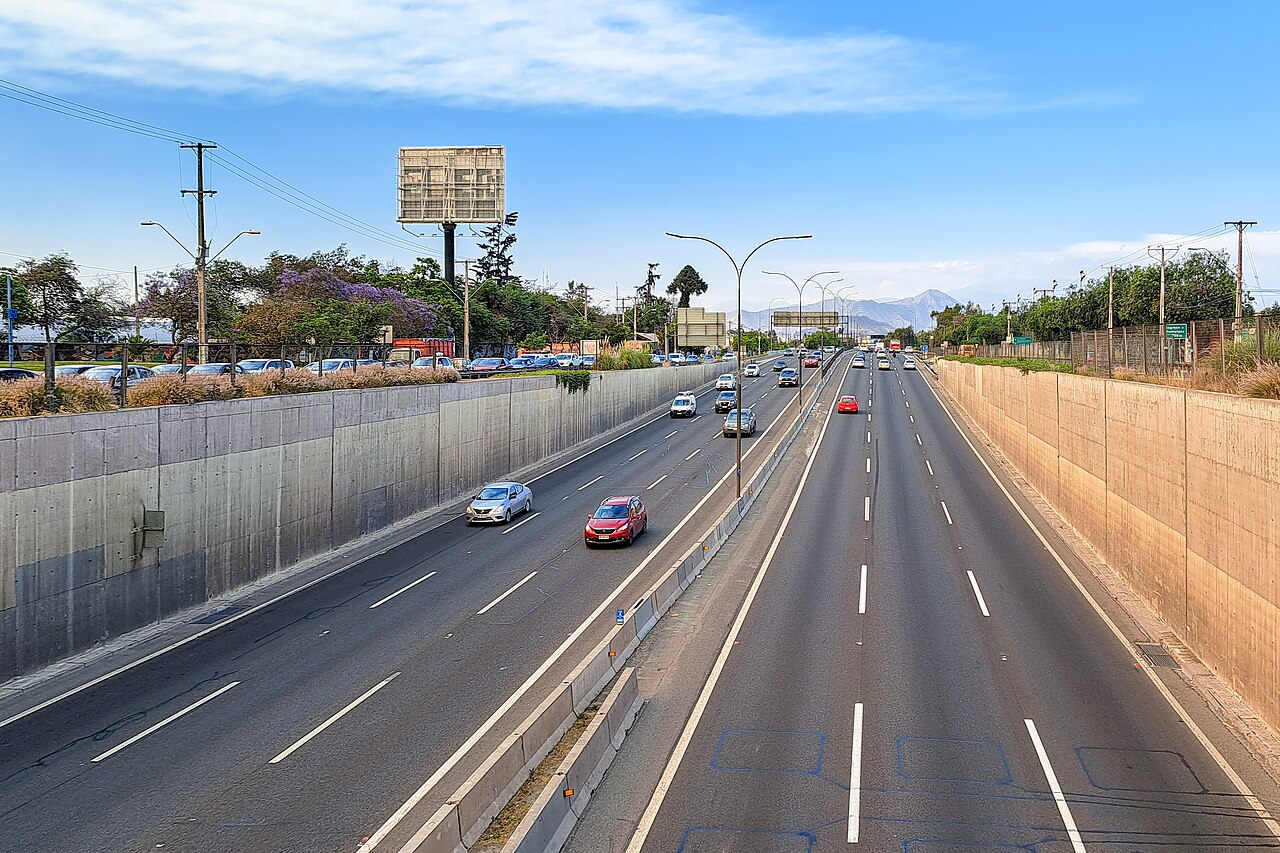
Chile plans to cut the Autopista Central toll by up to 25% from 1 January 2027, President José Antonio Kast said on Monday. The road carries the Pan-American Highway through Santiago, and its tolls are charged through TAG, a small windscreen device, including to foreigners in rental cars.
In return, operator VíasChile gets a concession about 20 months longer, said Louis de Grange, minister of Public Works and Transport, as quoted by Cooperativa. Only drivers with paid-up accounts will get the discount, Kast said, according to Cooperativa and Meganoticias.
How the Autopista Central Toll Cut Works
Kast said the Autopista Central toll discount will be 25% at peak and congested hours and 10% at off-peak times. Both Cooperativa and Meganoticias reported the same rates and the 1 January 2027 start.
Like Santiago’s other urban highways, Autopista Central charges more at rush hour, with a top rate for the most congested periods. The bigger cut therefore goes to commuters who drive at the busiest times.
There is one condition. Drivers must have their Autopista Central TAG account paid up within the first 60 days after the measure takes effect, Kast said.
“Whoever does things properly is rewarded,” he said, in remarks quoted by both outlets. The deal is not yet in force: it faces an administrative review in the coming weeks, Chilevisión and Emol reported.
A monthly bill of 100,000 pesos (about US$102), all from peak-hour trips, would fall to 75,000 pesos (about US$77), Chilevisión and La Tercera reported. Those conversions use about 977 pesos to the US dollar on 13 October 2026.
Who Owns Autopista Central
Autopista Central is run by VíasChile, the Chilean arm of Spanish toll operator Abertis. Cooperativa reported that VíasChile reached the agreement with Louis de Grange, the minister for both Public Works and Transport.
According to VíasChile’s 2024 annual report, Abertis owns 80% of the group and the Abu Dhabi Investment Authority, the emirate’s state wealth fund, owns 20%. Abertis itself is split equally between Spain’s ACS and Italy’s Mundys.
The same report says VíasChile bought the other half of Autopista Central from Canadian investor AIMCo, giving it control of the road.
Abertis has negotiated with Chilean governments over Santiago’s roads before, including a major investment deal agreed in 2021.
What VíasChile Gets in Return
De Grange said the Autopista Central toll cut comes “in exchange for an extension of the concession term of close to 20 months.” Cooperativa quoted him, and La Tercera and Emol also reported a 20-month extension.
The details will depend on when the Contraloría, Chile’s public-spending watchdog, approves the change, De Grange added. The Contraloría must sign off on every amended concession contract before it applies.
Opposition deputies said the deal mainly helps the company. They include Ignacio Achurra of the left-wing Frente Amplio, the party of former President Gabriel Boric, and Nelson Venegas of the centre-left Socialist Party.
Achurra argued that longer contracts mean families still pay in the long run and block a cheaper re-tender, Cooperativa and Emol reported. Venegas said the agreement “tends to favour mainly the concessionaires.”
Why Kast Wants Lower Tolls
Kast, a conservative who founded Chile’s Republican Party, took office in March. Louis de Grange runs both the Public Works and the Transport ministries, as our guide to Chile’s key players explains.
In September De Grange said the government was negotiating with four Santiago highways, T13 and Pauta reported. They were Autopista Central, Costanera Norte, Vespucio Sur and Vespucio Norte.
De Grange said any cut had to be “something users notice in their pockets.” He added that older concessions are easier to renegotiate, because the state can offer them longer contracts in return for lower tolls.
On Monday Kast said De Grange is talking to other urban highways about similar deals. De Grange said they will be announced as they close, because concession terms and toll levels differ from road to road.
What It Means for You
Rush-hour commuters with paid-up accounts should see their Autopista Central toll fall by a quarter from January, if the deal is approved. Off-peak trips will be 10% cheaper.
Visitors who rent a car in Santiago also pay the Autopista Central toll whenever they use the road. Whether rental firms will pass the discount on has not been announced.
For investors, the cut was agreed with the operator rather than imposed, and the operator gets extra contract time in exchange. De Grange is negotiating similar deals with other Santiago highways, which matters to foreign funds holding Chilean road concessions.
What Is Not Known
Neither Kast nor De Grange gave the concession’s new end date. Nor did they say how much Autopista Central toll revenue VíasChile gives up in exchange.
The exact peak and off-peak hours and the new per-kilometre rates in pesos were not given. No date was set for sending the amended contract to the Contraloría.
More: Chile news in English, every day from The Rio Times.
Frequently Asked Questions
What is a TAG in Chile?
A TAG is a small electronic device on a car’s windscreen that pays tolls automatically. Santiago’s urban highways have no toll booths, so the TAG account is billed each time a car passes under a gantry.
When does the Autopista Central discount start?
Kast said it will apply from 1 January 2027. The agreement first faces an administrative review in the coming weeks and must be approved.
Who gets the discount?
Drivers whose Autopista Central toll account is paid up within the first 60 days after the cut takes effect. The rate is 25% at peak and congested hours and 10% off-peak.
What does the operator get in return?
A concession about 20 months longer, minister Louis de Grange said, as quoted by Cooperativa. La Tercera and Emol reported the same figure.
Who owns Autopista Central?
VíasChile controls the road. Its 2024 annual report shows the group is 80% held by Spain’s Abertis and 20% by the Abu Dhabi Investment Authority.
Sources: Cooperativa — Kast and De Grange announce TAG cut on Autopista Central, 12 October 2026; Meganoticias — Kast announces up to 25% TAG cut, 12 October 2026; La Tercera — Government announces Autopista Central toll cut in exchange for 20-month extension, 13 October 2026; Emol — Kast announces TAG cut on Autopista Central, 12 October 2026; Emol — Lawmakers’ reactions to the TAG cut, 12 October 2026; Chilevisión — Kast announces up to 25% TAG cut on Autopista Central, 12 October 2026; VíasChile — Annual Report 2024 (ownership), 2025; T13 — De Grange on highway talks, 23 September 2026; Pauta — Government targets four highways, 24 September 2026.
This article was produced by The Rio Times’ automated newsroom system. How we use AI · Report an error · Editorial responsibility: Matthias Camenzind, Editor-in-Chief