60,000 Migrants Storm Spain’s Ceuta Enclave in a Day
MOROCCO · GEOPOLITICS
Key Facts
—At least 34 dead: Ceuta’s regional president, Juan Jesús Vivas, put the death toll at 34 by Friday, up from nine on Thursday evening.
—Tens of thousands in a day: Estimates of arrivals in 24 hours range from about 49,000 to around 60,000, the higher figure equal to roughly 70% of the city’s usual population.
—Spain calls it an attack: Prime Minister Pedro Sánchez, visiting on Friday, described the events as a violation of Spain’s territorial integrity.
—Who he blames: Sánchez pointed at human smuggling networks rather than at Rabat, and both governments have reinforced the border.
—The legal trigger: Spain’s Supreme Court ruled this month that people intercepted at sea cannot be returned to Morocco without due process.
—The 2021 echo: More than 8,000 people entered Ceuta in two days in May 2021, during a diplomatic rupture over Western Sahara, according to the Associated Press.
—Europe’s only land border with Africa: Ceuta and Melilla are the two points at which the European Union touches the African continent by land.
The Ceuta migrant crossing has killed at least 34 people and brought tens of thousands into the Spanish enclave in a single day, by the estimates available on Friday. Spain has sent soldiers, and its prime minister has called what happened a violation of the country’s territorial integrity.
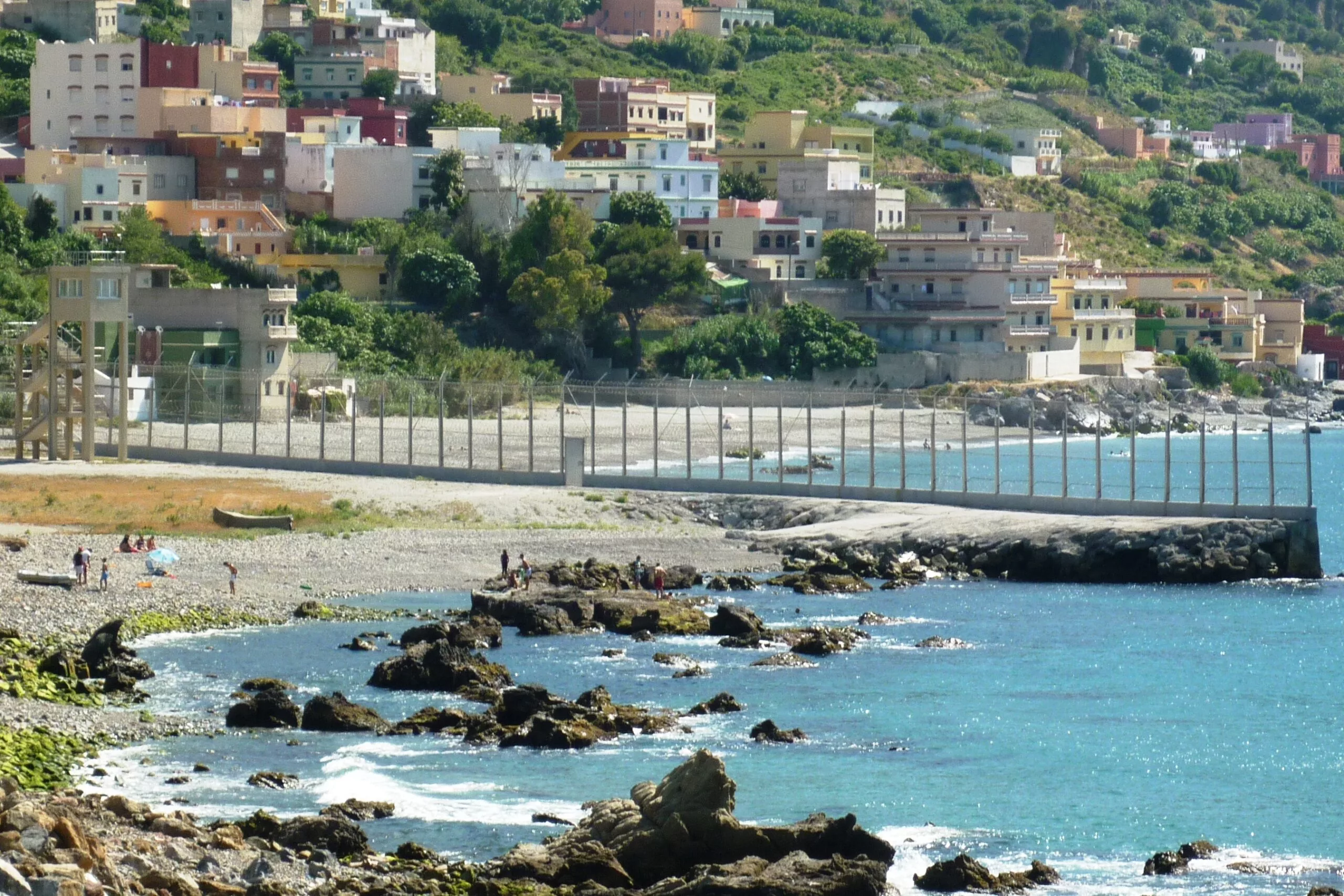
How the Ceuta migrant crossing escalated
The first crowds came over on Thursday 30 July, most walking around the breakwaters at Tarajal beach and onto local roads, and Spain’s government delegation reported nine dead that evening. By Friday the toll given by Ceuta’s regional president, Juan Jesús Vivas, had reached at least 34.
The scale moved just as fast. What began as an estimate of 1,500 to 2,000 arrivals over ten days became, within a day, figures of between about 49,000 and 60,000 people in 24 hours.
At the upper end that is close to 70% of the city’s normal population. No European territory absorbs that in a day.
Madrid’s response, and its careful choice of words
Spain first refused Ceuta’s request for a national emergency, arguing that its legislation does not treat migration flows as a national-security risk, and sent 60 soldiers to reinforce the Civil Guard. By Friday the prime minister was on the ground.
“A violation of Spain’s territorial integrity,” was how Pedro Sánchez described the events during his visit. It is the language of a border incident rather than a humanitarian one.
He was careful about who he blamed. Sánchez pointed at human smuggling networks that he said deceive young people and lead many of them to their deaths, rather than accusing the Moroccan government of opening the gates.
A court ruling that travelled faster than the law
Spain’s Supreme Court ruled earlier in July that people intercepted at sea on their way to Ceuta or Melilla cannot be pushed straight back without due process. Those who climb the land fence can still be returned immediately.
Sánchez said that interpretation had spread through smuggling networks over a matter of hours, which is his explanation for why a slow increase became a mass movement. Moroccan activists have been sceptical that a judgment in Madrid is what drew a crowd to a beach at Fnideq.
Both readings can be true. A legal change creates an opening, and organised networks are what turn an opening into a queue.
What Rabat has done, and not said
Morocco’s interior ministry did not respond to requests for comment as the crossings began. By Friday, Spanish and Moroccan forces were reinforcing the border together.
Spain’s interior ministry has said throughout that Rabat was cooperating closely and that Moroccan police were stopping large numbers of people on their side. Both governments have agreed to work towards returning everyone who entered illegally.
That cooperation is the diplomatic fact worth holding onto. This is not being handled as a rupture, whatever the rhetoric about territorial integrity suggests.
The shadow of 2021
The scenes recalled May 2021, when more than 8,000 people entered Ceuta within two days, according to the Associated Press. Spain had allowed Brahim Ghali, leader of the pro-independence Polisario Front, to be treated in a Spanish hospital, and Morocco was widely accused of easing its border controls in response.
That episode ended in a full diplomatic rupture, which is why every surge here is now read as a possible signal. No evidence has been produced that the same thing happened this week.
What is beyond dispute is the leverage. Morocco polices the approach to two European cities, and both capitals understand what that is worth.
Why a small enclave matters to the whole continent
Ceuta was taken by Portugal in 1415, came under Spanish control in 1580 during the Iberian Union, and was formally recognized as Spanish by Portugal in 1668. Together with Melilla it forms the European Union’s only land frontier with Africa.
That makes it the place where Europe’s migration politics and Africa’s labour market meet most directly. Interior ministry figures put arrivals in Ceuta at close to 3,000 for the whole year as of 15 July, a number this week has made meaningless.
The pressure travels. In Italy, Prime Minister Giorgia Meloni said she was ready to suspend the Schengen arrangement with Spain to protect Italian borders, even though the two countries share none.
Spain’s next official migration report is due on 3 August, and it will be the first audited measure of the past week. Until then every number in circulation is an estimate from a city that ran out of beds days ago.
More: Morocco news in English, every day from The Rio Times.
Frequently Asked Questions
How many people have died in the Ceuta migrant crossing?
At least 34, according to Juan Jesus Vivas, president of the autonomous city of Ceuta. The toll rose through Thursday and Friday from an initial figure of nine.
How many migrants have entered Ceuta?
Estimates range from about 49,000 to around 60,000 in 24 hours. The higher figure is roughly 70% of Ceuta’s usual population.
What has Spain said about it?
Prime Minister Pedro Sanchez, visiting Ceuta on Friday, called the events a violation of Spain’s territorial integrity. He blamed human smuggling networks rather than Morocco.
Why did so many people cross at once?
Spanish authorities link the surge to a Supreme Court ruling this month that people intercepted at sea cannot be returned without due process. Sanchez said that interpretation spread rapidly through smuggling networks.
Connected Coverage
This story belongs to our running coverage of the contest for influence across the continent, gathered in Africa: The New Scramble. For the economic side of the same relationship, see how Morocco built Africa’s car and battery powerhouse on the strength of its access to European markets, and how Rabat has positioned itself as a security partner after it foiled a network of Sahel plots.
Sources: Ceuta's regional president, Juan Jesús Vivas; Prime Minister Pedro Sánchez; Spain's Supreme Court.
This article was produced by The Rio Times’ automated newsroom system. How we use AI · Report an error
Read More from The Rio Times