Card Purchases in Brazil Grow 18 Percent in the First Semester
RIO DE JANEIRO, BRAZIL – In the first half of the year, card purchases amounted to R$850 (US$212) billion, with growth of eighteen percent in relation to the first six months of 2018.
Credit cards totaled R$534.4 billion (up 18.8 percent), debit cards R$308 billion (up sixteen percent), and prepaid cards R$7.4 billion (up 70.4 percent). The data, released August 28th, are from the Brazilian Association of Credit Card and Service Companies (Abecs).

In the second quarter alone, the sector’s growth was 19 percent — the highest growth in seven years (since March 2012) — with emphasis on the use of credit cards, which grew 19.7 percent.
“We are living a process of digitalization of payments, in which we have more and more consumers all over the country using cards and other digital media, either in person, or through the internet or applications, and also more and more stores and service providers accepting this type of transaction,” says the president of Abecs, Pedro Coutinho.
The number of purchases with credit, debit, and prepaid cards in the period exceeded the $10.3 billion mark, the equivalent of 40,000 transactions every minute.
However, the possible approval of the Provisional Contribution on Financial Transactions (CPMF), the tax on financial transactions, may hold back the growth of the sector.
“The CPMF may interfere, yes. But I don’t think the population will stop using cards after learning how to use a means of payment without friction and go back to filling their pockets with money,” said the president of Abecs, Pedro Coutinho. He also said that the subject is new and was not discussed in the association’s assemblies.
Credit concession
Analysis of data from Abecs and the Central Bank shows that the volume moved by credit cards in the first half was responsible for 68.4% of all credit granted to individuals to finance the consumption of goods and services in Brazil.
In parallel with the growth of electronic means of payment, the number of Brazilians who use credit cards in a conscious manner remains high. The research by Abecs shows that nine out of ten consumers pay the full amount of their bills, and, therefore, do not resort to any type of financing.
In addition, data from the Central Bank show that the card default rate remains low, reaching 5.8 percent in June 2019, one of the lowest levels in the historical series and below the personal credit default rate (7.4 percent).
For the executive director of Abecs, Ricardo Vieira, the result of this survey shows that Brazilians have been using credit cards in a conscious way. “When you have ninety percent of the population who settle their bills in full on maturity, it shows that the Brazilian uses the card in an adequate way. There is a two percent who use the revolving card, but the great majority settles their invoice on maturity. Of the ten percent who do not settle, eight percent of these use installment payments with a much lower interest than the revolving one”, analyzes Vieira.
According to Vieira, another factor is the decrease in interest rates. “The balance of revolving credit has fallen over time, which means that fewer people use it, and when it is used the average term is fifteen days per year.”
Shopping
Internet payments helped boost the sector’s results and, along with other non-contact purchases, already represent 21 percent of the volume of credit card transactions. R$112.2 billion were traded on remote channels, up 26 percent compared to the first half of 2018.
Cited by 69 percent of consumers, mobile phones are the preferred access channel for users to buy online, according to a survey for Abecs conducted by Datafolha. In June of last year, this participation was 58 percent. Next, are the purchases by laptop (33 percent), desktop (thirty percent) and tablet (three percent).
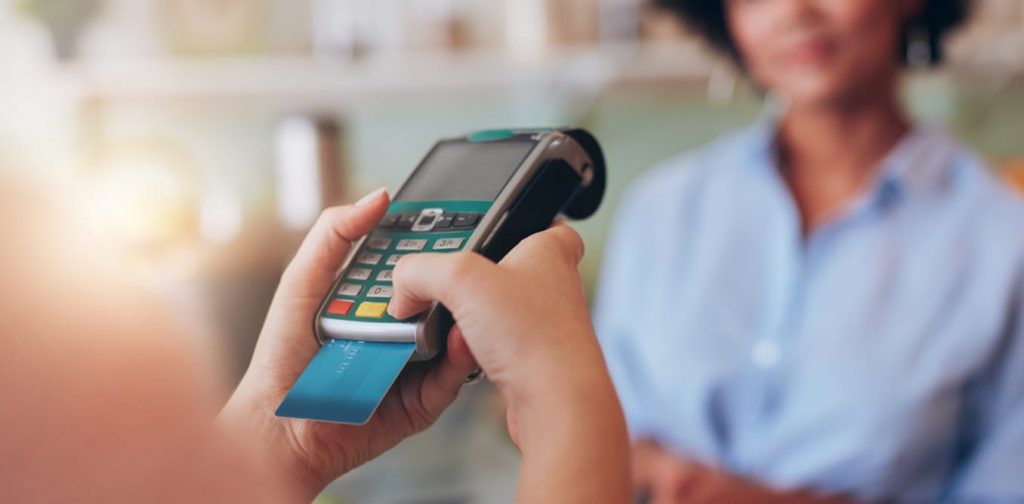
The survey also shows that, regardless of the means of access, 83% of consumers use credit cards as a means of payment for online purchases.
According to Central Bank data, the use of credit cards by Brazilians abroad totaled R$16.7 billion (US$4.3 billion), which is an increase of 5.3 percent in relation to the first half of last year. On the other hand, foreign spending in Brazil increased by 2 percent, reaching R$8.5 billion (US$ 2.2 billion).
Cost of acceptance
Abecs figures show that over the past ten years, the average fee charged for card transactions, known as the MDR (Merchant Discount Rate), has been reduced by almost 25 percent.
Between the second quarter of 2018 and the same period of 2019 alone, the rate dropped from 2.12 percent to 1.91 percent. For the association, it is a reflection of increased competition in the sector, and the arrival of new accrediting companies and greater diversification of business models.
More: Brazil news in English, every day from The Rio Times.
This article was produced by The Rio Times’ automated newsroom system. How we use AI · Report an error · Editorial responsibility: Matthias Camenzind, Editor-in-Chief