Canada Investment in Colombia Up Eightfold Since 2011 Deal, Envoy Says
COLOMBIA · INVESTMENT
Key Facts
- —What was said Canada’s ambassador Elizabeth Williams told La República on 30 September 2026 that Canadian investment in Colombia is eight times its level before the free trade agreement.
- —How big it is La República put Canadian investment at US$6.912 billion in 2025; Ottawa’s latest official figure is C$13.6 billion (about US$9.6 billion) for 2023.
- —The deal The Canada-Colombia Free Trade Agreement has been in force since 15 August 2011, and Global Affairs Canada says it has more than doubled bilateral trade.
- —The condition Williams said investors want regulatory stability, legal certainty and physical security, while Colombia’s public finances are under strain in 2026.
- —Who is involved More than 100 Canadian companies operate in Colombia, including Parex, Hatch, WSP, Scotiabank and CIBC, the ambassador said.
Canada investment in Colombia has grown eightfold in the 15 years since a free trade agreement took effect, Ottawa’s ambassador says. Mining and clean technology come next.

Canada investment in Colombia is now eight times its level before the two countries’ free trade agreement, says ambassador Elizabeth Williams. The deal entered into force on 15 August 2011 and has just passed its 15th anniversary.
An ambassador’s 15-year scorecard
“The level of Canadian investment in the country is now eight times higher than before the FTA,” Williams told La República. The newspaper published the interview on 30 September 2026.
She added that bilateral trade has more than doubled and trade in services is five times larger. Colombia remains a very attractive market for Canadian companies, she said.
Williams is a career diplomat who joined Canada’s foreign service in 2001. She served as ambassador to Costa Rica, Honduras and Nicaragua before arriving in Bogotá in September 2024.
What the numbers show
La República put Canadian investment in Colombia at US$6.912 billion in 2025. Ottawa’s own latest figure is higher and older: a stock of C$13.6 billion in 2023.
At the 29 September 2026 rate of 1.419 Canadian dollars per US dollar, C$13.6 billion equals about US$9.6 billion. Global Affairs Canada, Ottawa’s foreign ministry, publishes that figure.
Ottawa ranks Colombia as the fourth-largest destination for Canadian investment in South and Central America. Two-way goods trade reached C$2.6 billion in 2023, about US$1.8 billion.
That made Colombia Canada’s fourth-largest trading partner in Latin America and the Caribbean, excluding Mexico. Two-way services trade reached C$633 million in 2022, about US$446 million.

Who invests, and in what
More than 100 Canadian companies operate in Colombia, the ambassador said. She named the oil producer Parex, the engineering firms Hatch and WSP, and the banks Scotiabank and CIBC.
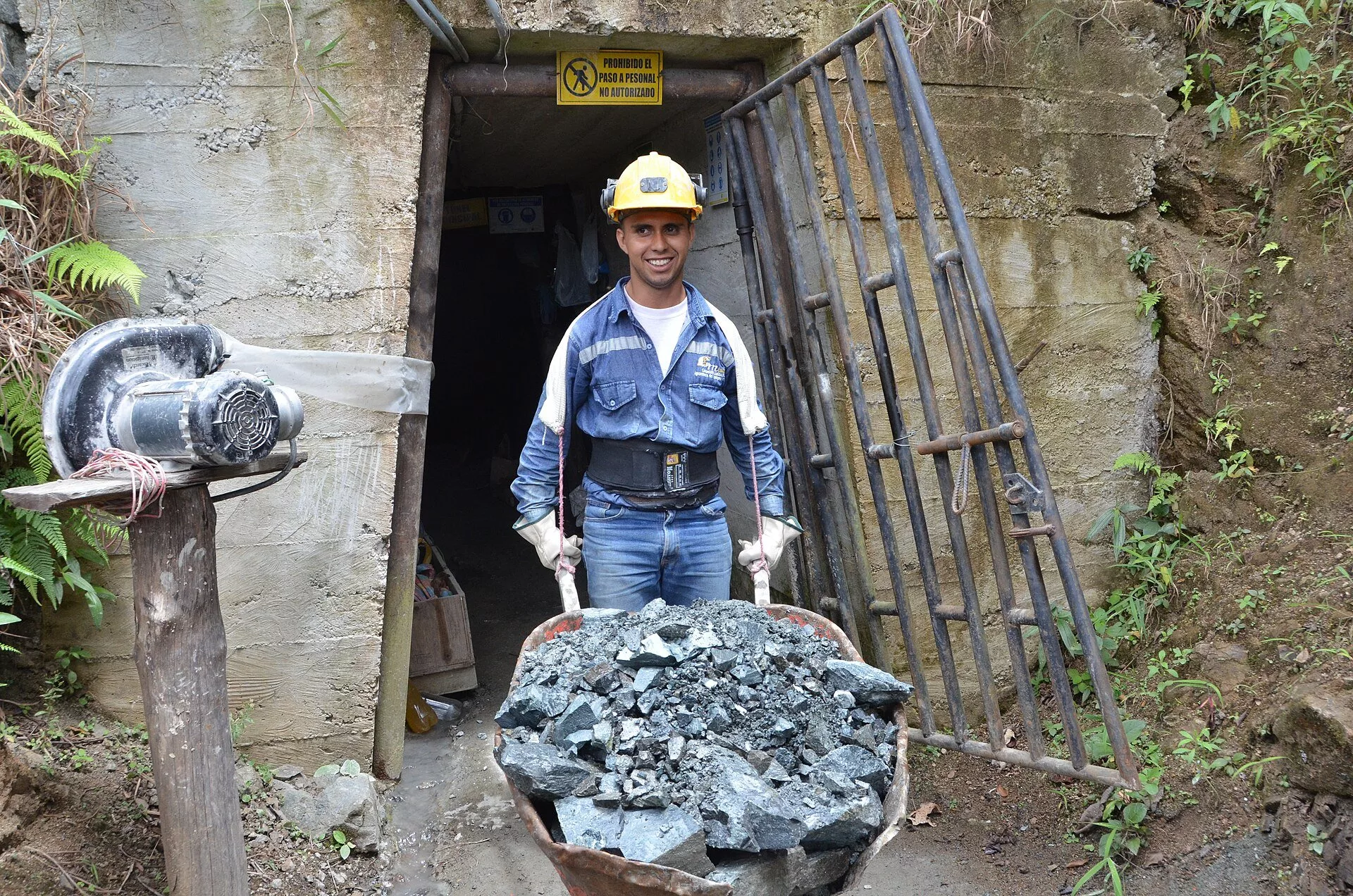
Williams sees the next openings in clean technology, renewable energy, infrastructure and farming. She also expects Canadian miners to help Colombia explore critical minerals for the energy transition.
Mining was one of the sectors Williams stressed most. “Canada is a global leader in mining,” Williams said, with firms active from exploration to production, engineering and services.
Trade runs in both directions. In 2023 Canada sold Colombia C$1.2 billion in goods, led by wheat, fertilisers, vegetables, machinery and meat.
In return, Canada bought C$1.4 billion of Colombian goods, about US$990 million, mostly energy products and coffee. Colombia was Canada’s third-largest export market in South America, after Brazil and Peru.
The human side of the relationship
“We have winter for six months of the year, so we need products from countries like Colombia,” Williams said. She named coffee, flowers, fruit and vegetables.
More than 5,000 Colombians received permits to study in Canada in 2025, she said. Many take master’s degrees and doctorates, and some return to work for Canadian firms in Colombia.
Colombian brands are also heading north. The coffee chain Juan Valdez announced its arrival in Canada with 400 points of sale, La República reported.
Williams herself knows the region’s harder postings. Before Latin America, she served in Amman, Baghdad, Damascus, Beirut, Washington and Geneva, La República reported.
The counterpoint: stability is the condition
The ambassador attached a clear condition to the growth story. “Investors want a stable and predictable environment,” she said, citing regulatory stability, legal certainty and physical security.
That condition meets a difficult fiscal moment. Colombia asked the International Monetary Fund on 28 September 2026 to bring forward its regular review of the economy.
Colombia’s independent fiscal committee projects a 2027 central government deficit close to 10 percent of GDP. It sees net debt around 67.3 percent, near the legal ceiling of 71 percent.
The agreement also carries a human rights clause. Under a side accord signed on 27 May 2010, each country publishes a yearly report on the deal’s human rights effects.
Where the relationship goes next
Williams said both governments want to diversify trade and hope to raise Colombian investment in Canada. She pointed to infrastructure as one area of interest.
She listed Colombia’s strengths as its institutions, its access to two oceans and its skilled workers. Canadian firms set up regional offices in Colombia because of that talent, she said.
For investors, the ambassador’s figures describe a long upswing built over 15 years, not a sudden boom. Whether it continues depends on the stability she named, and on how Colombia repairs its public finances.
More: Colombia news, every day from The Rio Times.
Frequently Asked Questions
How much has Canada invested in Colombia?
La República put Canadian investment at US$6.912 billion in 2025. Global Affairs Canada reports a stock of C$13.6 billion (about US$9.6 billion) for 2023. Ambassador Elizabeth Williams says investment is eight times its level before the 2011 free trade agreement.
When did the Canada-Colombia Free Trade Agreement start?
The agreement entered into force on 15 August 2011, alongside side agreements on labour cooperation and the environment. Both countries also publish annual reports on its human rights effects.
What risks do Canadian investors see in Colombia?
Ambassador Williams said investors want regulatory stability, legal certainty and physical security. Colombia is also under fiscal pressure, with its fiscal committee projecting a 2027 deficit near 10 percent of GDP.
Sources: La República · Global Affairs Canada
This article was produced by The Rio Times’ automated newsroom system. How we use AI · Report an error
In depth
Read More from The Rio Times